


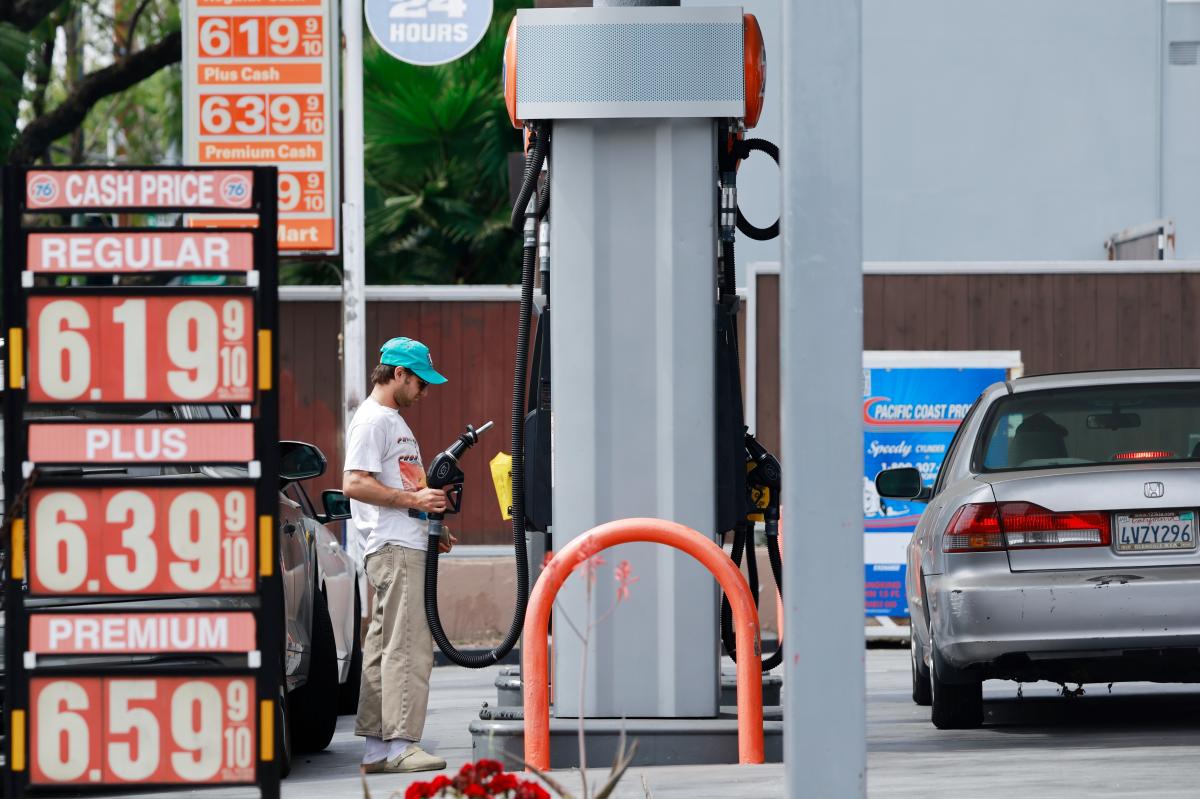
Gas and diesel prices in California are soaring Tuesday, climbing past already elevated levels and putting increasing pressure on commuters as fuel shortages drive costs higher.
As of March 31, diesel reached a statewide average of $7.45 — the highest ever recorded — while regular gasoline is nearing $6 at $5.88, according to the American Automobile Association.
In Los Angeles County, that average passed the $6 mark Tuesday, exceeding both the state and national averages, with the U.S. average just above $4.
Approximately 737,900 vehicles in California are registered to use diesel, representing a portion of the state’s 35 million registered vehicles. Diesel constitutes 17% of total fuel sales in California, with around 3.5 billion gallons sold annually to power heavy-duty trucks, buses, agriculture, and construction, according to the California Energy Commission.
According to GasBuddy, the surge in fuel costs is reaching unprecedented levels. Analysts say this marks the largest one-month spike on record, highlighting just how quickly prices are rising and the mounting strain on drivers.
Across Southern California, prices remain elevated: Orange County averages $5.93, Ventura County $5.95, San Bernardino County $5.86, and Riverside County $5.84.
Meanwhile President Donald Trump is open to ending military operations in the Middle East — even if the Strait of Hormuz, which carries roughly 20% of the world’s oil supply, remains closed, The Wall Street Journal reported.
Some of the highest prices in California are being reported at a Chevron station in Los Angeles’ Chinatown, where gas has surpassed $8.70 per gallon. Other notoriously expensive locations include remote stops along Route 66 and near Death Valley.
The spike comes as Sable Offshore resumed oil movement through the Santa Ynez Pipeline System for the first time since a major spill shut it down more than a decade ago.
Company CEO Jim Flores called the restart a boost for U.S. energy security, emphasizing domestic production and supply.
Earlier this month, operations resumed after the Trump administration invoked the Defense Production Act, allowing the restart while bypassing certain state environmental regulations.
California has since filed a lawsuit challenging the move, arguing it overrides state authority and prioritizes industry interests over community safety.
State officials also pushed back on claims the project would ease prices, saying the added supply would have little real impact.
“This would be a drop in the bucket—about 0.05% of total oil production—and would not lower global oil prices,” a spokesperson for Newsom’s office told The Post noting oil is sold on a global market to the highest bidder, not reserved for U.S. consumers.
Download The California Post App, follow us on social, and subscribe to our newsletters
California Post News: Facebook, Instagram, TikTok, X, YouTube, WhatsApp, LinkedIn
California Post Sports Facebook, Instagram, TikTok, YouTube, X
California Post Opinion
California Post Newsletters: Sign up here!
California Post App: Download here!
Home delivery: Sign up here!
Page Six Hollywood: Sign up here!
Read the full article here