


It’s last call for San Francisco’s government hooch.
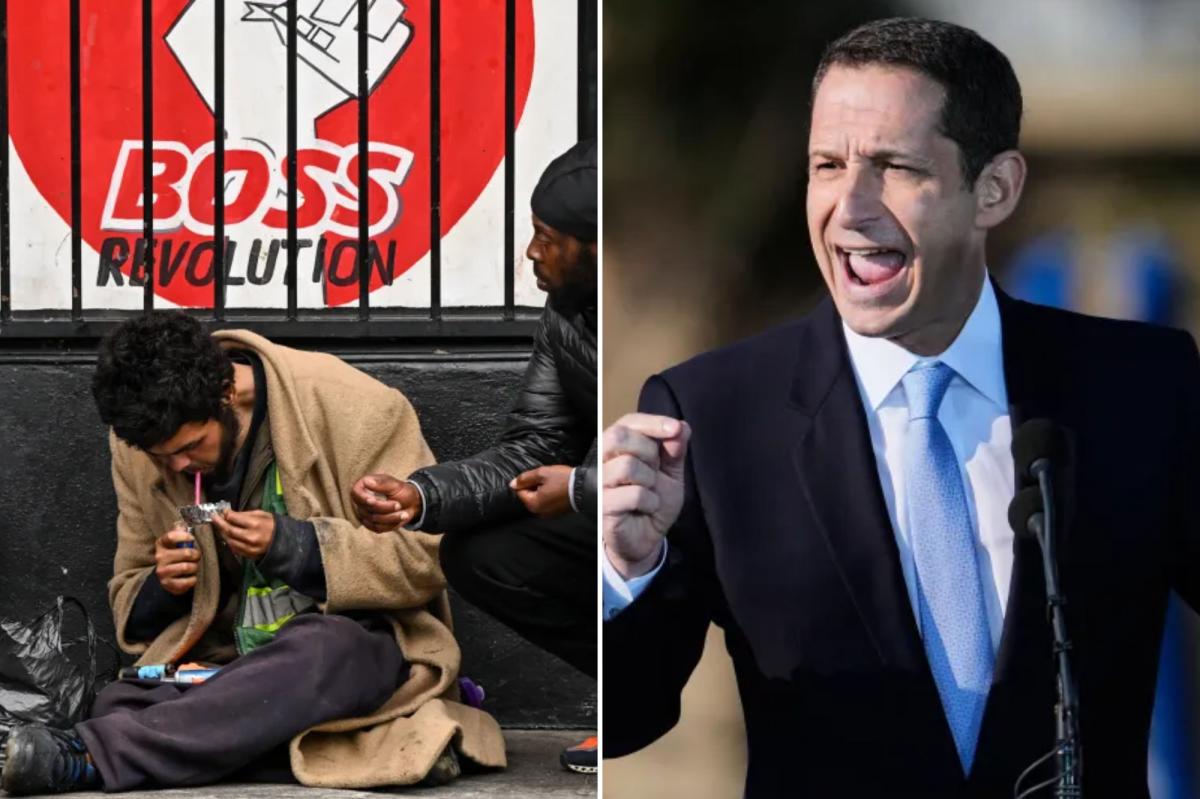
A COVID-era program that guzzled $5 million of taxpayer money annually to serve booze to homeless alcoholics will finally shutter this year, San Francisco Mayor Daniel Lurie exclusively told The California Post.
“For years, San Francisco was spending $5 million a year to provide alcohol to people who were struggling with homelessness and addiction — it doesn’t make sense, and we’re ending it,” Lurie said.
The taxpayer tipple, called the Managed Alcohol Program (MAP), was created by the San Francisco Department of Public Health in April 2020, when the city began housing homeless people in hotels during lockdown.
The program served just 55 clients during its run — amounting to a $454,000 bar tab each.
To prevent chronic alcoholics from dangerous withdrawal while stores and bars were closed, clinicians brought metered doses of beer and liquor to clients.
But the scheme went on for six years, well after the pandemic ended.
Now, “We have ended every city contract for that program,” Lurie added.
A representative for Community Forward, the San Francisco-based nonprofit contracted by the health department to run the plan since 2023, confirmed to The Post that the city had pulled the plug.
A health department official boasted in a 2024 video presentation about one of the success stories, who went from 36 ER visits annually to fewer than 10.
Community Forward’s financial statements show the nonprofit received $17.8 million in government contracts and grants in 2025, with $10.8 million going to salaries and compensation. In 2024, it was revealed that CEO Kara Zordel, who stepped down that year, earned a $225,794 salary.
Although Canada has over 50 MAP sites, San Francisco’s was the first of its kind in the US.
While other harm reduction services, like free needle exchanges, have been sold as public health initiatives to fight the spread of bloodborne diseases, San Francisco’s MAP took the unprecedented leap of administering the actual substance of choice to addicts.
Lurie, who was sworn in last year, has put an end to this, along with handing out free drug supplies such as crack pipes — a practice that had turned the city’s downtown, especially its Tenderloin district, into a shooting gallery.
“Under my administration, we made San Francisco a recovery-first city and ended the practice of handing out fentanyl smoking supplies so people couldn’t kill themselves on our streets,” Lurie told The Post.
“We have work to do, but we have transformed the city’s response, and we are breaking the cycles of addiction, homelessness and government failure that have let down San Franciscans for too long.”
Lurie put the city’s notorious open-air drug markets on notice in a statement last year, saying: “If you do drugs on our streets, you will be arrested. And instead of sending you back out in crisis, we will give you a chance to stabilize and enter recovery.”
This shift away from a multi-decade, permissive approach to addiction puts San Francisco outside the norm for a major West Coast city, as the city governments of Los Angeles, Portland and Seattle continue to insist that a housing shortage, and not addiction, is to blame for the homeless crisis.
Recovery advocates cheered the news of MAP’s impending closure.
“They [were] wasting our money just paying people to keep using the drug that they’re hopelessly addicted to,” Tom Wolf, a former homeless heroin addict in San Francisco who now works as a recovery advocate, told The Post.
“Harm reduction itself is part of the overall social justice framework … If you ascribe to social justice ideology, you must ascribe to harm reduction, which has been redefined from the original meaning, from keeping people alive, and keeping them from getting bloodborne diseases like HIV, to now supporting drug users,” Wolf added.
“Over the past two decades the city had really doubled down on housing first and harm reduction,” said Steve Adami, a once-incarcerated recovering addict who is now the executive director of The Way Out, the Salvation Army’s recovery-focused homeless initiative in San Francisco.
“Under Mayor Lurie, they have reassessed the outcomes of those models and have pivoted and have a very clear strategy: That we are a recovery-first city. He’s made a significant investment into abstinence-based and recovery-focused services.”
In May, Lurie signed the largely symbolic Recovery First Act, which provided a “north star” to reorient all city programs toward recovery and abstinence over pure harm reduction in addressing the addiction and homelessness crisis.
Among Lurie’s challenges: The city reportedly only has 68 detox beds available for the 19,000 people who cycle in and out of homelessness annually. On any given night, 8,000 people sleep on the streets of San Francisco. Those who seek help with addiction often wait days or weeks for detox services to be available.
The MAP news highlights the uphill struggle that Lurie faces in returning San Francisco to its once grand self after being brought down by homelessness, addiction and retail flight in the downtown area.
But unlike Minneapolis’s Mayor Jacob Frey or Chicago’s Brandon Johnson, Lurie has worked with President Trump on managing immigration enforcement in his city.
Read the full article here