


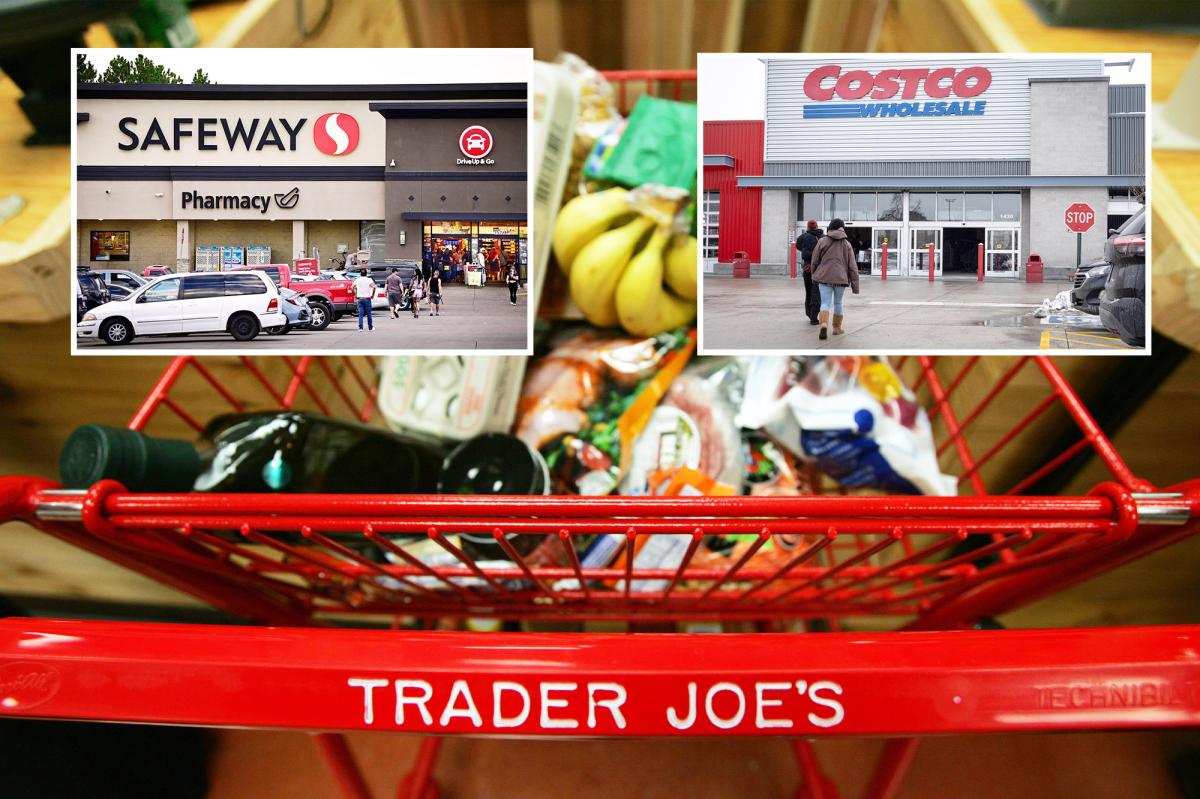
Californians are no strangers to sticker shock at the checkout line, where high grocery prices are just part of everyday life. But shoppers can slash their grocery bill in half just by switching stores.
San Francisco shoppers ringing up with Trader Joe’s spent $82 compared to $168 at Bi-Rite on a 12-item basket, a new study found.
The discount chain’s total barely moved from last year — slipping from $82.45 to $82.03 — while neighborhood markets saw sharp jumps, with Luke’s Local climbing to $164.71 and Bi-Rite surging to $168.21, according to the San Francisco Chronicle.
The findings come as shoppers navigate stubborn inflation, tariff uncertainty and volatile food costs driven by supply disruptions and labor pressures.
Pantry staples and protein saw steep increases — with black pepper rising more than 30%, coffee up nearly 24% on average and ground beef climbing by roughly 19% year-over-year.
Download The California Post App, follow us on social, and subscribe to our newsletters
California Post News: Facebook, Instagram, TikTok, X, YouTube, WhatsApp, LinkedIn
California Post Sports Facebook, Instagram, TikTok, YouTube, X
California Post Opinion
California Post Newsletters: Sign up here!
California Post App: Download here!
Home delivery: Sign up here!
Page Six Hollywood: Sign up here!
Some stores saw even steeper jumps. Lucky’s ground beef soared 44% to $10.99 a pound, while the cheapest bag of coffee at Trader Joe’s doubled to $9.99.
Despite those price spikes, Trader Joe’s still undercut its rivals.
A pound of ground beef cost $6.49 at Trader Joe’s, compared with $12.99 at Mollie Stone’s and $11.99 at Gus’s, while a 12-ounce bag of whole-bean coffee rang up at $9.99 — far below the $17.99 at Bi-Rite and $19.59 at Mollie Stone’s.
The $86 difference on the small basket could translate into thousands of dollars a year for a household that shops weekly, depending on where they fill their carts.
Not every item became more expensive. Egg prices fell nearly 22% on average from last year’s bird-flu highs, easing pressure on one of the most closely watched staples.
Eggs were also cheaper at Trader Joe’s, where they were selling for $2.99 a dozen compared with $5.49 at Luke’s Local and $4.99 at several other neighborhood markets.
Trader Joe’s heavy reliance on private-label goods and direct sourcing may help it keep prices lower, while smaller neighborhood markets face higher per-unit costs and less leverage with suppliers, according to the Chronicle.
Independent markets including Mollie Stone’s, Luke’s Local and Gus’s Community Market all posted year-over-year increases on the 12-item basket, with Mollie Stone’s jumping nearly 23% and Luke’s rising more than 8%.
Aside from Trader Joe’s, Lucky was the only chain to see an overall decline, falling to $103.98 from $114.13 last year.
The Chronicle’s comparison excluded value-focused retailers such as Costco and Grocery Outlet because of inconsistent product offerings.
The publication’s research also did not include international markets.
Nationwide, grocery prices remain elevated. Federal data show food-at-home prices rose about 2% over the past year, even as certain staples like beef and coffee climbed much faster.
Read the full article here