


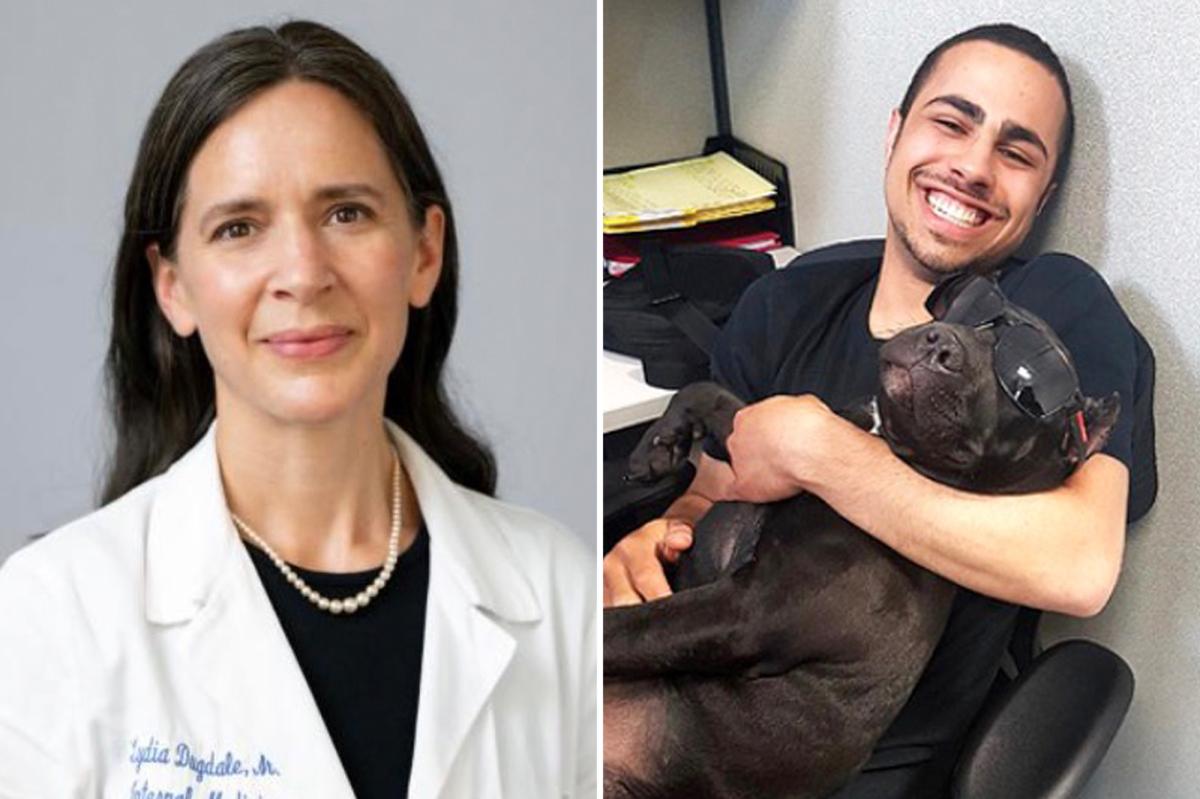
As medical aid-in-dying laws continue to spread across the country, a New York-based physician and ethicist is warning about the dangerous ripple effects that can follow laws intended to ease suffering.
“I can completely empathize with the sense that this is a very effective and efficient way to end suffering,” Dr. Lydia Dugdale told Fox News Digital. “But are we creating new problems by normalizing the taking of life or the taking of one’s own life?”
Dugdale, the Dorothy L. and Daniel H. Silberberg professor of medicine at Columbia University Medical Center and director of the Center for Clinical Medical Ethics, has been outspoken about what she sees as the ethical fallout of legalizing physician-assisted suicide.
In February, New York Gov. Kathy Hochul signed the Medical Aid in Dying Act, allowing qualified, terminally ill adults with six months or less to live to self-administer medication to end their lives. The law’s passage followed Illinois legalizing its own version in December, when Gov. JB Pritzker signed the measure. The practice is now legal in 13 states and the District of Columbia.
New York’s law is similar to others around the country, Dugdale said, but includes additional safeguards. Under the law, a patient must undergo a mental health evaluation by a psychiatrist or psychologist to determine whether the patient is capable of making the request. The law also requires an audio or video recording of the patient’s request and imposes a five-day waiting period between the request and filling the prescription. Patients must also be legal residents of the state.
Advocates of such laws, including the group Death with Dignity, argue that allowing terminally ill people to end their lives gives them agency and dignity over the manner and timing of their deaths.
Dugdale said she sympathizes with families who want to ease a loved one’s suffering or who face heavy financial burdens caring for someone who is seriously ill.
But she questions what “new problems” are created when society views assisted suicide as a solution to suffering.
Dugdale pointed to Canada, where medical assistance in dying, known as MAID, has been legal since 2016. The number of assisted deaths has surged — from about 1,000 in its first year to more than 16,000 deaths in 2024.
“It’s now one in 20 or more die from MAID in Canada. That’s made me more concerned,” she said.
Dugdale said legalized assisted suicide can shift cultural attitudes toward caring for the sick, the dying and other vulnerable members of society.
“Certainly it changes the culture around care of the sick and dying,” she said. “Rather than committing to the long, difficult work of caring for the sick, all the way to the point of death, we have an easy out.”
She warned the effects may not be limited to terminally ill patients. People who are disabled or dependent on others for care, she said, may feel pressure to relieve the burden on their loved ones.
“I think there’s an additional concern about what happens then for those whose lives we don’t think are worth living, for those who feel a burden on their families or on the community,” she said. She added that practical concerns, including finances and how to pay for elder care, can influence how patients view their choices.
“And so this is a very real threat that people feel like they have, which pushes them into seeking these drugs,” she said.
Dugdale pointed to research that suggests that in places where assisted suicide has been legalized, unassisted suicides rise as well.
“Once a community is committed to death on demand, then there are many people who feel like they don’t even need to go through the doctor,” she said. “Taking one’s own life becomes legitimate.”
While the New York law includes safeguards that other states and countries do not, Dugdale warned that in many places where assisted suicide became legal, restrictions were later weakened or removed after advocates argued they create barriers to access.
In 2021, Canada expanded MAID eligibility to include applicants whose deaths are not reasonably imminent.
Ontario mother Margaret Marsilla told Fox News Digital in February that doctors helped her son Kiano, who suffered from diabetes and blindness, to meet criteria for MAID in Canada, despite his history of depression and no terminal illness.
Dugdale pointed to policy shifts in the United States, including some states that have eliminated residency requirements and have reduced waiting periods.
Dugdale said the debate often overlooks what good end-of-life care can look like when families and clinicians are equipped to walk with patients through decline rather than treating death as a solution.
In her book, “The Lost Art of Dying,” she argues for reviving an older approach to preparing for death, by anticipating mortality and living more intentionally.
“There’s a way in which the acknowledgment of death brings into relief that which matters most to us,” she said, pointing to how terminal diagnoses can force patients to reevaluate relationships and priorities.
“But what if all of us… just lived intentionally, knowing that our days are numbered,” she said. “If we can do all of that and attend to that, not only will our dying be better, but our living will be better as well.”
Read the full article here