


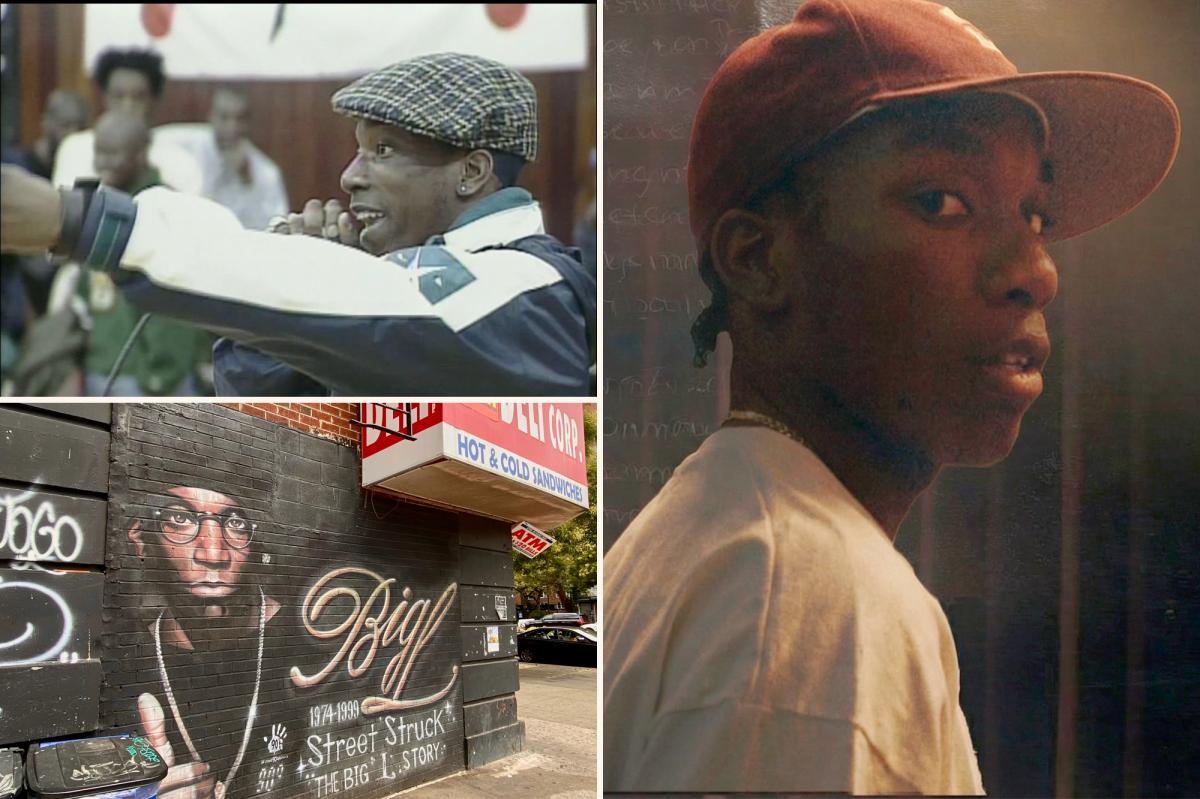
The mystery of who gunned down legendary Harlem rapper Big L nearly 30 years ago might finally be solved, the family told The Post this week.
Lamont Coleman was shot and killed in his prime in a Feb. 15, 1999, drive-by shooting on the corner of West 139th Street and Lenox Avenue — the gritty spot prominently featured in his rhymes. He was just 24.
Since then, two more members of Coleman’s immediate family have also been killed in a two-block radius of where he was fatally blasted nine times.
Lamont’s childhood friend Gerald Woodley was arrested three months after the murder, but later released due to lack of evidence.
The family insisted this week there is more to the story and they will be telling it in a new documentary, “The Parable of Lamont Coleman,” due to come out before the end of the year.
The film chronicles the decades-long web of relationships and betrayals around the enigmatic “Lifestylez ov da Poor & Dangerous” rapper, whose songs like “Flamboyant” “M.V.P.” and “Danger Zone” made him an underground hip-hop sensation
“Everything will be answered,” Big L’s brother Donald Phinazee told The Post.
“For the first time, my family’s true story will be told, and it will be shocking,” he added.
There are never-before-seen home videos, unreleased footage, and new testimony that challenges the old narratives and will finally tell the complex story around Big L’s death.
Where it will be shown will be announced at a later date.
The family did not shy away from saying the Big L was a product of his environment.
“Lamont was no saint,” Phinazee admitted.
Leroy “Big Lee” Phinazee, Big L’s older half-brother, was a leader of the notorious Harlem street gang known as the 139th St. NFL Crew, according to a 2017 book titled “Ethylene: The Rise and Fall of The NFL Crew.”
NFL, or “N—-z For Life,” was known for extreme violence, drug trafficking and allegedly involved in dozens of murders and was often mentioned in Big L’s lyrics.
Before Big L’s murder, Phinazee was imprisoned for a probation violation when he sought revenge on three rival gang bangers — Including Woodley. He allegedly contracted a Brooklyn-based hitman, and tasked his little brother, Big L, with identifying the targets, according to the book.
Leroy’s street ties led cops to believe Big L’s murder was a retaliation for his brother’s actions or possibly a case of mistaken identity.
“It’s a good possibility it was retaliation for something Big L’s brother did, or Woodley believed he had done,” said a spokesperson for the NYPD.
Woodley was gunned down in 2016 at the same intersection where Lamont was murdered.
On his first album, “Lifestylez” Lamont immortalized this stretch around West 139th Street and Lenox Avenue as the ”Danger Zone.”
In 2002, Leroy was 33 when he was shot and killed just two blocks away from where Big L was gunned down. His son, also named Leroy Phinazee and known as “Little Lee,” was shot and killed in 2019 on the same streets. He was 29.
Their mother died in 2008.
“My mother died of a broken heart,” said Phinazee, who remembered only good things about his famous brother.
Coleman was raised in Harlem by his mother Gilda “Pinky” Terry, alongside his older step-brothers, Donald and Leroy.
“People have an idea of what Harlem is like, but no one really knows besides the people who lived there,” said Phinazee. “There were good times — basketball, music, parties.
“My mother loved Earth, Wind and Fire, The Temptations.
“She bought us this little DJ machine, and we went crazy with it. Lamont got so good he started doing freestyle battles … he won this trophy — it was bigger than him.”
In 1985, Phinazee took his then 11-year-old brother to a Run-DMC concert.
“Lamont was mesmerized and after that, all he wanted to do was rhyme.”
Coleman’s focus was on his music, even later competing with superstar Jay-Z in rap rhyming competitions, ending with J-Z being so impressed by Big L that he wanted to sign him to his Roc-A-Fella record label, which later became Roc Nation.
“His talents had no limits, his potential was infinity,” said Phinazee.
Read the full article here