


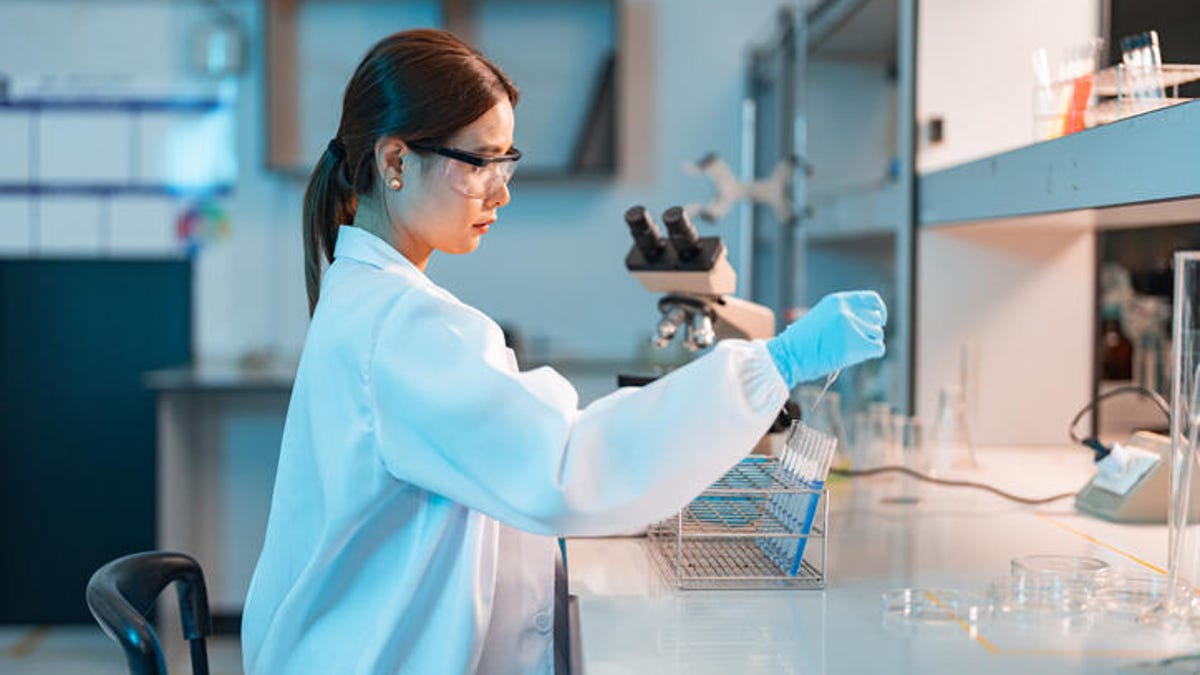
OpenAI’s latest AI model is built to do far more than offer cooking advice or create a spreadsheet. GPT-Rosalind, the company’s first model specifically built for life science, is meant to help scientists with drug discovery, biology and translational medicine.
The model is named after Rosalind Franklin, whose research revealed the structure of DNA and formed the foundations for modern molecular biology. Scientific research relies heavily on data, and GPT-Rosalind is designed to help sort through it, while also helping reduce the time it takes to develop and get new drugs approved and out on the market.
(Disclosure: Ziff Davis, CNET’s parent company, in 2025 filed a lawsuit against OpenAI, alleging it infringed Ziff Davis copyrights in training and operating its AI systems.)
It can take 10 to 15 years for a new drug to be developed and approved in the US, OpenAI said in a blog post Thursday. GPT-Rosalind is intended to improve the selection of research targets and create stronger hypotheses for higher-quality experiments.
The model has been tested on topics such as its understanding of organic chemistry, proteins and genetics. Researchers can use it to find relevant scientific literature for their work or design experiments.
This isn’t the first time an AI model has been developed with medical advancements in mind. Google DeepMind has developed many AI models for scientific research, such as AlphaFold, which earned its creators a share of the 2024 Nobel Prize in Chemistry.
“For me, the best use case for AI was to improve human health and accelerate scientific discovery,” Google DeepMind CEO Demis Hassabis said in a recent interview. Anthropic introduced Claude for Life Sciences in January with the same purpose.
Some scientists have expressed concerns in the past about how quickly AI has infiltrated the science space and have warned of vulnerabilities, potential misuse and issues with data representation.
OpenAI said GPT-Rosalind has safeguards to protect it from misuse — like the creation of a biological weapon — and has teamed up with various biotechnology, pharmaceutical and life sciences technology organizations to support research and scientific discovery.
Sean Bruich, senior vice president of artificial intelligence and data at the biopharmaceutical company Amgen, said in a statement that scientific work requires precision: “Our unique collaboration with OpenAI enables us to apply their most advanced capabilities and tools in new and innovative ways with the potential to accelerate how we deliver medicines to patients.”
GPT-Rosalind is available only through OpenAI’s trusted-access system as a research preview.
Read the full article here