


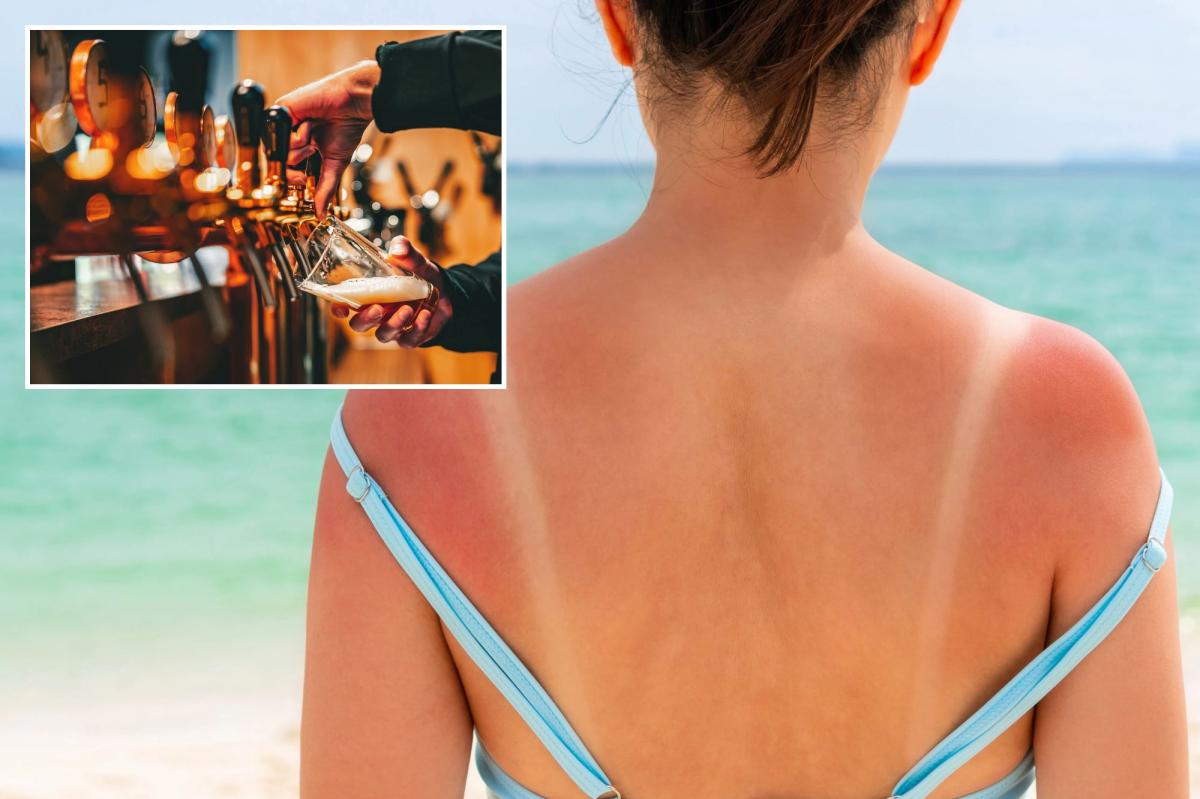
Something exciting is brewing in the skincare world.
A new study suggests that a byproduct of beer production could make sunscreens more effective at blocking harmful ultraviolet B rays, which are responsible for sunburns.
The finding could be significant, as studies have shown that many products on store shelves don’t deliver the level of protection they claim.
Just last week, a Consumer Reports analysis of more than 100 sunscreens found that a majority delivered average Sun Protection Factor (SPF) levels well below what was listed on their labels.
At the same time, concerns are mounting over whether some of the chemicals used in sunscreens could pose risks to human health and the environment.
In search of an alternative, scientists in Brazil are exploring whether “spent hops” could serve as a natural, eco-friendly additive that could help sunscreen better block harmful UVB rays.
Hops are the green, cone-shaped flowers of the Humulus lupulus vine, used as a bittering, flavoring and stabilizing agent in beer.
They’re added at different stages during brewing, first while the liquid base, known as wort, is boiled, and sometimes later in a step called dry hopping to boost smell and flavor.
But not everything in those hops gets used. Even after brewing, a large share of their natural compounds remains in the leftover plant material.
That waste is usually thrown out — but it turns out it’s packed with bioactive compounds, including some powerful antioxidants that earlier research has shown can protect against UV damage.
To test the idea, researchers added an extract made from spent hops to a water-based sunscreen formula and found it increased the product’s SPF from about 54 to 178.
All of the testing was done in a lab rather than on human skin, so you probably won’t be slathering on hop-powered sunscreen anytime soon. Still, the researchers say the findings suggest that the beer-making byproduct could be a target for future research.
“For this idea to reach the market, further studies and validations are needed, such as the long-term stability of the sunscreen, standardizing the bioactive compounds, and clinically evaluating safety and efficacy,” André Rolim Baby, one of the coordinators of the study, said in a press release.
While you wait, there are still steps you can take to protect yourself as temperatures begin to rise nationwide.
In general, dermatologists recommend SPF 30 for daily use. When applied correctly, it filters out about 97% of UVB rays.
For longer periods of sun exposure, SPF 50 may offer additional protection.
If you’re planning to swim or do any activity that leads to heavy sweating, reach for a water-resistant sunscreen.
The FDA recommends applying 2 milligrams of sunscreen per square centimeter of exposed skin. In practical terms, experts say that’s roughly a shot glass’s worth for an average adult’s mostly bare body.
Sunscreen should be applied about 15 minutes before going outside and reapplied at least every two hours.
Still, surveys show most Americans don’t use sunscreen regularly or correctly.
And that can come back to burn them.
Over time, unprotected UV exposure causes significant, cumulative damage, including sunburn, premature aging, dark spots and skin cancer.
In fact, five or more sunburns more than double the risk of melanoma, the deadliest form of skin cancer.
This year, the American Cancer Society estimates that about 112,000 new cases of melanoma will be diagnosed in the US, and 8,510 people are expected to die from the disease.
Read the full article here