


Negotiators from Hungary and the European Commission are making a final push to reach an agreement on the release of frozen EU funds ahead of a key deadline.
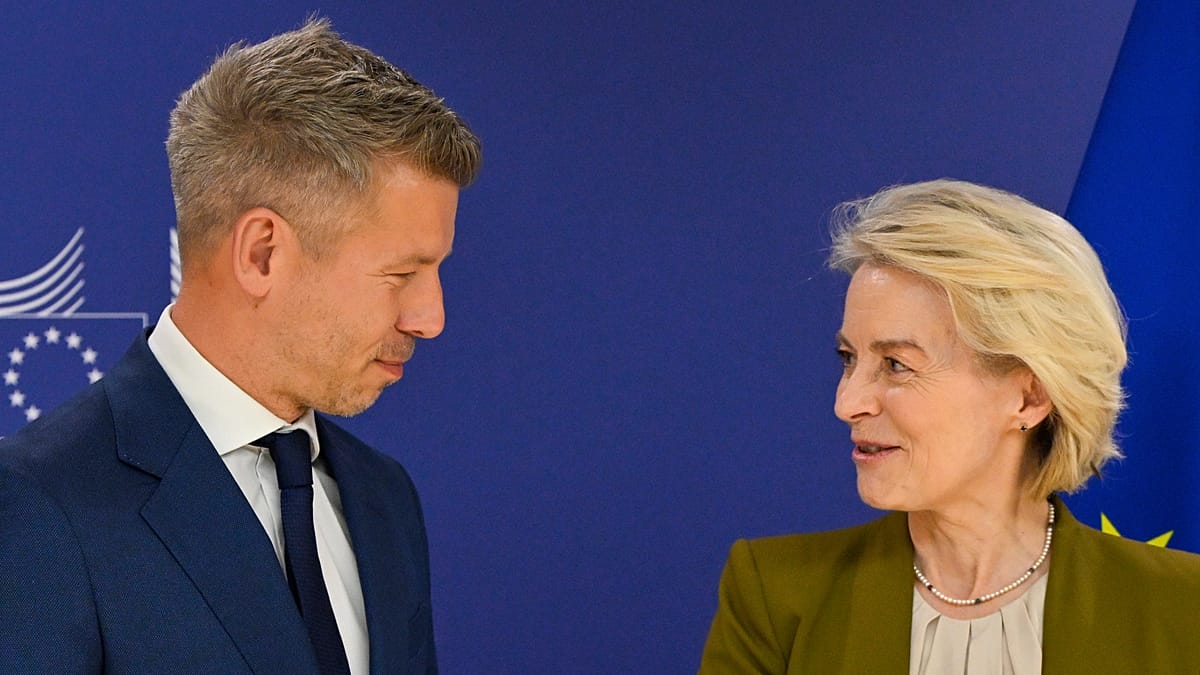
Hungarian Prime Minister Péter Magyar is due to meet European Commission President Ursula von der Leyen on Friday at 13:00 for talks aimed at signalling a new chapter in relations between Hungary and the EU.
Magyar won April’s general election, bringing an end to Viktor Orbán’s 16-year rule. During his time in office, Orbán frequently blocked EU decisions, while Brussels withheld €17 billion in funding over concerns about corruption.
Magyar’s last-minute push for EU funds
Several members of Magyar’s government held talks with Commission officials on Thursday on securing €10.4 billion from the EU’s post-pandemic Recovery Fund. Hungary risks losing part of the funding if it fails to meet the end-of-August deadline.
“I don’t want to say it too loudly, but we are now very close to an agreement,” Magyar said in a Facebook video released on Thursday, while acknowledging that some issues remain unresolved.
He said he would discuss the remaining points directly with von der Leyen on Friday. According to Magyar, agreement has already been reached on conditions relating to the governance of public-interest foundations and extending the mandate of Hungary’s anti-corruption body, the Integrity Authority.
On issues involving constitutional questions, he asked the Commission to show flexibility.
It remains unclear how much funding Hungary will ultimately secure. The Commission has urged the Hungarian delegation to focus on the €6.5 billion in non-refundable grants available through the recovery package, rather than the €3.9 billion loan component. Hungary has already received €919 million in advance payments from the fund.
“I will obviously not anticipate or prejudge the outcome of the meeting. But a series of meetings has taken place between both teams in order to make as much progress as possible,” European Commission spokeswoman Paula Pinho told journalists.
Magyar is also seeking to unlock as much funding as possible from cohesion funds allocated to Hungary. Meeting the same conditions attached to the Recovery Fund could release €4.3 billion, while a further €2.5 billion depends on more politically sensitive reforms, including changes to anti-LGBTIQ+ legislation, asylum rules and the restoration of academic freedom.
By abandoning the recovery loan and the politically sensitive cohesion funding, Magyar could secure around €11 billion of the total €17 billion currently frozen. However, his ambitions may go further. In a televised interview last weekend, he said recovering all of the funds might not be realistic, but that he intended to fight for “every penny”.
The Commission and Magyar’s team have also discussed whether Hungary could replace earlier reform commitments on taxation and pensions with alternative measures. Hungary still needs to submit a revised national recovery plan.
Ukraine and Russian energy also on the agenda
In his social media video, Magyar said the issue of unblocking EU funds was unrelated to Ukraine. Under Orbán’s government, Hungary had blocked the start of EU accession talks with Kyiv.
“These negotiations are not connected in any way with the issue of Ukraine, the war or gender issues. They were primarily about fighting corruption and bringing money to Hungary,” Magyar said.
Nevertheless, Ukraine’s accession talks form part of the broader discussions between Hungary and Brussels, as does the EU’s push for member states to end their dependence on Russian oil and gas from next year. Magyar’s government opposes the move and wants to continue importing Russian energy until 2035.
“Both leaders are free to raise whichever issues they wish, so we will have to wait and see. But the topics you mention are clearly of major importance for both the EU and Hungary,” Pinho said.
EU Enlargement Commissioner Marta Kos has said she expects Hungary to lift its veto in June, allowing Ukraine’s accession negotiations to move forward.
Magyar’s government has indicated it would drop its objection if Ukraine restores the educational and language rights of the Hungarian minority living there. Bilateral talks between Budapest and Kyiv on the issue are ongoing.
Read the full article here