


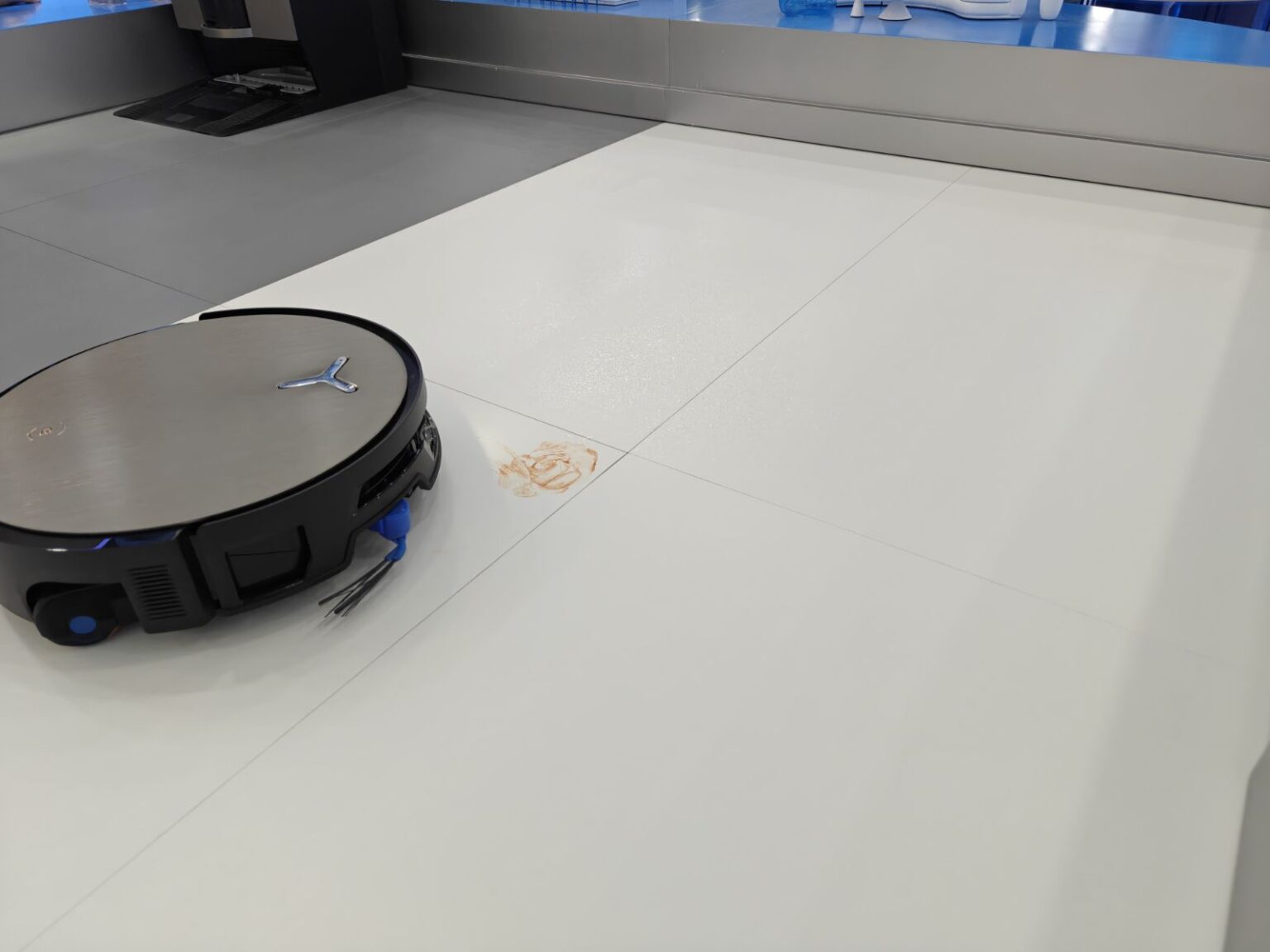
Ecovacs makes some of the best robot vacuums we’ve tested here at CNET, and for a long time, their unique combo T90 Pro Omni was our top choice for its incredible versatility. The new Ecovacs Deebot X12S OmniCyclone is a bit more iterative than its predecessor, the X12, but it makes key improvements to tackle dust mites and allergies while keeping the water jet that the previous model used to loosen stains. I got to see it in action and…well, let’s just say, there are some parts of the concept that could use some work.
The dust mite removal on the other hand, is something I’m very interested in and I could see a real use for it in my house with three asthmatic cats.
“A dust mite allergy isn’t something you just get over. You clean around it,” said Michelle Jones, associate brand marketing director at Ecovacs Americas. “Most robots skim the top of a carpet. We built the X12S to get down to where the dust actually sits.”
The X12S was tested by the SGS Testing & Control Services Singapore and, in testing, removed an average of 97.44% of dust mite allergens and 95.45% of dust mites from carpet. Ecovacs points out that dust mites live in soft material, especially carpet. Since carpet is underfoot, it traps dust mites and allergens deeper in the pile that a conventional robot vacuum can’t reach.
This might sound niche, but as someone who has three asthmatic cats and occasionally seasonal allergies, I’m interested to see if it lives up to the testing claims. The feature sounds similar to Anker’s new Omni E35, which also claims the ability to remove 99% of dust mites and has Asthma and Allergy Foundation of America certification.
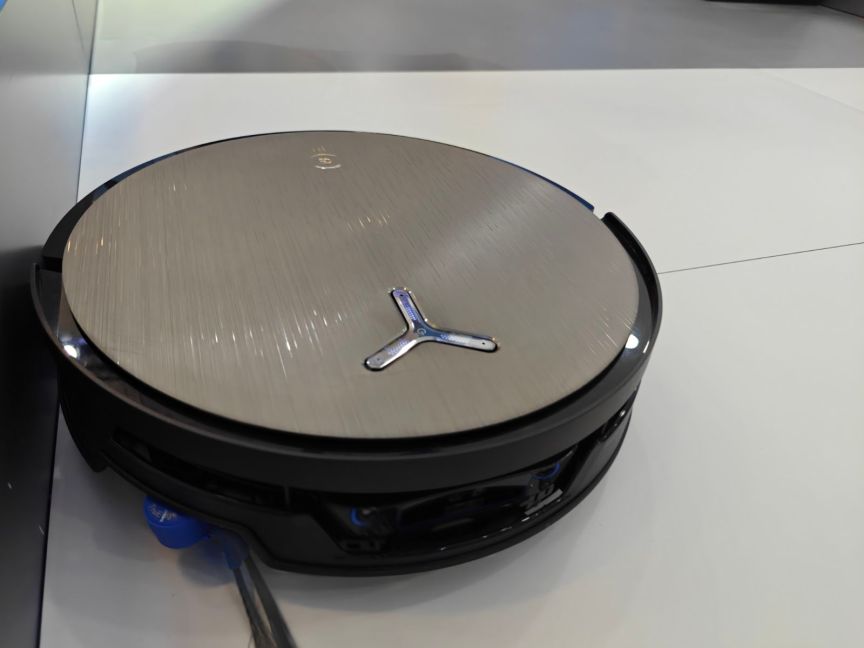
The X12S also has 53 air watts of effective suction, 60% more than the previous-generation X12; Ecovacs claims this gives it handheld-vacuum-level cleaning power, which I’ll be interested to see if that is true in CNET’s lab testing.
You may not want to count on the spray for removing stains
The OZMO Roller 3.0 is self-washing, as is increasingly common among robot vacuums from different manufacturers, so the roller keeps refreshing itself with clean water. Reprising its role from the previous generation is the FocusJet stain spray, which shoots water to loosen and break up older and dried-on stains — this is another feature we’ve seen other manufacturers adopt after Ecovacs showed it off on the X12 earlier this year.
I watched the X12S Omnicyclone steadily mop the test area after the demonstrator squirted a bit of ketchup onto the white tile. The robot didn’t seem to notice the stain at first. It continued its slow and steady mopping pattern, until finally the sensors spotted the ketchup. The sprayers started up and it doused the general area of the stain, but there was just one problem — it didn’t make contact with the stain at all.
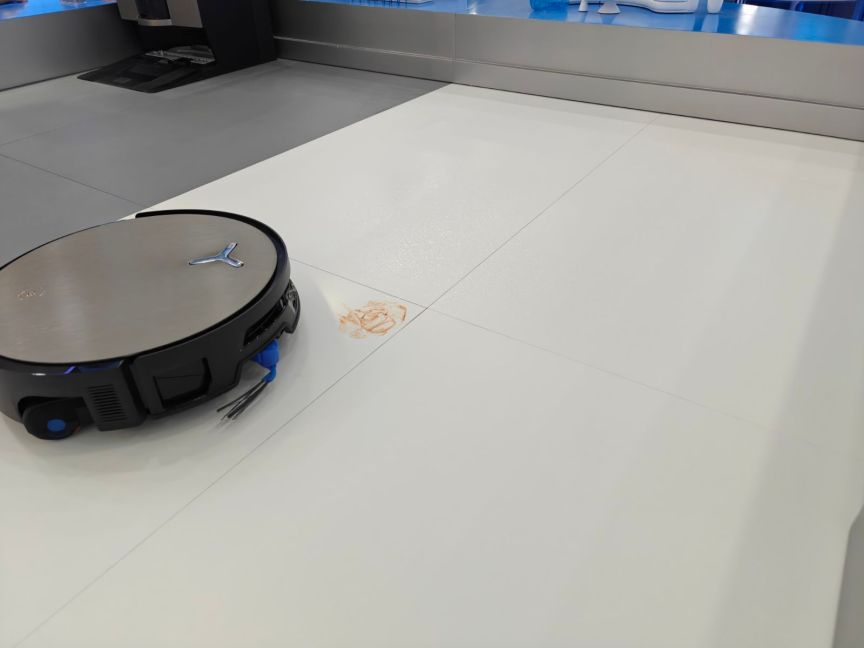
The Omnicyclone actually completely overshot the stain with the spray, dousing a good chunk of tile beyond where the ketchup actually was. It was still about to remove the ketchup by going over it with the roller mop, which uses fresh water for each cleaning, but the spray itself didn’t really contribute anything. This may have just been bad luck, so I don’t want to write the system off entirely, but a demo environment like this is really as ideal as it gets for a robot vacuum.
You have a situation here where the X12S has a small, very well-mapped area to clean, great bright lights, and the ideal floor type. The spray really shouldn’t be missing the mark like that. I also noticed that the robot had to get pretty close to the ketchup on one of its passes before it registered and acknowledged it. The fact that it then missed the spray entirely tells me that whatever AI or algorithm the robot is using to calculate the spray force, distance, and quantity is way off.
The good news is that this sounds like it could be a software fix rather than a hardware issue, but it’s not a promising problem to have arise if you’re looking for a reliable cleaner that gets the job done hands-free.
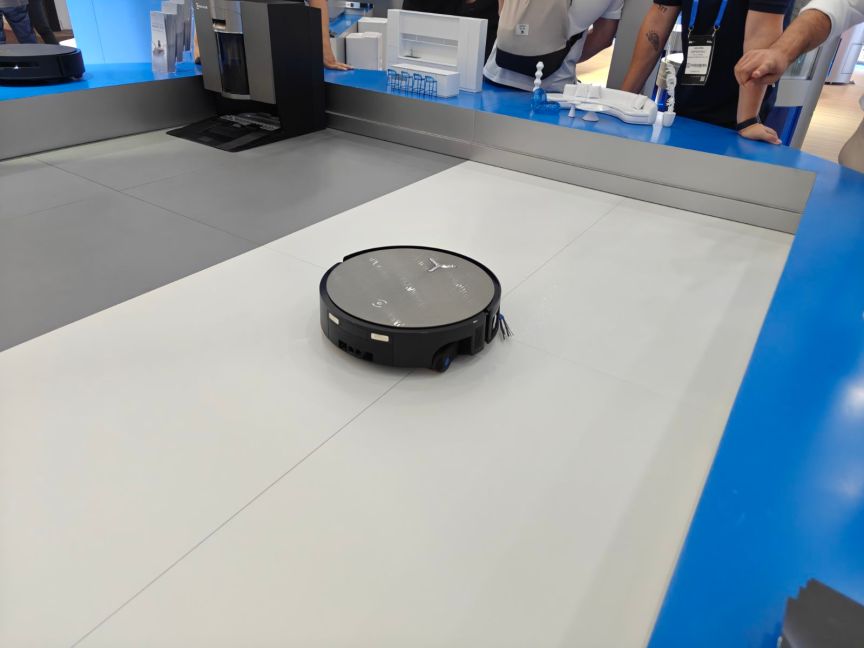
The rest of the cleaning system carries over from the X12, including the 15-millimeter auto-mop lifting and the Mop Roller Smart Cover, which keeps the mop clear of the carpet. It has AIVI 3D 4.0 dual obstacle avoidance, which pairs camera vision with 3D laser sensing to navigate cluttered rooms. There’s also a 3D edge sensor to clean close to walls and baseboards without leaving gaps.
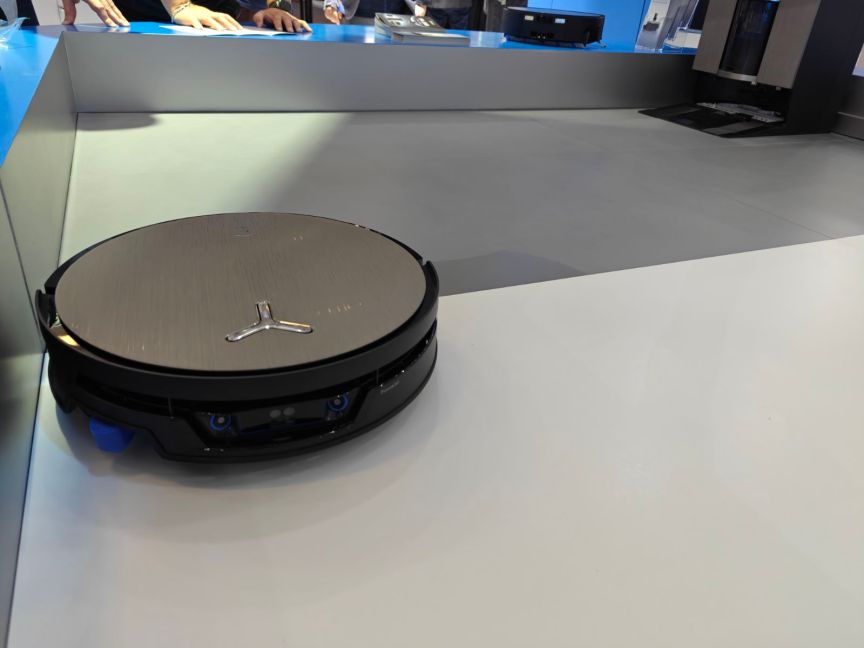
Interestingly, the X12S has a physical privacy shutter, not just software privacy. It covers the AIVI camera so you can be sure that when it’s closed, the lens is blocked.
“A cover you can see is easier to trust, because you can look at it,” Jones said. “As these robots take in more of the home, people will want to ensure they have their privacy.”
This is a first for robot vacuums, at least with the ones I’ve seen, and it’ll be interesting to see if other companies choose to adopt it. Lastly, it comes with the fast-charging system we liked on the X12, which can top up the robot vacuum more quickly between mop-washing dock cycles.
Price and availability
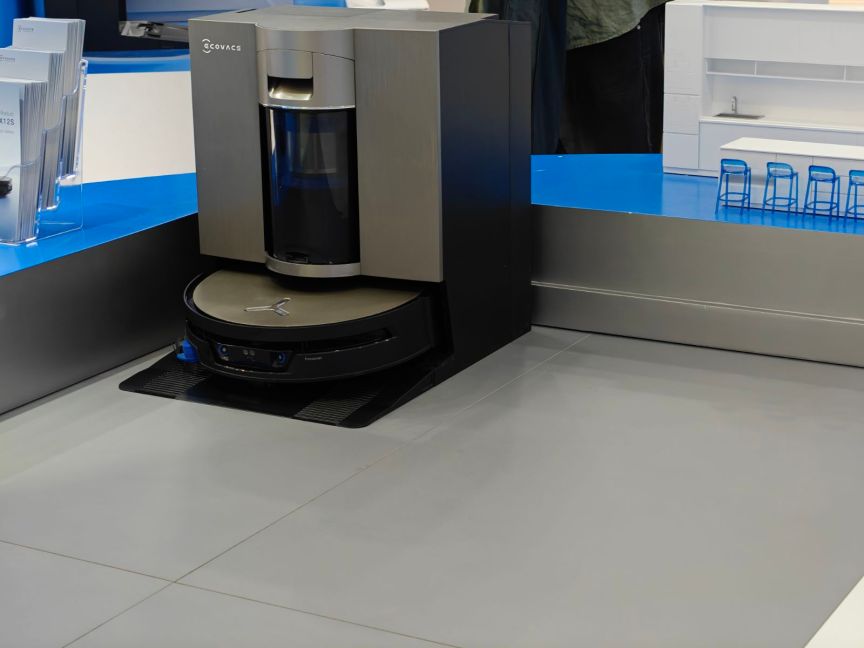
The Deebot X12S OmniCyclone is available in the United States at an MSRP of $1,300. Buyers can order it on Amazon or at ecovacs.com. From Sept. 4 through Sept. 11, an Amazon launch deal brings the price to $1,000.
Editors’ note: Ajay Kumar’s travel costs for the IFA conference were covered by Roborock. The judgments and opinions of CNET are our own.

See full bio
Read the full article here