


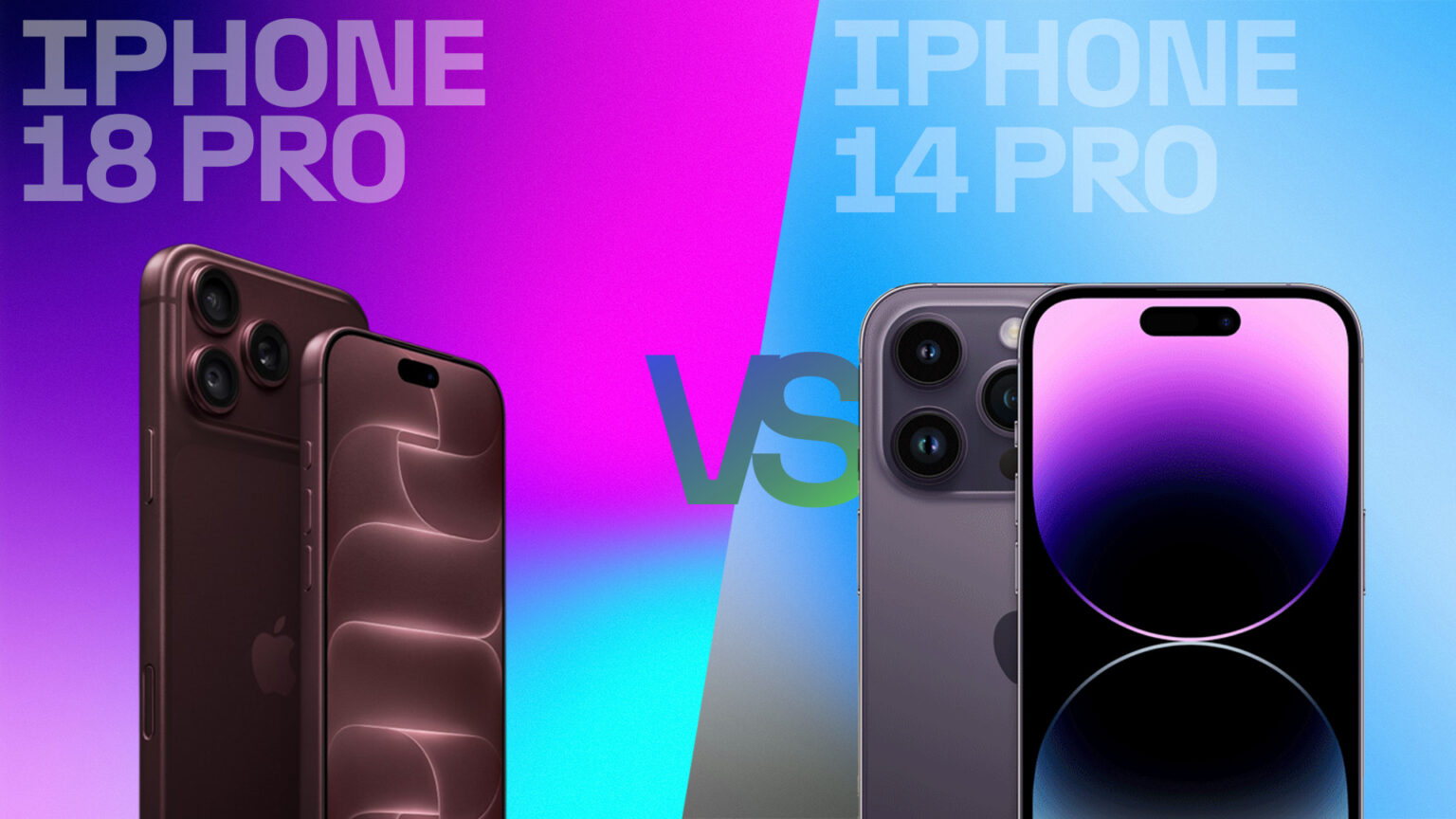
Apple has just announced its latest premium flagship, the iPhone 18 Pro, at the company’s recent Surprise and Shine event on Wednesday. With a starting price of $1,199, the iPhone 18 Pro has a few new features over its predecessor, such as a variable aperture camera and a faster A20 Pro chip. But that probably isn’t enough to prompt most people with an iPhone 15 Pro, 16 Pro or 17 Pro — all of which are still excellent.
If you’re still holding on to the iPhone 14 Pro, however, that’s another story. Not only has it been four years since that phone debuted, but it’s also the last Pro-level iPhone to have a Lightning connection; every iPhone since has a USB-C port. Lightning accessories and adapters still exist for now, but they’ll eventually be harder to find. Meanwhile, USB-C is a lot more ubiquitous.
Beyond moving on from older hardware and aging batteries, upgrading to the iPhone 18 Pro is also a leap forward in terms of specs and features. Some things remain the same, but there are a lot of upgrades too. Four years make a pretty big difference in the phone world.
Here’s a more detailed breakdown outlining the difference between the iPhone 14 Pro and the iPhone 18 Pro.
Design and display
Display-wise, the 14 Pro and the 18 Pro might seem rather similar. The iPhone 14 Pro has a 6.1-inch Super Retina XDR OLED display with a 120Hz refresh rate, while the iPhone 18 Pro has a slightly bigger 6.3-inch OLED display, also with a 120Hz refresh rate. Both also have 460ppi.
There are a few notable differences, however. The iPhone 18 Pro does have 3,000 nits of peak brightness, while the iPhone 14 Pro has only 1,000 nits of peak brightness. The 18 Pro also features an upgraded Dynamic Island with additional features that can show three activities at once.
As for design, the iPhone 18 Pro has an action button and a camera control button on the side, adding additional functionality to the phone.
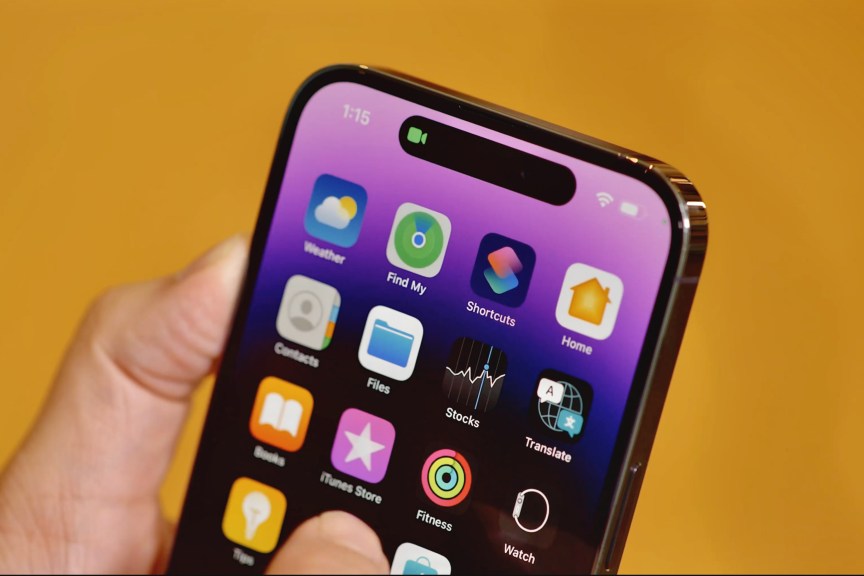
The Dynamic Island debuted on the iPhone 14 Pro (pictured), but is now able to show three different activities at once on the iPhone 18 Pro.
Celso Bulgatti/CNET
Cameras
The iPhone 18 Pro represents a pretty significant upgrade in the camera department, especially over the iPhone 14 Pro. The iPhone 14 Pro has three rear cameras: a 48-megapixel wide, a 12-megapixel ultrawide and a 12-megapixel telephoto. This was pretty advanced at the time, but Apple has added a lot of new camera features in the years since
The iPhone 18 Pro has three rear cameras, which are all 48 megapixels across the board. It also has a variable aperture, which offers additional flexibility, especially when shooting in low-light conditions.
The same goes for the front-facing camera. While the iPhone 14 Pro has a 12-megapixel camera, the iPhone 18 Pro has an 18-megapixel one. On top of that, the 18 Pro has the Center Stage capability introduced with the iPhone 17 models that automatically switches between portrait and landscape orientations without needing to rotate your phone.

Battery and performance
While Apple doesn’t disclose official battery specs in the US, we can surmise that the iPhone 18 Pro does have improved battery life over the iPhone 14 Pro. According to Apple, the iPhone 18 Pro delivers up to 36 hours of video playback per charge, while the iPhone 14 Pro has just 23 hours of video playback per charge. The iPhone 18 Pro has wireless charging of up to 25 watts, while the iPhone 14 Pro has MagSafe charging of up to 15 watts.
Another huge leap between the two phones is in the performance department. While the iPhone 14 Pro ships with the A16 Bionic chip, the iPhone 18 Pro ships with the A20 Pro processor, which should result in faster apps, smoother multitasking and a superior gaming experience.
Getting the iPhone 18 Pro is also a good option if you’re considering a phone with more storage. While the 14 Pro maxes out at 1TB of storage, the 18 Pro is available in a 2TB variant. You’ll have to pay a high cost for it ($2,399 retail), but at least it’s available if you want it.
To further compare the iPhone 18 Pro and the iPhone 14 Pro, check out the comparison chart below.
Apple iPhone 18 Pro vs. Apple iPhone 14 Pro
| iPhone 18 Pro | iPhone 14 Pro | |
| Display size, tech, resolution, refresh rate | 6.3-inch OLED, 2,622×1,206 pixels, 120Hz refresh rate | 6.1-inch Super Retina XDR OLED display; 120Hz Adaptive Refresh Rate; 2,556×1,179 pixels |
| Pixel density | 460 ppi | 460 ppi |
| Dimensions (inches) | 5.9 x 2.3 x 0.3 in | 5.81 x 2.81 x 0.31 in. |
| Dimensions (millimeters) | 150 x 71.9 x 8.75mm | 147.5 x 71.5 x 7.85mm |
| Weight (grams, ounces) | 211 g (7.4 oz) | 206g (7.27 oz) |
| Mobile software | iOS 27 | iOS 16 |
| Camera | 48-megapixel (wide), 48-megapixel (ultrawide), 48-megapixel (telephoto) | 48-megapixel (wide), 12-megapixel (ultrawide), 12-megapixel (telephoto) |
| Front-facing camera | 18-megapixel | 12-megapixel |
| Video capture | 4K at 60fps | 4K at 60 fps |
| Processor | A20 Pro | Apple A16 Bionic |
| RAM + storage | RAM N/A + 256GB, 512GB, 1TB, 2TB | RAM NA; 128GB, 256GB, 512GB, 1TB |
| Expandable storage | None | None |
| Battery | Up to 24 hours | Undisclosed; Apple claims 23 hours of video playback |
| Fingerprint sensor | None (Face ID) | None (Face ID) |
| Connector | USB-C | Lightning |
| Headphone jack | None | None |
| Special features | Apple N1 wireless networking chip (Wi-Fi 7 (802.11be) with 2×2 MIMO), Bluetooth 6, Thread. Action button. Camera Control button. Dynamic Island. Apple Intelligence. Visual Intelligence. Siri AI. Dual eSIM. 1 to 3,000 nits brightness display range. IP68 resistance. Colors: black, silver, glacier, burgundy. Fast charge up to 50% in 20 minutes using 40W adapter or higher via charging cable. Fast charge up to 50% in 30 minutes using 30W adapter or higher via MagSafe Charger. | Dynamic Island; Always-On display; 5G enabled; MagSafe; water resistant (IP68); wireless charging; dual-SIM capabilities (e-SIM) |
| US price starts at | $1,199 (256GB); $1,399 (512GB); $1,799 (1TB); $2,399 (2TB) | $999 (128GB), $1,099 (256GB), $1,299 (512GB), $1,499 (1TB) |

See full bio
Read the full article here