


Published on
The European Commission stepped up pressure on China on Thursday, calling for tangible results with Beijing following a one-hour video call between Trade Commissioner Maroš Šefčovič and his Chinese counterpart, Wang Wentao.
The EU executive hopes to secure commitments from Beijing to rebalance the trade relationship, as the bloc’s trade deficit with China has been widening by €1 billion a day.
However, Beijing wants to secure access to the EU’s market of 450 million consumers, resisting calls from the Europeans to reduce its exports.
“While genuine engagement remains a priority, it is equally important that first concrete outcomes are delivered at the second session of the Trade and Investment Council in Beijing in October, which the Commissioner will co-chair – a signal that we are moving from rhetoric to results,” the Commission said in a statement after the call.
“That outcome needs to be credible,” the statement added.
The EU-China Trade and Investment Council was launched in June as a dialogue between the two sides, with the Commission setting October as a deadline to reach tangible results.
During the call on Thursday, Šefčovič and Wentao discussed market access on both sides and Chinese export controls on rare earths.
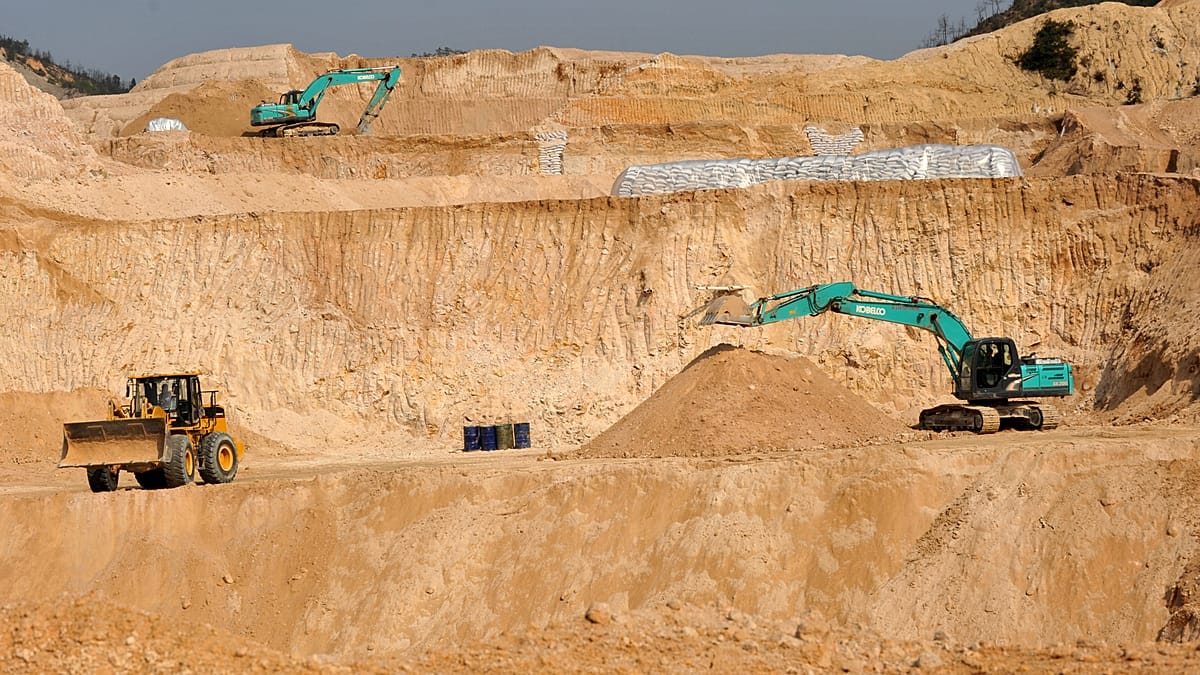
China has a near-monopoly over the production and processing of these strategic materials, which are essential to the EU’s green technology, defence and automotive industries, giving Beijing significant leverage in the negotiations.
The EU is seeking assurances that China will not halt its exports of rare earths again, a year after blocking them amid a trade war with the US. Securing the necessary export licences is essential for EU businesses.
EU leaders expect results
The coming weeks will be crucial for the negotiations, with EU officials expected to make another trip to China for technical discussions before Šefčovič himself travels to Beijing on 8–9 October.
In her State of the Union address to MEPs on Wednesday, European Commission President Ursula von der Leyen also pushed for concrete results in the EU-China talks.
“Words are good. But deeds are better,” she said, making clear that the EU was ready to use all its trade defence instruments to rebalance the trade relationship.
China is also expected to feature prominently on the agenda when EU leaders meet in October. They have tasked the Commission with securing tangible results from its dialogue with Beijing.
In an interview with Euronews, Šefčovič also made clear that, without a “deliverable” to present to EU leaders,“the political interest would be to look for the solution through other instruments.”
The EU has several trade defence instruments such as anti-dumping duties or tariffs against unfair subsidies.
A diversification tool is also in the pipeline, aimed at reducing EU firms’ reliance on Chinese critical minerals for strategic technologies by helping them diversify their sources of supply.
Such a move would come as relations between Beijing and Brussels remain strained, following the Commission’s introduction of several legislative proposals aimed at protecting the EU market. One of them would introduce a European preference for products made in Europe, prompting China to threaten retaliatory measures.
Last summer, China also urged its companies to stop cooperating with the Commission in antitrust investigations, after the EU executive opened a probe in May into e-commerce giant JD.com over concerns about subsidies.
Read the full article here