


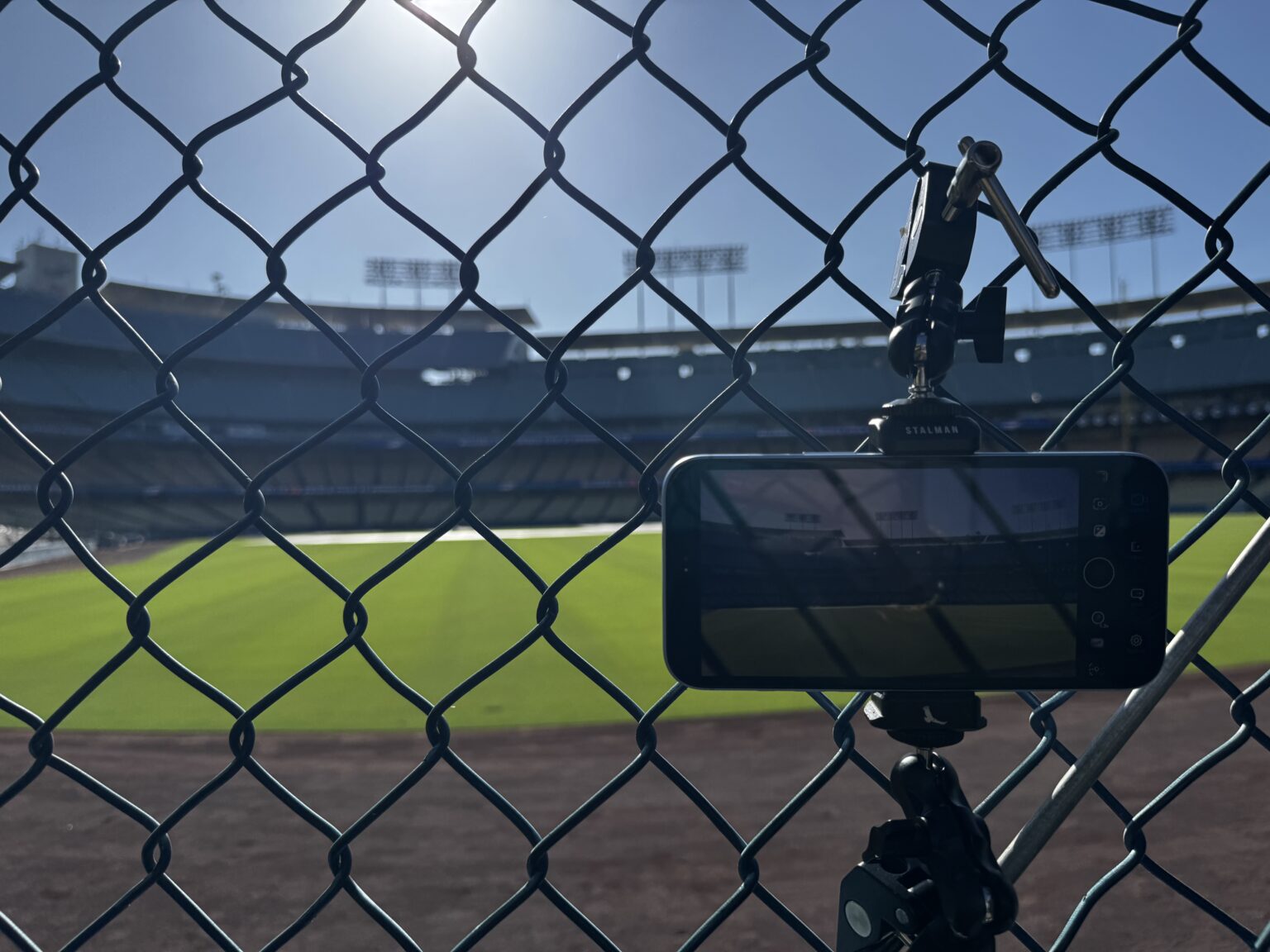
It was a beautiful night for a ballgame last Friday at Dodger Stadium in Los Angeles — and some of the footage seen by viewers at home came right out of the phone in their pockets.
That’s the iPhone 18 Pro Max in their pockets, if they happened to be one of the serious fans who bought one when it went on sale Friday. Apple’s latest iPhones have video upgrades with physical aperture blades and new modes, which fans watching the Dodgers take on the San Francisco Giants saw for themselves: Out of the 30 cameras shooting footage of the game, 14 were iPhone 18 Pro Max units.
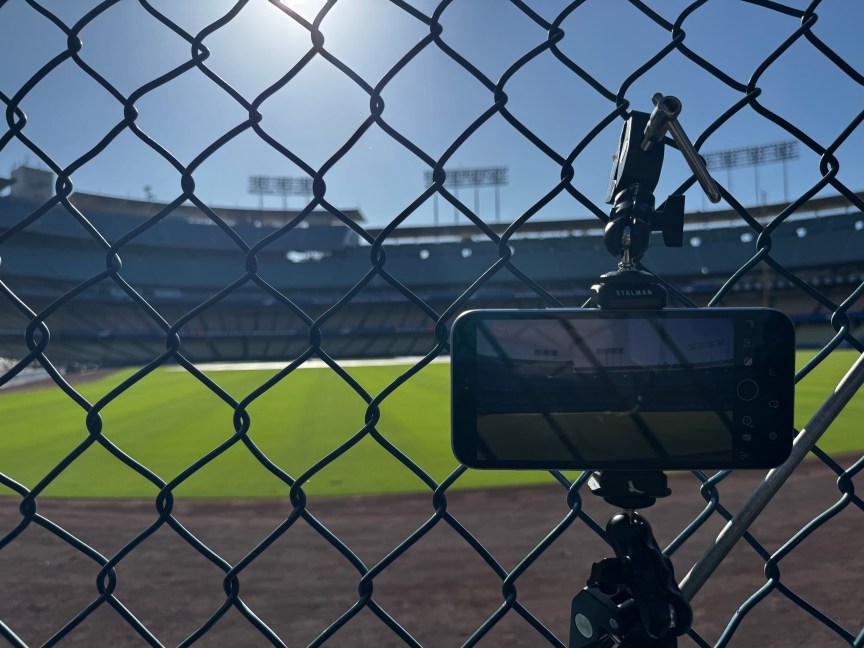
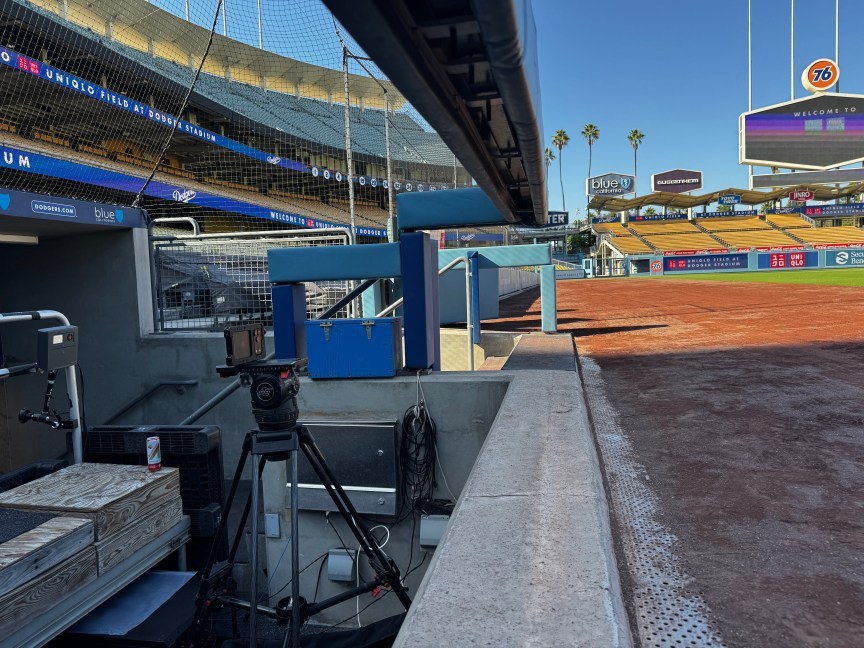
Ahead of the game, Apple brought members of the media, including me, to Dodger Stadium to see the setup, which would record footage for Apple TV Plus’s final broadcast of the Friday Night Baseball game. As soon as I stepped from the stands out onto the field, I found the first of these iPhones on a tripod just inside the dugout, pointed at the field. Considering the phone had only been released to the public that morning, it didn’t surprise me that the phone case for mounting it on the tripod read “iPhone 17 Pro Max.”
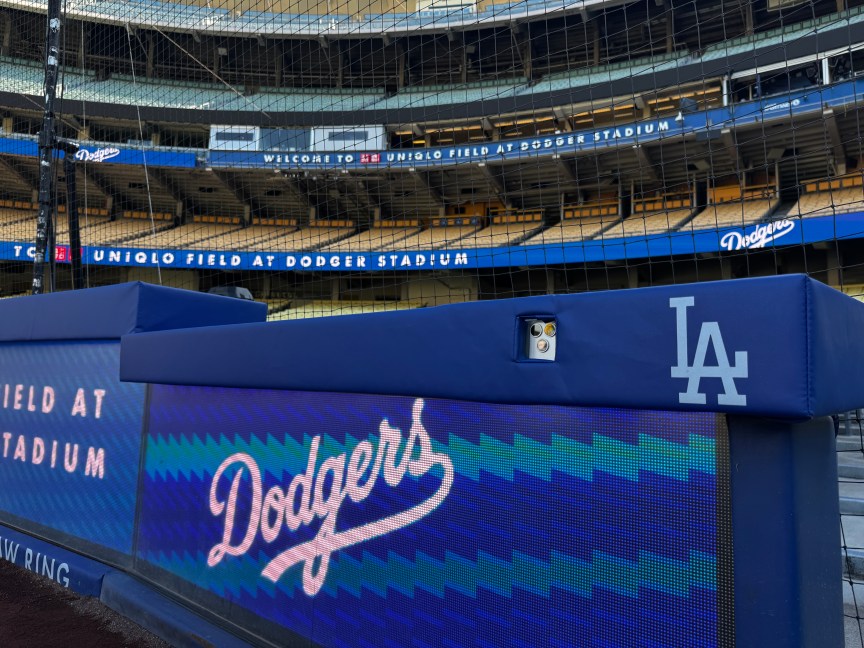
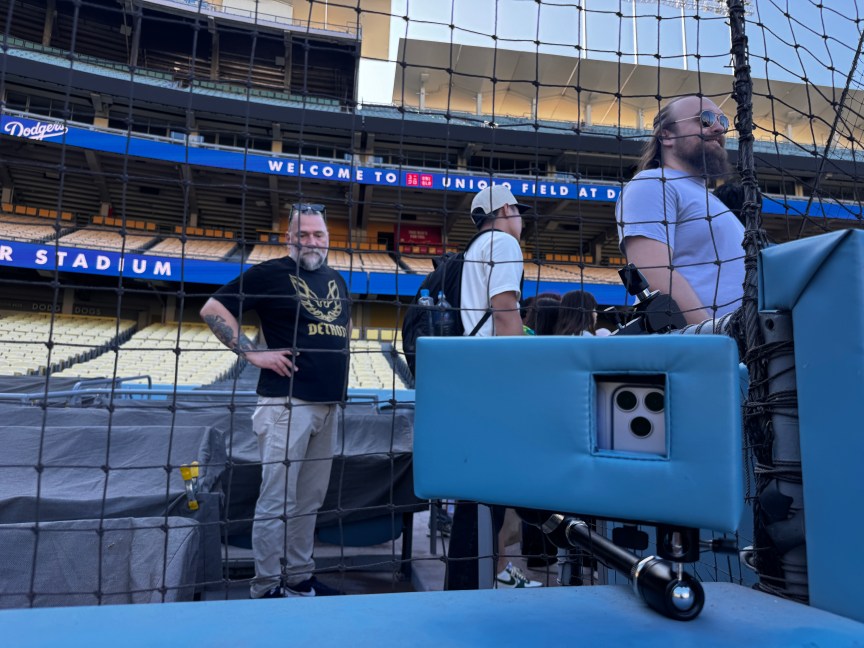
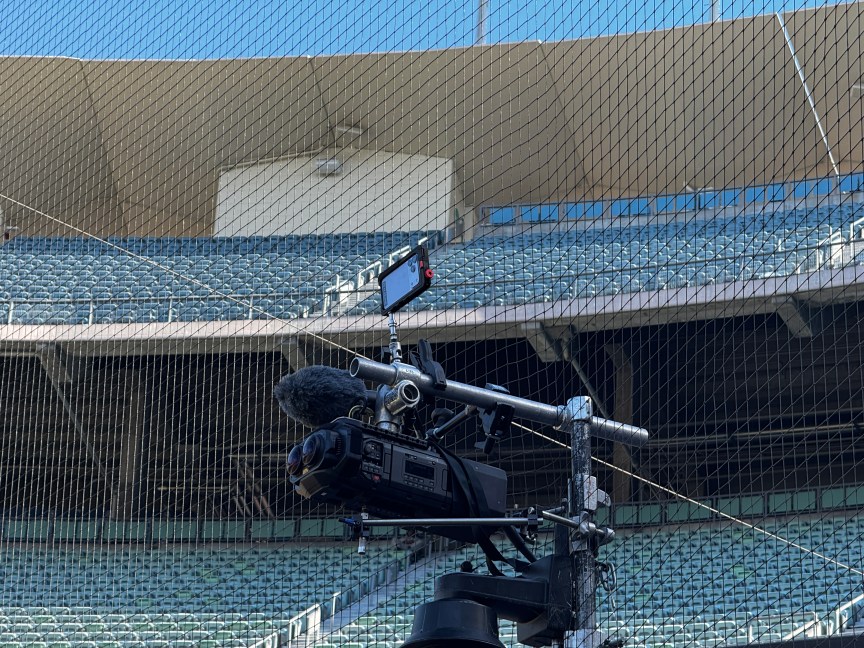
Our tour continued behind the home plate, where iPhones were slotted into custom-made, heavy padding on the backstop and perched above the tower of pitch clock cameras. Others were placed in the visitors’ dugout, posted on the right-field foul pole and positioned toward the field from either team’s bullpens.
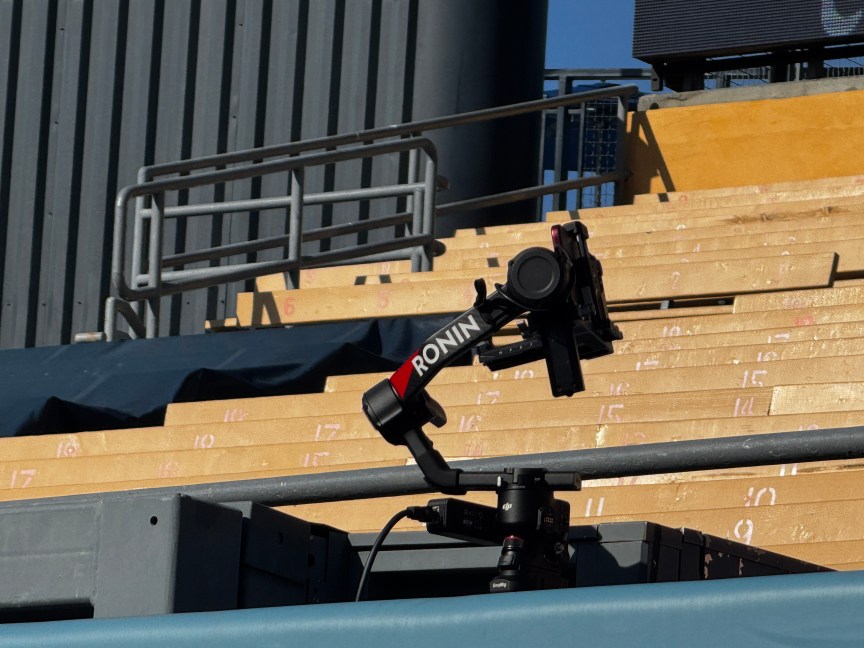
One perched on the wall above right-center field was on a gimbal, nicknamed “the robo” and manually controlled from the broadcast center, was positioned to capture outfielders rushing to the wall and reaching over to rob home runs. And one was carried out in the stands to get live fan reactions during the game.
Apple had its first live iPhone-shot broadcast of a Major League Soccer game back in May, but around half of the fifteen iPhone 17 Pro Max units were bolted onto large, professional-grade telephoto lenses. At Dodger stadium, all the iPhone 18 Pro Max units are shooting from their lenses alone. It’s a way to show off the differences in video capabilities on the premium phones, especially under the challenging conditions of night-time baseball games that start in daylight and end under stadium lights, explained Dylan Ashbrook, director of content and brand development for Apple Sports.
“The new 48MP Fusion Main camera gives us even more versatile video capabilities, and the variable aperture on the Main camera gives us another tool for managing exposure in-camera, giving us more control over the look of the game as conditions change,” Ashbrook said.
Apple didn’t go into detail on the sixteen other cameras that shot the game, but presumably, they were conventional cameras with powerful telephoto lenses to capture plays up close. But the iPhones were chosen to capture angles that those hefty cameras couldn’t — because unlike them, nine of the iPhone 18 Pro Max units weren’t connected by cable wire to pipe in their live footage to the broadcast center. They sent it over wireless 5G — in the middle of the game.
Live-streaming footage over 5G for a professional MLB broadcast
While five of the iPhones sent their footage through fiber cable to the broadcast center, nine sent theirs over a private 5G network, which T-Mobile set up ahead of the game. Apple tested the network and was confident there wouldn’t be any latency — in theory, it would be able to switch to any of the 14 iPhones around the stadium at any time.
Not needing a bulky cable to send broadcast footage freed up Apple to place the iPhones in many more locations. That behind-the-plate setup only required Apple to get specially made backstop cushions (which met MLB safety standards) with small slots to slide an iPhone 18 Pro Max into, rather than arduously rebuilding the whole setup with wire connections. Not needing wires also enabled the free 360-degree movement of the gimbaled setup on the outfield wall.
It also means most of Apple’s setup for the game is intentionally temporary. When I asked the company’s representatives touring us around the field why they hadn’t put up an iPhone on the left-field foul pole, they noted that they could easily switch around the layout for the next game — including adding more gimbaled iPhones on the outfield wall, which they’re particularly excited about.
There’s one downside to the freedom of wireless iPhones: They won’t be plugged in to charge while they’re shooting video, which often drains the battery quickly. Since the iPhone 18 Pro Max units were shooting in 4K (which was later scaled down to 1080p in the broadcast center), and were streaming their footage to the broadcast center over 5G wireless, I was concerned about whether they’d last a whole game. While recent rule changes have shortened baseball games (last year’s average was around 2 hours and 40 minutes, according to MLB.com), that’s still a long stretch of continuous video.
Yet when I asked, Apple wasn’t worried. It was confident the iPhone 18 Pro Max units would last the whole game, no problem. (That’s also confidence that the phones wouldn’t overheat while recording video; temperatures topped out around 82 degrees F the day of the mid-September game).
Apple’s likely right to feel secure that the iPhone 18 Pro Max wouldn’t run out of battery while shooting the games. The company never gives out exact capacities for the batteries on its iPhones, but has said that its latest and biggest phone should get last 30 hours on a full charge. In his review, CNET Director of Content Patrick Holland got about a day and a half of casual use before hitting 0% on the battery, and on a more intensive day of use, had 14% charge left just before midnight.
I caught some of the game’s broadcast on Apple TV Plus, and while most of the broadcast stuck with the views that most viewers are familiar with (and were likely shot by conventional cameras) like looking over the pitcher’s shoulder toward the batter and bleacher-positioned zoom-ins on big plays, I did notice some iPhone footage snuck in there.
Some of these were vantages at the field level of players and pitchers locked in to the game, but the biggest screentime came from the iPhone wandering around the stands getting the true fan experience. For viewers at home, this was definitely a new vantage from the seats they wished to be in, surrounded by jovial comrades adorned in Dodger blue.

See full bio
Read the full article here