


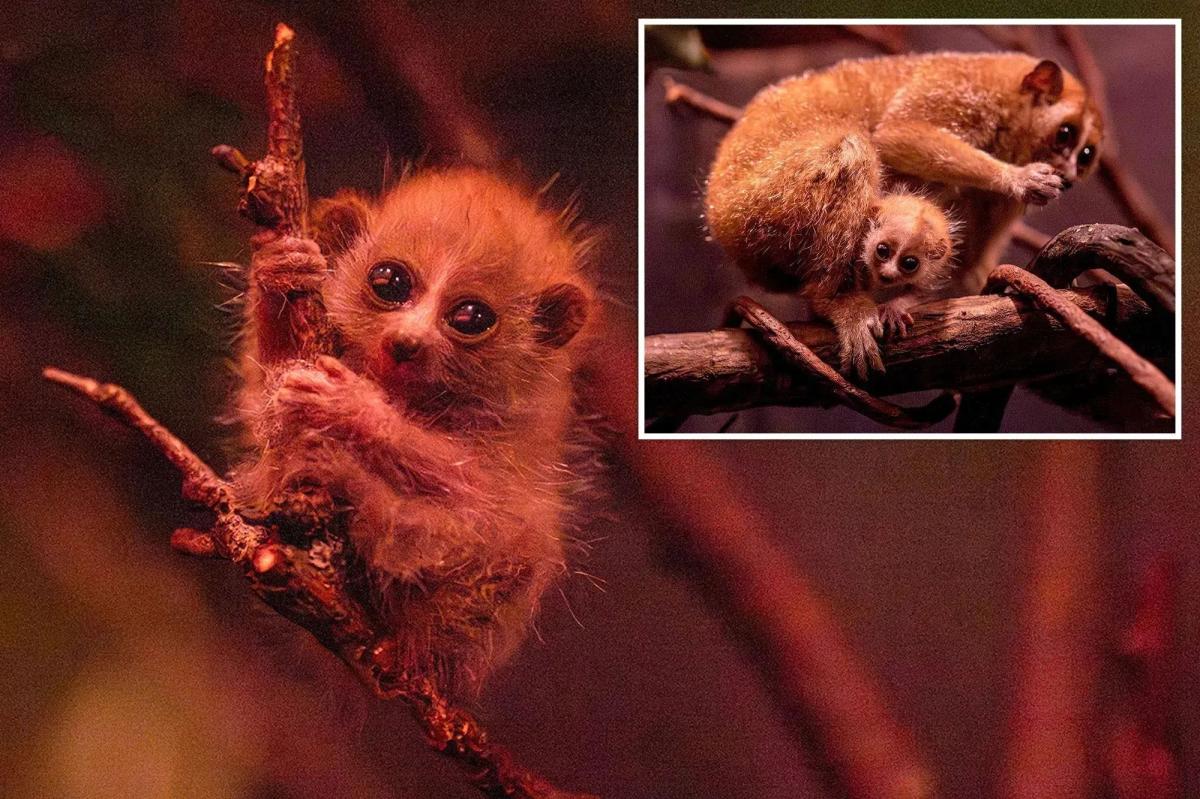
It’s a baby only a mother could love.
A rare wide-eyed pygmy slow loris — with eyes as big as its ears and a sleep cycle that would drive even the most patient parents bonkers — has become the first primate born at the Bronx Zoo’s new exhibit for nocturnal animals.
The Dec. 13 birth of the little critter in the “World of Darkness” section was just announced by proud-papa zoo reps — who warned fans not to take its photo using a flash because of the species’ sensitivity to light.
“The baby will become more active and independent as it grows, becoming fully weaned around 6 months of age,” the zoo said in a statement.
“Due to the pygmy slow loris’s sensitivity to light, the Bronx Zoo requests that visitors kindly resist taking disruptive flash photographs.”
Slow lorises are born with their full fur and eyes open, the zoo said. The pint-sized primates only reach an adult weight of about a pound — or a little more than a loaf of bread.
The new Bronx baby has yet to be named — because zoo workers don’t even know if it’s a boy or girl yet.
“Bronx Zoo animal care staff will determine the baby’s sex at its first veterinary exam,” the zoo said.
The zoo’s shadowy World of Darkness exhibit spotlights more than two dozen rare and unusual nocturnal animals across 21 habitats, from two-toed sloths to vampire bats.
The pygmy slow loris is native to southeast Asia and is considered to be endangered under the International Union for Conservation of Nature’s Red List of Threatened Species.
Habitat loss and poaching for the illegal pet trade are prime reasons for the species’ “rapid decline,” the zoo said.
The unnamed newborn is part of a Species Survival Plan program aimed to maintain the global pygmy slow loris population.
The zoo’s special nocturnal exhibit opened in July after a more than a 16-year hiatus.
The first World of Darkness exhibition opened at the Bronx Zoo in 1969, serving as the first first major zoo exhibit to feature nocturnal animals in a “reverse light cycle” so visitors could watch the nocturnal world during the daytime.
The zoo is open daily under a winter schedule from 10 a.m. to 4:30 p.m. through April 1.
Read the full article here