


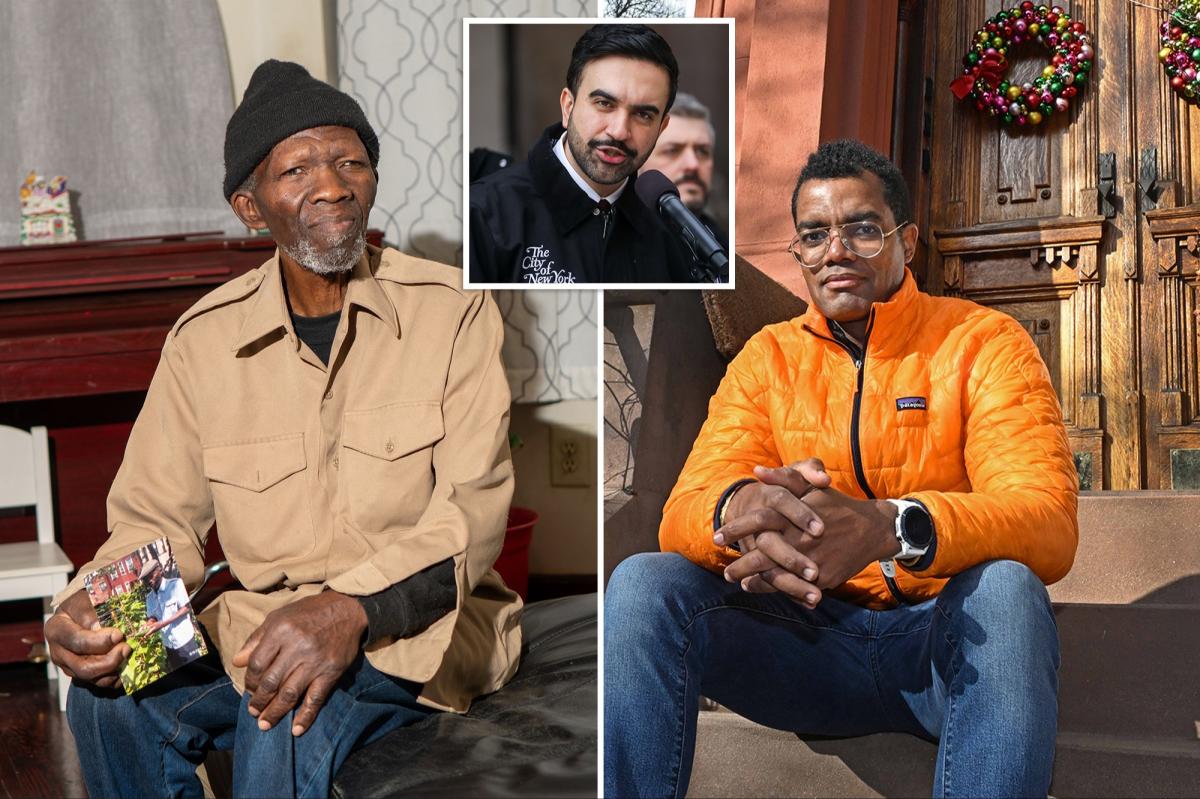
Black homeowners are fuming over Mayor Zohran Mamdani’s threat that he’ll raise their property taxes by nearly 10% — with some telling The Post it could force them out of New York City.
“Mayor Zohran Mamdani you are out of your goddamn mind,” Cambria Heights resident James Johnson seethed.
Critics like Johnson, 35, a Democratic City Council candidate and an activist for the predominantly black and working class Queens neighborhood, argued the proposed tax hike was a whiplash-inducing departure from Hizzoner’s campaign promise that only the ultra wealthy would see their taxes go up under his administration.
“You screamed affordability. You ran on it. You said affordability, affordability, affordability … And the first thing, not even three months into your administration, into your term. You wanna hit us with a 9.5% property tax increase? Not happening.”
Mamdani revealed the whopping 9.5% property tax increase pitch last week, as he unveiled his record $127 billion preliminary budget proposal for next year. He framed the proposal as a “last resort” for raising revenue if Albany and Gov. Kathy Hochul refused to approve the income tax hike he wants on New Yorkers making $1 million or more.
“There’s this narrative that the governor is going to tax the rich. You tax the rich, this is gone … But the problem with that is that you are giving only two options,” Johnson said, noting higher property taxes would squeeze Big Apple residents whether they rent or own.
“You’re saying if we don’t tax the rich, then I got to increase property taxes. There were many, many, many other options to make sure that things were affordable,” he said.
Johnson was one of around 30 homeowners who joined the “Hands Off Our Homes” rally on Thursday to push back against the mayor’s plans.
Some at the rally said the proposal would hurt lower income New Yorkers to the point they may be forced to sell and leave the city.
“You keep raising the taxes, you’re gonna run us out of here. Where are we gonna go?” said 62-year-old Darryl Smith, also of Cambria Heights.
“Mayor, you came here with a good talk, but you’re not walking the good walk.”
Nadine Morency Mohs, 47, a Cambria Heights resident and broker, said plainly: “This is not the solution.”
“Southeast Queens is home to many African American families, and they worked hard to acquire their homes. They saved, they worked overtime so they could purchase their homes and build equity,” she said.
“These are their forever homes, and to increase these property taxes on these homeowners who are already surprised by these high cost utility bills. The water went up, the gas went up, and the light bill went up. Now property taxes. What exactly are we doing here?”
Fellow resident Oscar Brian said communities like Cambria Heights were built in the headwinds of the 1960s civil rights struggle, and that higher taxes could unmake decades of hard-fought progress.
“What it took for us to build this community, as we mentioned before: cross burnings, KKK marches, and things that we had to go through to create this community that we had. We’re not gonna stand by and let it be a political point and endanger losing those things,” he said.
“Keep your hands off our houses, keep your hands off our community.”
Advocates and politicians have also warned that the Democratic socialist’s plan to plug a $5.4 billion budget gap by hiking taxes on property owners would hit communities of color and the working class the hardest.
“We cannot be raising property taxes 9.5% on the backs of small property owners, small business owners, black and brown communities throughout our city,” City Council Speaker Julie Menin said on NY1.
Queens Borough President Donovan Richards called the property tax hike a “non-starter.”
“Under no circumstance should we consider balancing our budget on the backs of working-class New Yorkers, especially seniors on fixed incomes and workers who keep our city running,” he said.
“New Era shouldn’t price out black and brown New Yorkers,” Richards added, referring to Mamdani’s “inauguration of a new era” tagline for the launch of his mayoralty.
Brooklyn Borough President Antonio Reynoso agreed: “This would only make an unfair system worse and hit black and brown communities hardest.”
The sentiment was similar among homeowners in the borough, particularly older residents or those on fixed incomes.
“It would affect us tremendously,” said Maria Garrett, 69, a retiree and part of the Fresh Creek Civic Association, which covers an area of 140 blocks, primarily composed of African-American and Caribbean homeowners in the Sea View Village of Canarsie.
“The people over here in my area, most of them now are older people who are retired… If this goes into effect, it’s going to have a huge impact on their income, because we are all on a fixed income,” she said.
Cecil Prince, who lives in Clinton Hill, said the cost of living in the neighborhood has gotten “way too expensive.”
He told The Post he worked “very hard” financially and physically to purchase his property in 1975 at a cost of around $200,000, but worried a property tax increase would drive him, and many others, out of the neighborhood.
“Where are people going to get all that money from? There’s no increase in wages. The people are struggling. They’ve got to work. The women have to take their kids to school. They’ve got to pay their car. Now they’ve got to pay property taxes,” Prince said.
“It’s too much. It’s too much,” Prince said he’d tell the mayor if he had his ear.
Mamdani even admitted his Plan B for closing the fiscal gap would hurt working class New Yorkers the most.
“What we are hoping for, what we will spend every day looking towards is working with Albany to increase taxes on the wealthiest and the most profitable corporations, such that a fiscal crisis is not resolved on the backs of working and middle class New Yorkers,” he said.
Mamdani similarly found himself in hot water with black New York City homeowners last month thanks to his radical-left tenant advocate, Cea Weaver, who framed property ownership as a “weapon of white supremacy” and said it should be abolished.
“Homeownership is an essential element of black wealth. It’s repugnant to attach yourself to policies that would look to devalue homeownership,” said Marlon Rice, who is running in the Democratic primary for the 25th state Senate District in Brooklyn.
Philip Solomon, 51, a Bedford-Stuyvesant brownstone owner, who previously slammed Weaver over the comments, said he hoped the city would take its time to look into how to implement such a tax increase.
“If I had to sit down with the mayor, I would say, ‘Mayor, the only thing I’m saying is, do your due diligence. See where you’re really going to get a benefit out of raising taxes. Leave the small, fixed-income, small property owners alone. Don’t hit them up,’” Solomon told The Post last week.
Cambria Heights resident Alicia Spears, 63, a committee advocate, said although raising property taxes nearly 10% “doesn’t make any damn sense,” the blame goes beyond Mamdani.
“No tax reform has been touched by elected officials for any kind of reform in the last how many years. So this doesn’t just fall on Mamdani only; this one falls on all of our officials,” she said, noting that residents are already struggling to make ends meet.
“We don’t have the basic service that we were paying for now,” she said. “We’re tired. We’re working ourselves to the bone here. We don’t have it.”
— Additional reporting by Craig McCarthy and Hannah Fierick
Read the full article here