
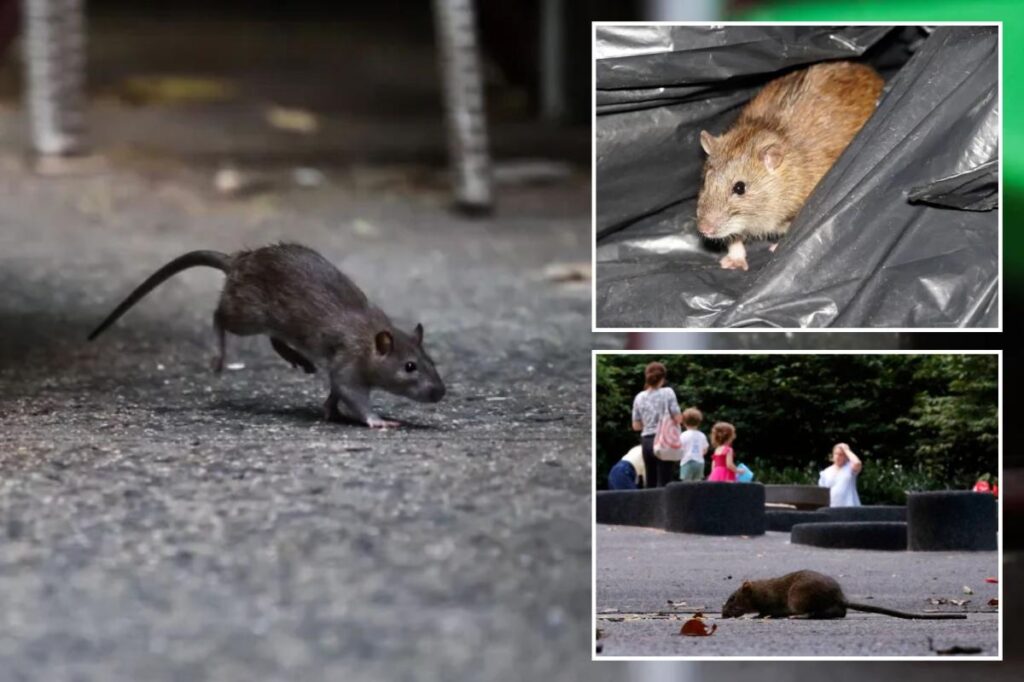
Exclusive | NYC ramps up war against rats with new, 14-day inspection rules after 311 complaints

News Room
5 Min Read

New York City’s war on rats is ramping up, with strict, new rules governing inspections of suspected rodent-infested properties.

The city Department of Health, in response to a new local law, is drafting the regulations requiring the agency to inspect a property within 14 days of receiving a complaint or request regarding a rat infestation.

Local Law 8 of 2026 also requires the health department to record specific information during each pass or fail inspection.

“The proposed rule would clarify how the Department determines whether a building passes or fails an inspection for rats, and specify the abatement measures the person in control of such building must take,” the rule states.

The law was authored by Brooklyn Councilwoman Susan Zhuang following constituent complaints that rat sightings were not promptly investigated.

“This bill begins with a constituent begging our office for help after she placed countless 311 rat complaints and never saw city agency inspectors come to respond to any call,” Zhuang said during a Dec. 4, 2025, hearing before the legislation was passed by the City Council and approved by then-Mayor Eric Adams.

“We all know one or several people who filed rats 311 complaints and never see an inspector,” she said.

“I’m happy to say we also included language to make sure if DOH cannot gain access in the first attempt, they must make a second attempt within 20 days.”

Zhuang said the legislation by itself is not a panacea, but added, “now, by law, our constituents’ calls for help must be answered.

“We need inspections to get to the bottom of this rat problem and end it for good.”

The DOH will hold a public hearing on September 14 before implementing the proposed rules.

City officials backed the measure, testifying last year that the health department’s average response time for 311 rat complaints was nine days.

Health inspectors must observe interior and exterior areas for active signs of furry fiends, including “tracks, fresh droppings, burrows, active runs, fresh gnawing and live rats seen,” the rules state.

Property owners must take steps to eliminate or curb rat infestations, such as sanitizing the premises, storing all garbage in hard plastic or metal containers with a tight-fitting lid and removing clutter and debris from yards and basements.

Other mitigation methods include sealing holes and cracks, pest-proofing doors, windows, vents and drains and hiring an exterminator licensed by the state Department of Environmental Conservation to inspect and treat rat infestations.

“However, taking any or all of such measures shall not be deemed a sufficient defense to a violation if the Department has observed any active sign of rats at the time of a compliance inspection,” the DOH rule states.

Fines range from $300 for a first violation, doubling to $600 for a repeat violation, $1,200 for a third violation, and up to $2,000 for four or more violations.

The Big Apple has made progress in its battle against rat, a priority of Adams’ administration with policies continuing under successor Mayor Zohran Mamdani.

According to recent city data, reported sightings of the persistent pests are on track to hit their lowest numbers since the COVID-19 pandemic for the first half of 2026 — as major anti-rodent measures are seeing positive results.

There were around 9,900 calls for rats in the first seven months of the year — marking the first time reports have fallen below the 10,000 threshold during that timeframe since 2020, according to 311 data.

Meanwhile, a new city policy requires New York buildings to replace trash bags with sealed containers to better secure scraps that are magnets for rats.

Conditions attracting rats include accumulation of trash and other material, the presence of cracks, gaps or holes in building exteriors or interiors, accessibility to food or water and unsanitary conditions, according to the DOH.

More than 70% of all trash is now required to be in sealed containers, the city Sanitation Department previously told The Post

Empire Bins were first introduced through a 10-block pilot program in 2023 in West Harlem to eliminate trash bags on curbs.

The program — which targets residential buildings with more than 30 units — was expanded throughout West Harlem’s Manhattan Community Board 9 by June 2025.

Mamdani wants to expand containerization citywide by 2032.

Read the full article here

Share This Article
Leave a comment

Leave a Reply

Your email address will not be published. Required fields are marked *