


Commuters in Los Angeles are going through hell. And there’s statistics to prove it.
Crime on Los Angeles Metro has risen a staggering 58% since 2019 – despite bureaucrats pumping $192 million into safety measures.
Crime has risen from 2,747 reported incidents in 2019, to 4,354 in September 2025, according to Metro data. The data during the COVID period and recovery is not included.
Metro recorded 286 aggravated assaults on buses and rail lines in In 2025 — up 38% from 2017’s 207.
Rider complaints logged through Metro’s Transit Watch app also repeatedly flagged the same problems: open drug use, smoking, alcohol, graffiti, harassment and disorder.
Over the course of a week, the Post confirmed what riders have been describing, witnessing homeless passengers unraveling, pacing the aisles while shouting or muttering to themselves.
Drug deals were conducted in the open, with some customers lighting up in public, filling the sealed train cars with smoke.
Crack pipes clattered across grime-slicked floors and the sour stench of sweat and urine soaked the seats.
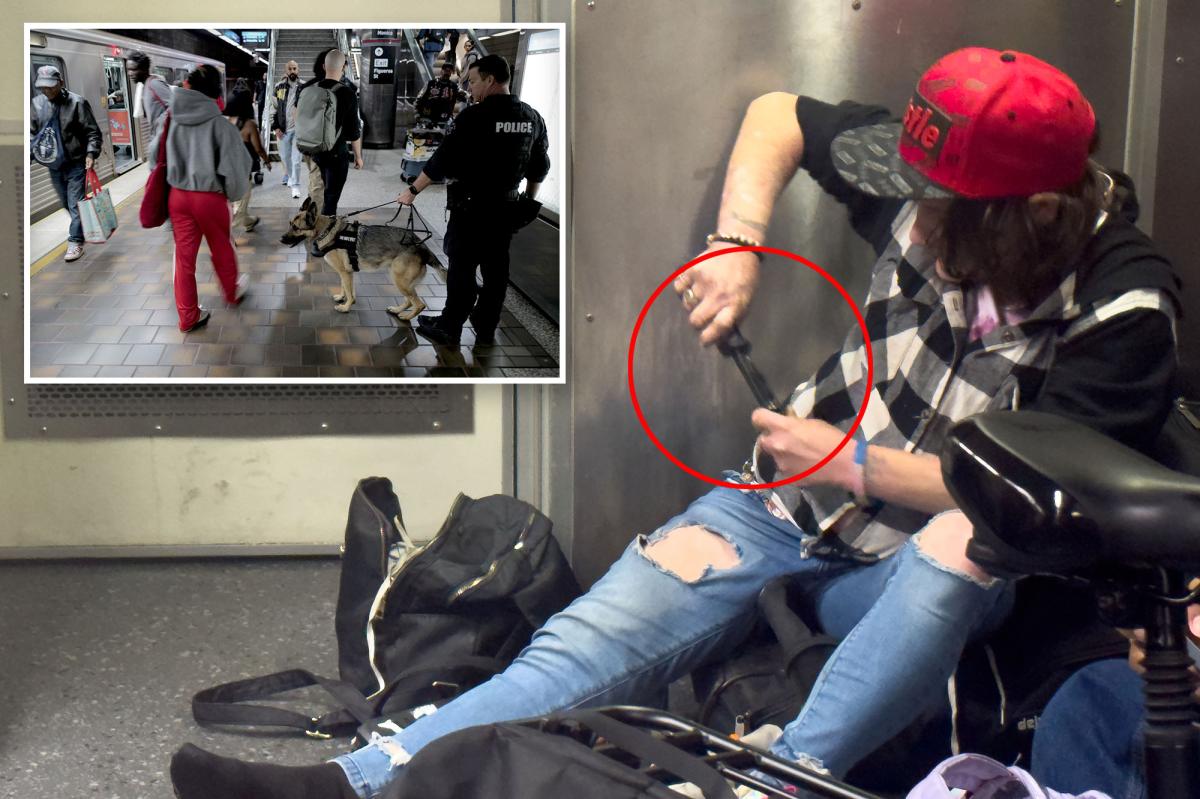
A woman even pulled a knife during one ride, waved it in the open car, before slipping the blade back into a holster and continuing on her journey like nothing had happened.
Security flickered into view — then disappeared, leaving passengers to fend for themselves.
“You can feel the energy change when someone boards in crisis. You don’t know what’s coming next,” said Malcolm Caminero, a USC journalism senior who interned in Glendale, spending up to three hours a day riding buses in 2025.
One night about 1 a.m., a man who missed his bus ran into traffic and began pounding his fists on the windshield, screaming to be let on, Caminero recalled.
“The driver just sat back,” he said, noting that police arrived roughly 20 minutes later, delaying the bus another half hour.
“I get that a lot of people are suffering and that the train is one of the only places they can be,” added another rider, Elissa Mardiney. “But that doesn’t make it safe.”
Sam Hill, who uses a wheelchair and relies on buses and trains daily, said she’s faced constant exposure to drug use, and has been followed off the Metro multiple times.
“Unfortunately, that isn’t unusual,” she said.
Her most frightening moment came while riding with family.
“There was a guy clearly on drugs swinging a knife at my stepfather,” Hill said. “He eventually walked away, but it took a while.”
The danger isn’t theoretical — and can turn lethal, at times.
In December, a dangerous brute who slit the throat of a passenger on the Metro B Line in a chilling, random attack was sentenced to life in prison.
Mirna Soza Arauz, 67, was riding into Universal/Studio City Station when 47-year-old Elliot Tramel Nowden pounced on her unprovoked in April 2024. She staggered onto the platform and died.
Violent crimes against people, instead of property or quality of life offenses, remain the most serious threat that riders face, according to Metro’s latest safety report.
There were 159 such crimes recorded in September, a 20% increase month over month, according to the report, the last crime data the agency has made public.
Those included 44 aggravated assaults, for a 61% spike and 29 robberies, marking a rise of nearly 29% from August to September. There were also 11 sex offenses and one reported rape that month.
Even Metro employees weren’t immune. Agency records show repeated assaults on operators — including spitting, punching, shoving, threats and attacks, including during passenger assistance.
Fare evasion was rampant — and enforcement limited. One sheriff’s deputy told The California Post deputies were no longer permitted to enforce TAP card violations, eliminating a tool that once led to arrests for outstanding warrants and the recovery of weapons and narcotics.
It comes as LA Metro has been overhauling its safety efforts — with major events like the World Cup and Olympics on the horizon — and continuing to pour hundreds of millions of taxpayer dollars into security each year with mixed results.
The Metro board in June 2024 approved the creation of its own Transit Community Public Safety Department -– with an estimated $192 million price tag.
It marked a sweeping restructuring meant to replace outside agencies like the LAPD, LA County Sheriff’s Department and the Long Beach Police Department with Metro’s own in-house force by 2029.
Previously, Metro relied on a patchwork policing model costing roughly $194 million annually, contracting armed patrols through those outside agencies.
The most recent shift came in January, when the agency rolled out a new “Care-Based Services Division” folding its Metro Ambassadors, homeless outreach and crisis-intervention teams into the new public safety department.
Metro leadership framed the rollout in a press release as a turning point, with Board Chair Fernando Dutra calling it “a significant step forward.”
CEO Stephanie Wiggins said the agency was trying to lead with “trauma-informed responses” as it moved toward building its fully operational police force.
Last year, the agency approved a $5 million budget amendment to convert Metro Ambassadors into direct employees, covering wages and benefits.
Wearing bright yellow jackets, the ambassadors circulate through stations and transit hubs alongside Metro Transit Security Officers and outreach teams. Their role remains non-enforcement: engaging homeless riders, distributing hygiene kits and offering basic assistance.
But the agency’s homeless outreach figures also expose the dead end at the center of that strategy.
Law-enforcement logs showed hundreds of contacts with homeless individuals across the system each month. The overwhelming majority refused services, as outreach teams made contact — then moved on.
Download The California Post App, follow us on social, and subscribe to our newsletters
California Post News: Facebook, Instagram, TikTok, X, YouTube, WhatsApp, LinkedIn
California Post Sports Facebook, Instagram, TikTok, YouTube, X
California Post Opinion
California Post Newsletters: Sign up here!
California Post App: Download here!
Home delivery: Sign up here!
Page Six Hollywood: Sign up here!
A Metro spokeswoman pointed out that violent crime had fallen 8% in the first 11 months of 2025, compared to the same time period in 2024 — touting it as a win.
“Nothing Metro is working on is more important than addressing public safety on our system,” the agency said.
“We are making tangible improvements that help us attract and retain new weekend and event riders, contributing to the establishment of a new culture of transit in Los Angeles.”
Read the full article here