


Published on
•Updated
Following tense negotiations among the 27 member states, Commission President Ursula von der Leyen on Thursday pushed the signature of the contentious Mercosur agreement to January to the frustration of backers Germany and Spain.
The trade deal dominated the EU summit, with France and Italy pressing for a delay to secure stronger farmer protections, while von der Leyen had hoped to travel to Latin America for a signing ceremony on 20 December after securing member-state support.
Without approval, the ceremony can no longer go ahead. There is not set date.
“The Commission proposed that it postpones to early January the signature to further discuss with the countries who still need a bit more time,” an EU official told reporters.
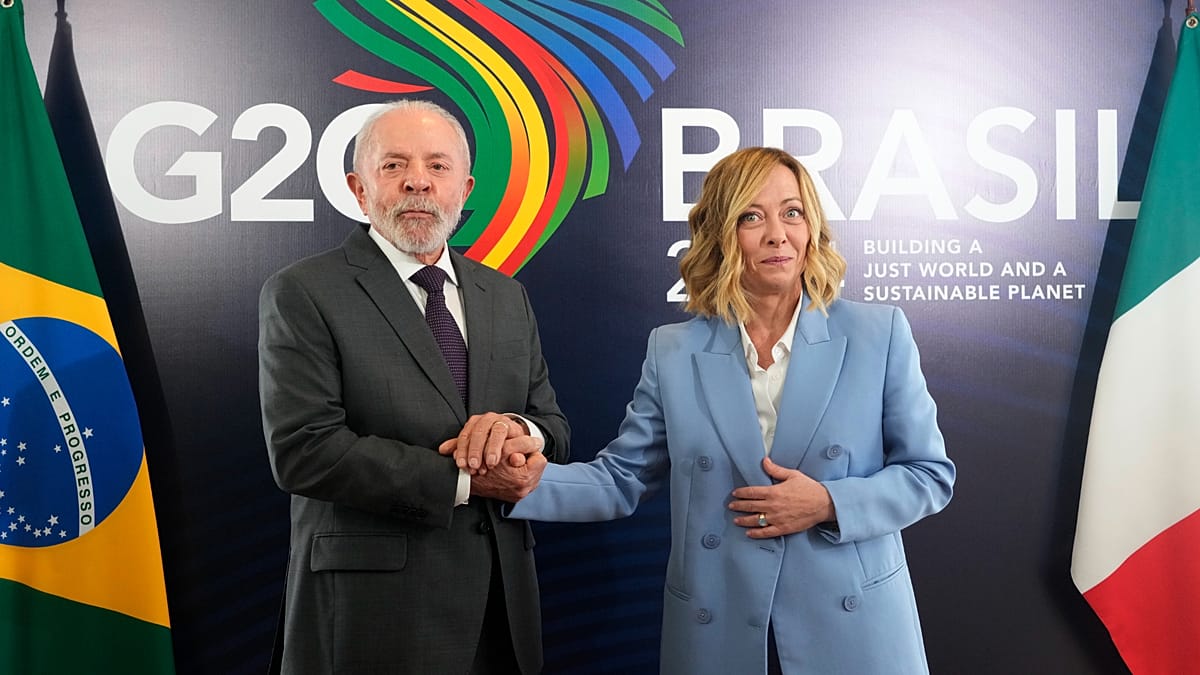
After a phone call with Brazilian President Luiz Inácio Lula da Silva, Prime Minister Giorgia Meloni said she supported the deal, but added that Rome still needs stronger assurances for Italian farmers. Lula said in separate comments that Meloni assured him the trade deal would be approved in the next 10 days to a month.
The Mercosur agreement would create a free-trade area between the EU and Argentina, Brazil, Paraguay and Uruguay. But European farmers fear it would expose them to unfair competition from Latin American imports on pricing and practices.
Meloni’s decision was pivotal to delay
“The Italian government is ready to sign the agreement as soon as the necessary answers are provided to farmers. This would depend on the decisions of the European Commission and can be defined within a short timeframe,” Meloni said after speaking with Lula, who had threatened to walk away from the deal unless an agreement was found this month. He sounded more conciliatory after speaking to Meloni.
Talks among EU leaders were fraught, as backers of the deal – concluded in 2024 after 25 years of negotiations – argued the Mercosur is an imperative as the bloc needs new markets at a time in which the US, its biggest trading partner, pursues an aggressive tariff policy. Duties on European exports to the US have tripled under Donald Trump.
“This is one of the most difficult EU summits since the last negotiation of the long-term budget two years ago,” an EU diplomat said.
France began pushing last Sunday for a delay in the vote amid farmers’ anger.
Paris has long opposed the deal, demanding robust safeguards for farmers and reciprocity on environmental and health production standards with Mercosur countries.
The agreement requires a qualified majority for approval. France, Poland and Hungary oppose the signature, while Austria and Belgium planned to abstain if a vote were held this week. Ireland has also raised concerns over farmer protections.
Italy’s stance was pivotal.
However, supporters of the agreement now fear prolonged hesitation could prompt Mercosur countries to walk away after decades of negotiations for good.
After speaking with Meloni, Lula said he would pass Italy’s request on to Mercosur so that it can “decide what to do.”
An EU official said contacts with Mercosur were “ongoing,” adding: “We need to make sure that everything is accepted by them.”
Read the full article here