


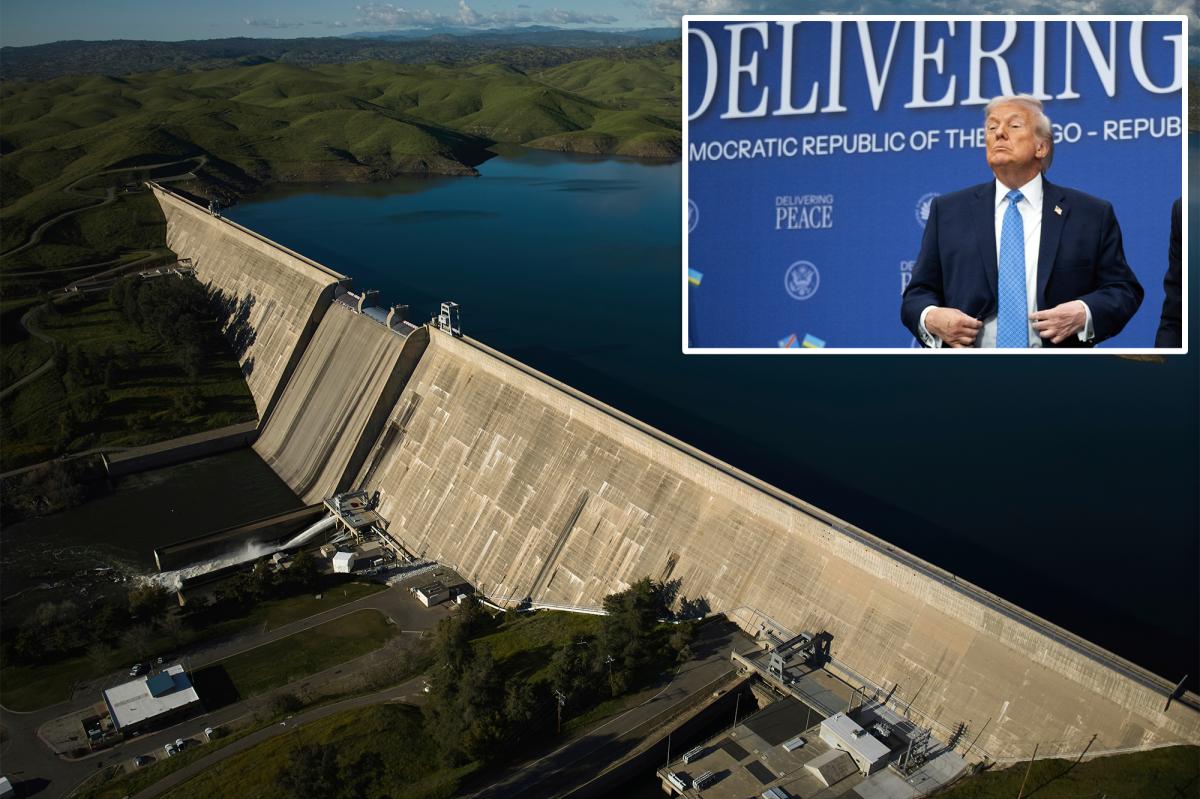
The Trump administration is making good on a promise to send more water to California farmers in the state’s crop-rich Central Valley.
The US Bureau of Reclamation on Thursday announced a new plan for operating the Central Valley Project, a vast system of pumps, dams and canals that direct water southward from the state’s wetter north.
It follows an executive order President Donald Trump signed in January calling for more water to flow to farmers, arguing the state was wasting the precious resource in the name of protecting endangered fish species.
Secretary of the Interior Doug Burgum said the plan will help the federal government “strengthen California’s water resilience.”
It takes effect Friday.
But California officials and environmental groups blasted the move, saying sending significantly more water to farmlands could threaten water delivery to the rest of the state and would harm salmon and other fish.
Most of the state’s water is in the north, but most of its people are in the south.
The federally-managed Central Valley Project works in tandem with the state-managed State Water Project, which sends water to cities that supply 27 million Californians.
The systems transport water through the Sacramento-San Joaquin River Delta, an estuary that provides critical habitat to fish and wildlife including salmon and the delta smelt.
It is important for the two systems to work together, Karla Nemeth, director of the California Department of Water Resources, said in a statement.
She warned the Trump administration’s plan could limit the state’s ability to send water to cities and farmers.
That is because the state could be required to devote more water to species protection if the federal project sends more to farms.
Barbara Barrigan-Parrilla, executive director at Restore the Delta, said pumping more water out would result in more Delta smelt and juvenile salmon dying from getting stuck in the pumping system, and once the temperature warms, harmful algae blooms will develop that are dangerous to fish, wildlife, pets and people.
That could have economic impacts, she said.
“When you destroy water quality and divorce it from land, you are also destroying property values,” she said. “Nobody wants to live near a fetid, polluted backwater swamp.”
The Bureau of Reclamation denied the changes would harm the environment or endangered species.
The Central Valley Project primarily sends water to farms, with a much smaller amount going to cities and industrial use. Water from the Central Valley Project irrigates roughly one-third of all California agriculture, according to the Bureau of Reclamation.
The Westlands Water District, one of the largest uses of Central Valley Project water, cheered the decision.
It “will help ensure that our growers have the water they need to support local communities and the nation’s food supply, while also protecting California’s wildlife,” Allison Febbo, general manager, said in a statement.
During Trump’s first term, he allowed more water to be directed to the Central Valley, a move Democratic Gov. Gavin Newsom fought in court, saying it would push endangered delta smelt, chinook salmon and steelhead trout populations to extinction.
The Biden administration changed course, adopting its own water plan in 2024 that environmental groups said was a modest improvement. Newsom didn’t immediately comment Thursday on the new decision.
The Republican president renewed his criticism of the state’s water policies after the Los Angeles-area fires broke out in January and some fire hydrants ran dry.
The Central Valley Project does not supply water to Los Angeles.
Trump dubbed his January executive order “Putting People over Fish: Stopping Radical Environmentalism to Provide Water to Southern California.”
Read the full article here