


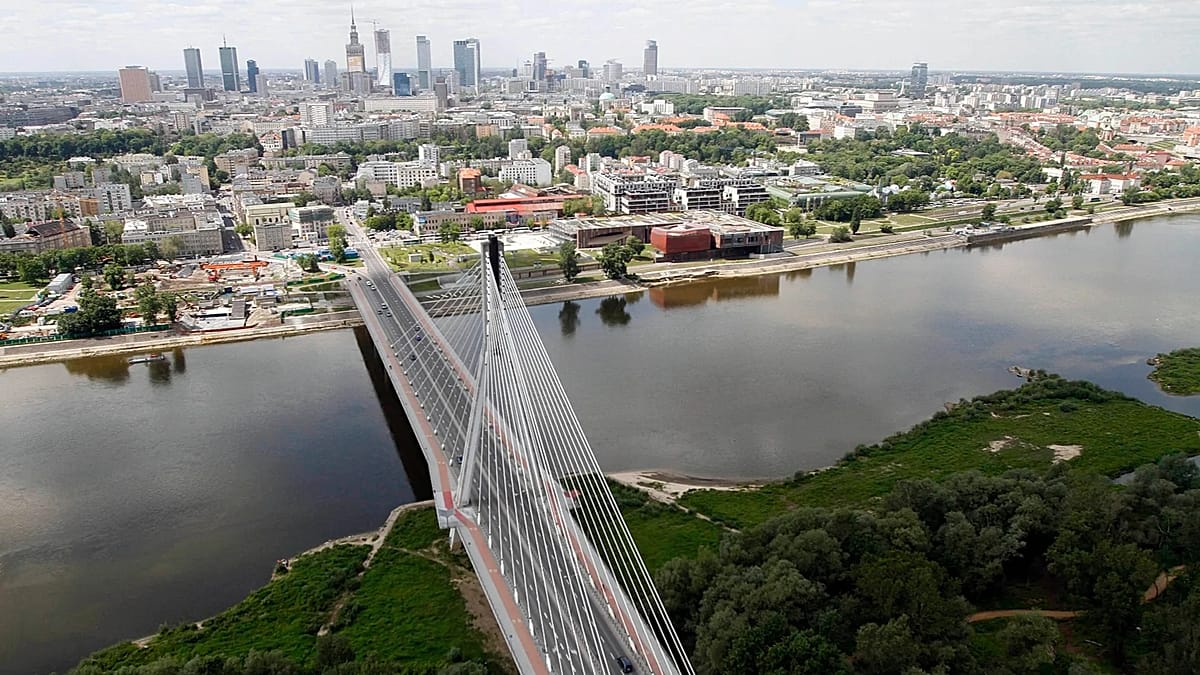
At stake is prestige, hundreds of jobs and influence over how the European Union will protect its economic borders for decades to come. The new office is expected to be operational this year and will become fully operational two years later.
Who will Warsaw face?
The list of candidates is long. In addition to Warsaw, the following are Liège (Belgium), Malaga (Spain), Lille (France), Zagreb (Croatia), Rome (Italy), The Hague (Netherlands), Porto (Portugal) and Bucharest (Romania).
Each city plays its own card. The Hague is promoting closer ties with Europol. Belgium and France are betting on logistics.
Poland is bringing geopolitical and operational arguments to the table: Warsaw is already home to the EU border agency Frontex, and the Polish government argues that, in an age of hybrid warfare, security and the synergy among these institutions are key.
The argument is simple: since customs officers and guards are fighting the same threats, they should work side by side.
Why is it worth the effort?
“On the one hand, hosting the headquarters of the EUCA offers more opportunities to actively participate in the process of reforming the customs union. On the other hand, it is an economic growth opportunity for the host city,” Małgorzata Krok, Plenipotentiary of the Minister of Finance and Economy for the application to establish the headquarters of the EU Customs Authority (EUCA), told Euronews.
“The new agency means increased business and tourist traffic, as well as the arrival of EUCA employees with their families. The EUCA is expected to eventually employ 250 people, but this number may increase in the future,” she said.
“Warsaw offers direct flights to all EU countries, as well as to candidate and partner countries. The synergy with Frontex, the proximity to all types of border crossings and the experience of our administration in customs matters and the creation of large-scale tax and customs IT systems, create optimal conditions for the development of the EUCA,” Krok added.
Polish diplomats also point out, behind the scenes, the weaknesses of rivals, noting that being a logistical hub for e-commerce, like Belgium or the Netherlands, in the era of the flood of cheap parcels from Asia can be a burden.
Poland’s biggest rival, however, is identified as France, which has been courting the agency for quite some time.
Not only taxes, but also security and technology
“The role of the tax collector has evolved into a guardian of the single market, the competitiveness of the economy and the security of citizens. It’s not just a question of smuggling or terrorism, but product compliance,” Magdalena Rzeczkowska, former Minister of Finance, added in an interview with Euronews. Rzeczkowska also previously managed the National Tax Administration and observed the evolution of customs from paper declarations to the digital age.
The former minister draws attention to our asset, namely the Frontex seat. The argument about the synergy of institutions is considered crucial, especially in the context of the security of the eastern flank: “We are talking about integrated border management, and this synergy is an important element. It is at the interface of the work of these institutions that security can really be built.”
Furthermore, the former minister points out that EUCA will also be a technology hub. “It should definitely not be officials in a suit, for the reason that the main task will be not only to build but also to maintain the EU Customs Data Hub,” she points out.
Rzeczkowska is echoed by Minister Krok: “The heart of the current customs reform will precisely be the data hub. The agency itself, on the other hand, will be the brain, analysing customs issues and risk at the EU level. With this, the agency has the potential to become a research and development centre in the customs area.”
What is the Customs Data Hub?
The struggle for localisation is only one dimension of the story. The real challenge is what the EUCA is supposed to manage: The EU Customs Data Hub.
Experts call this system the ‘nervous system’ of the new customs union. Instead of 27 separate national systems, the Union wants to create a single, unified database. This is supposed to enable real-time tracking of goods and the detection of dangerous products using artificial intelligence.
The reform is being driven by the crisis. According to European Commission forecasts, 5.6 billion parcels, the vast majority of which come from China, were expected to enter the Union in 2025. The current system is inefficient, and customs officials themselves are unable to physically control such a mass. The result? Europeans lose billions of euros in unpaid customs duties and taxes. It is this system that the new authority aims to seal.
However, business warns: without cooperation with the private sector (courier companies, e-commerce platforms), the construction of the ‘Data Hub’ could end up paralysing trade. The logistics industry has warned that the deadlines for implementing the changes are very tight and that the technical specifications remain unclear.
The industry itself adds that, without consultation with practitioners, the ambitious digital reform could lead to bottlenecks that will hit European consumers. At the same time, the Polish bid relies precisely on the argument that only a ‘digital stronghold’ with experience in crisis management will bear the burden.
This is why Warsaw, in fighting for the EUCA, is bidding not just to host officials, but to be the operational centre that must bear the biggest customs reform in the history of the European Union.
EUCA. The backstage of the competition
And what does the behind-the-scenes look like at the moment? Here, Minister Rzeczkowska is under no illusions about the nature of the choice of seat: “At the end of the day, it will be a political decision, although it shouldn’t quite be. We should look from the point of view of the independence of the institution”.
“We made a conscious decision to run for this office because we believe that it is in Warsaw that it will develop best. We are now actively persuading the decision-makers to do so,” indicates Krok, recalling that the decision will be made by the EU Council and the European Parliament.
The final verdict will come in March 2026. That is when it will become clear whether Brussels prefers to bet on the proven trade routes of the west or on a digital shield on the eastern flank – and whether the centre of gravity is finally shifting to the east in Europe’s new architecture.
Read the full article here