


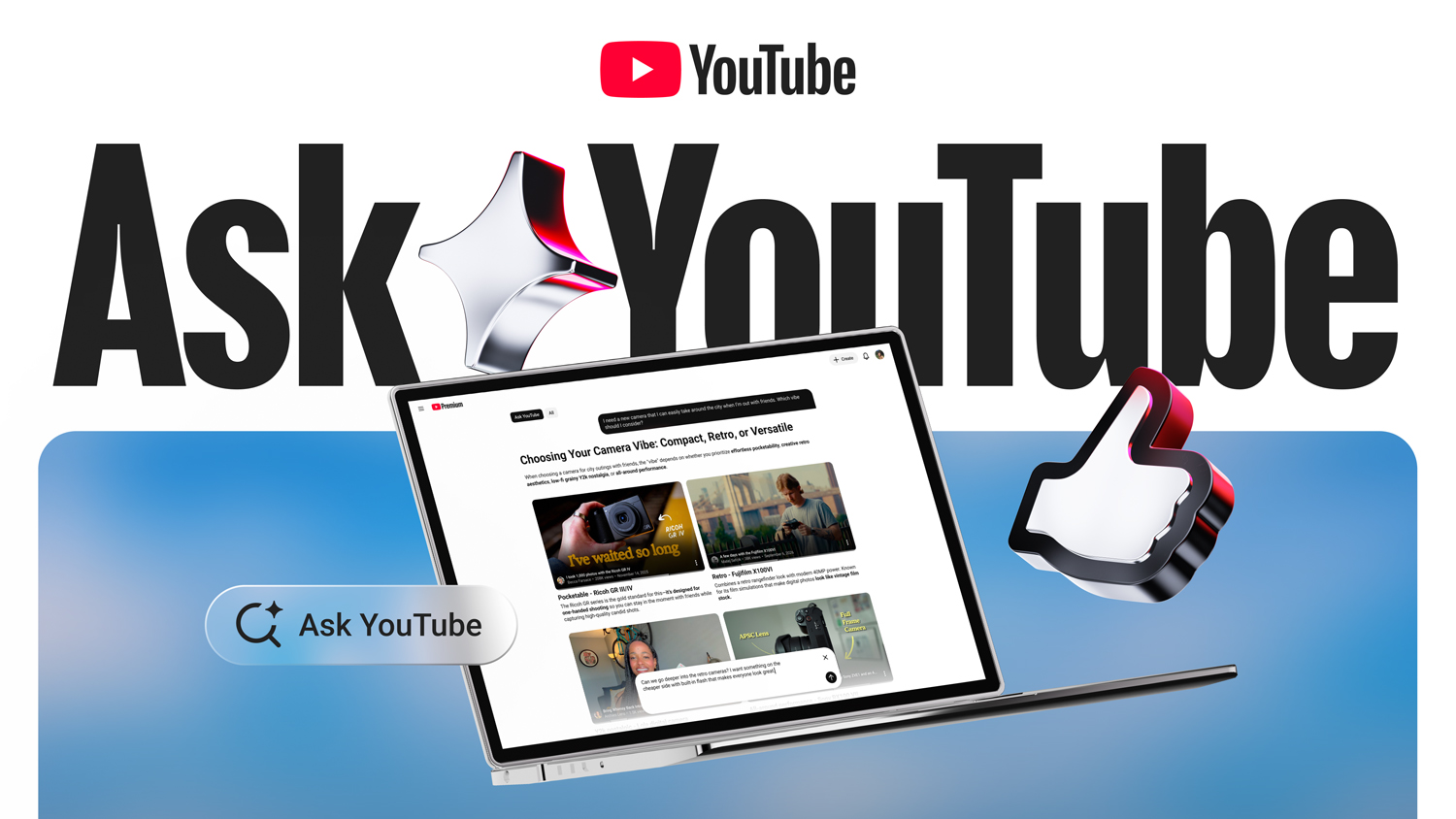
Platforms like YouTube have used machine learning tech for years to build your social media feeds. Now, in the age of generative AI, YouTube is building on that technological foundation and introducing a new way to use AI to build custom video feeds, the company announced at Made on YouTube on Wednesday.
You will soon be able to build multiple custom feeds of recommended videos by prompting YouTube like you would a chatbot, using plain language. So you can have feeds dedicated to specific subjects, like photography or college football, and YouTube creates dedicated tabs on your homepage for each feed. This will be rolling out across desktop, TV and mobile in the US next month.
YouTube’s experimental Ask YouTube tool lets you search for videos with AI, and it’s expanding its capabilities. Now, if you search for information about a new product, like the new iPhone Duo, the Ask YouTube AI can compile information from videos and outside sources. It uses that information to build comparison tables, among other things. You can click on a video that the tool surfaces and continue asking questions on the video’s watch page.
It is somewhat similar to how a chatbot can search the web for information, compile it and cite its sources. But similar to the decline in traffic that digital publishers have seen with the rise of generative AI, there is a risk that YouTube’s AI-enhanced search may eliminate the need for people to click on video links and consume original content.
“Our goal is to connect viewers with the right video faster. With Ask YouTube, we expect watch time to remain steady or improve,” a YouTube spokesperson told CNET. Other AI features, such as chapters and AI-generated summaries, “showed no negative impact on watch time; instead, they helped retain viewers.” Videos included in the AI search’s answers will “prominently display the video title and channel name,” the spokesperson said.
The AI takeover of YouTube has been an ongoing project for its parent company, Google, in recent years. While creators have been using AI to edit and create videos, leading to an onslaught of AI slop, the platform has been integrating new tools powered by Google’s Gemini models. Now, YouTube is focusing its AI efforts on personalization, both for viewers and creators, to ultimately keep us scrolling and monetize content. It is also adding Gemini as a content creation assistant to Shorts and the YouTube Create app.
YouTube has been under fire this year as a landmark court decision found that Meta and Google designed their sites to be intentionally addictive to children and teens, harming their mental health. YouTube has denied this, saying it’s a streaming platform, not a social media platform. Many child safety researchers and advocates are worried about social media sites adding more AI features. We’ve already seen how AI features can harm kids, such as in the case of Reuters’ 2025 investigation that found Meta’s AI chatbots on Instagram would engage in sexual and romantic roleplay with children.
Creator-specific tools coming to YouTube
YouTube is introducing a dedicated tool for episodic content, called Shorts series. This will let content creators designate videos as part of a dedicated series, with season and episode numbers. As more content creators are investing in serialized content — think Sydney Jo’s The Group Chat series or microdramas — this tool will allow people to separate and highlight these videos from the rest of their posts. Viewers will be able to more easily find and watch these videos. The series will live on a creator’s page as a playlist. Only creators in YouTube’s partner program will have access at launch, available on web, mobile and TV.
YouTube is also offering creators two new ways to personalize content for their viewers. Creators will be able to test multiple thumbnails and preview clips for their videos. YouTube will serve the video to real viewers, and depending on each thumbnail and video cut’s performance, it will match a viewer with the version YouTube thinks they will be most likely to click on. This kind of personalization is a key part of AI’s promise for digital marketers.
Auto dubbing, or real-time audio translation, will be available for livestreams, starting with English and Spanish, with plans to expand to additional languages in the future. YouTube is also expanding how creators can monetize their content with a new affiliate partnership with Amazon.

See full bio
Read the full article here