


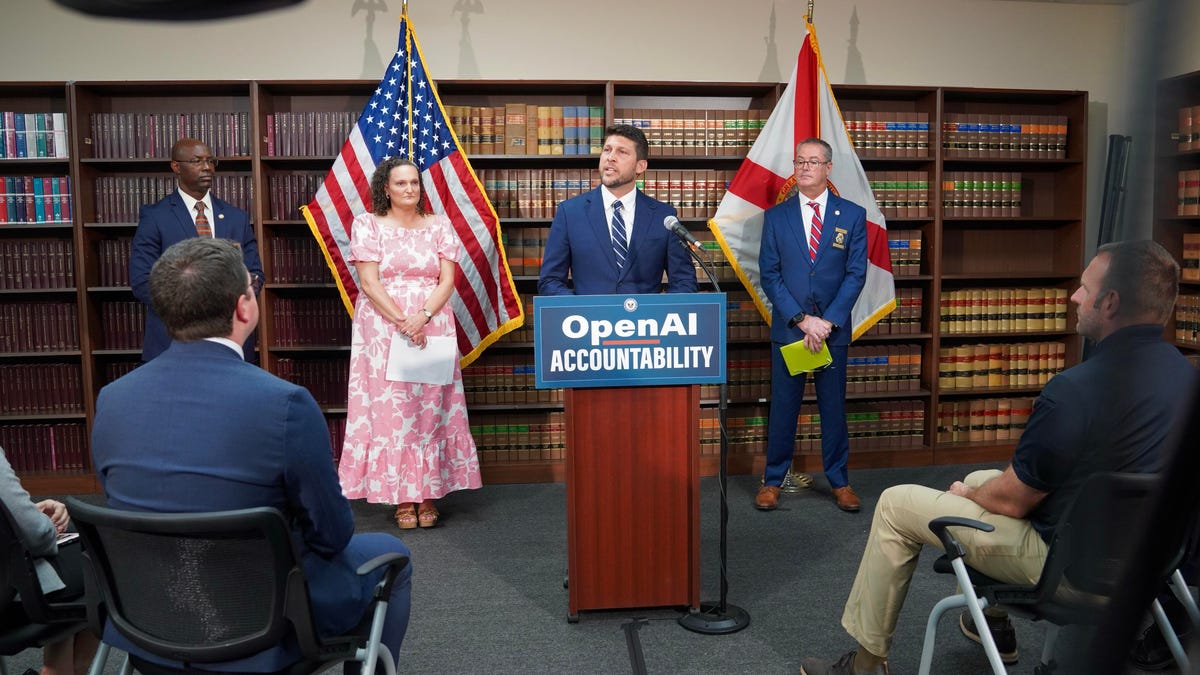
Florida has become the first US state to sue OpenAI over ChatGPT’s safety and design, adding to a massive wave of existing lawsuits against the company.
According to the lawsuit (PDF) filed on Monday by Florida Attorney General James Uthmeier, OpenAI has built a “web of deceit and the exploitation of users, including Floridians.” Florida alleges the company violated state laws against deceptive or unfair trade practices to boost its own market value — and profits — over the safety of its users.
Florida isn’t buying OpenAI’s promise to build safely, as the beginning of the complaint shows.
The state’s lawsuit against OpenAI and its CEO, Sam Altman, says they willfully ignored warnings, both from inside and outside of the company, about the many risks AI poses to its users. Florida alleges that OpenAI lied about ChatGPT’s reliability, suitability for children and promotes prolonged use that leads to users’ cognitive decline.
(Disclosure: Ziff Davis, CNET’s parent company, in 2025 filed a lawsuit against OpenAI, alleging it infringed Ziff Davis copyrights in training and operating its AI systems.)
The lawsuit comes as Florida pursues a criminal investigation into whether ChatGPT played a role in last year’s mass shooting at Florida State University that killed two people and injured six others. In that case, the shooter allegedly used ChatGPT to plan the attack, including advising on the type of weapon, the timing of the massacre and how to dispose of human bodies.
At the time, OpenAI said: “Last year’s mass shooting at Florida State University was a tragedy, but ChatGPT is not responsible for this terrible crime.”
OpenAI CEO Sam Altman is named in Florida’s lawsuit.
There are growing concerns about how ChatGPT and other chatbots can feed into people’s violent actions and harmful delusions. Experts have found that chatbots like ChatGPT can struggle to push back on dangerous ideas and be so eager to please that they can provide factually incorrect information, a problem called sycophancy.
Another area of concern for legislators and tech watchdog groups is over OpenAI’s data collection and privacy practices. Florida’s complaint says that ChatGPT offers kids unfettered access to “harmful information” about eating disorders and self-harm. By concealing these risks and promoting ChatGPT as safe, OpenAI has misled Floridians and the general public with a dangerous product, the complaint says.
OpenAI said in a statement that it believes minors need significant protections around AI and has worked to provide them to parents and teens. “Losing a child is the most devastating tragedy that can happen to a family and we know that no words can come close to addressing the pain of such a loss,” an OpenAI spokesperson said. “We’re committed to getting this right.”
Reining in AI
While this is the first state-led lawsuit against OpenAI around child safety, numerous state governments are taking action around AI. California, Illinois and New York have created new laws to rein in how AI companies operate.
Florida’s lawsuit is a civil case, which would result in penalties (money) and court orders instead of criminal charges. Though it’s unclear still how the financial penalty will play out, Meta and Google were recently ordered to pay $3 million after a jury found them guilty of creating addictive social media apps; in a separate case, Meta was ordered to pay $375 million on child exploitation charges. These cases deal with social media, not AI, but these legal strategies used against Big Tech could provide a legal roadmap going forward.
Despite a growing state and local backlash against AI, the Trump administration’s newest AI plan shows it wants the federal government to be in charge of making the rules around the technology. The White House has been outspoken in its support for AI infrastructure projects, including the boom of data center construction projects across the US.
But experts warn that loosening regulations to let AI companies build faster could have disastrous effects on the environment, economy and society as a whole.
Read the full article here