


Published on •Updated
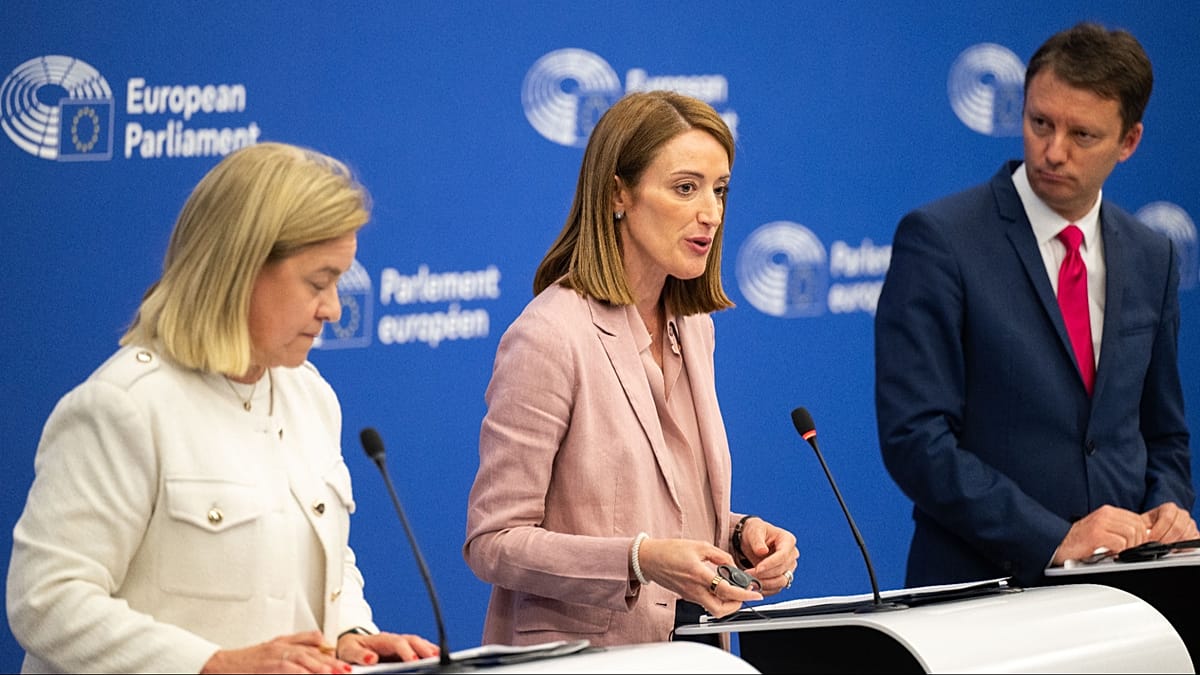
The European Parliament has rejected cuts proposed in the draft EU long-term budget for the period 2028-2034, MEPs Carla Tavares and Siegfried Mureșan told journalists at a press conference on Tuesday.
The Cypriot government, who is currently chairing the budget negotiations among the member states, presented a compromise text last week with cuts of €32.8 billion to the bloc’s overall budget.
The cuts represent a compromise between countries that asked substantial cuts and others that asked for an increase of the budget for agriculture and regional funds.
The divisions among co-legislators add further pressure to what’s already a difficult process. The EU wants to close a deal within the end of 2026 to avoid prolonging the discussions into 2027, a crucial election year, and the increasing distance between member states and the Parliament’s position puts that plan in jeopardy.
According to Parliament, the proposed cuts weaken an already inadequate budget, as the €2 trillion plan put forward by the European Commission in July 2025 had already been deemed insufficient by lawmakers.
“The European Parliament strongly rejects these cuts,” Mureșan said at Tuesday’s press conference. “It firmly opposes the Council’s proposal to set funding for agriculture and cohesion at an even lower level than the already insufficient amount put forward by the European Commission.”
In its proposal, the European Parliament asked for a 10 percent budget increase. MEPs also asked to exlude the repayment of the Next Generation EU, the common borrowing instrument approved in 2020 to cushion the economic blow of the COVID-19 pandemic, from budget calculations.
In the compromise text, Cyprus decided not to touch the issue of the budgetary correction mechanisms known as rebates, revenues coming from taxes at the EU level, known as own resources, and the principle of making the budget conditional on the rule of law.
In response, the Parliament has criticised what it called a lack of ambition.
“We need to make progress on own resources,” Tavares told journalists. “This is not reflected in the draft text. It is difficult to achieve a strong and renewed budget with cuts and without new own resources.”
What’s at stake
The current budget negotiations began in July 2025 when the European Commission published its €2 trillion budget proposal, which includes significant departures from the current framework.
The Commission has outlined three main spending priorities: the Competitiveness fund, Global Europe, and Horizon funds.
The most significant structural novelty concerns how regional, agriculture and fisheries funds will be distributed: the Commission proposed replacing the existing system with National and Regional Partnership Plans tailored to each member state.
The budget also sets aside funds for repaying Next Generation EU.
The draft text from the Cypriot presidency will form the foundation for a discussion among EU leaders that will take place in Brussels on 18-19 June.
Read the full article here