


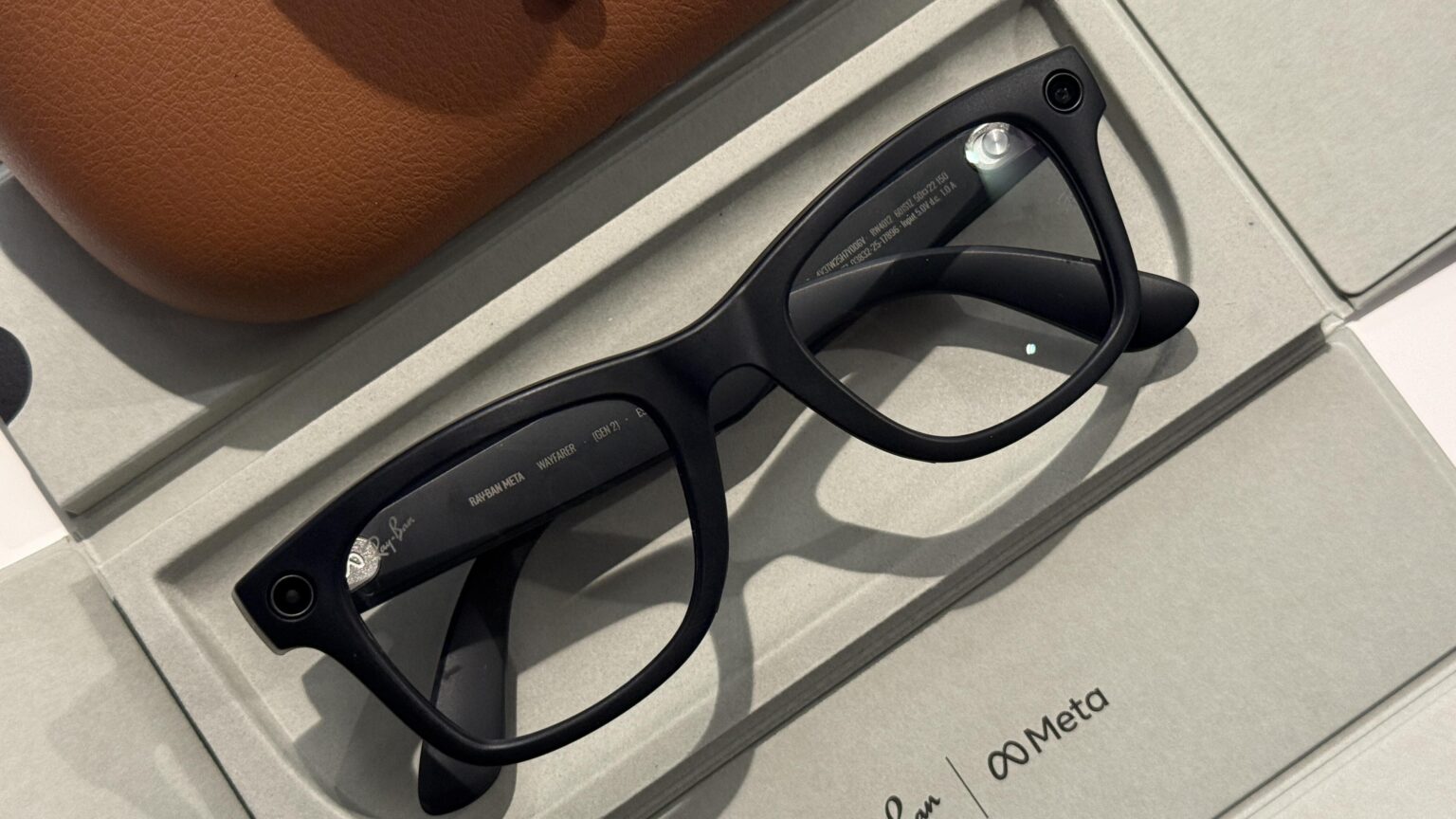
This summer feels like it’s been awash with smart glasses privacy concerns, and Meta’s been in the spotlight for all of it. A new glasses update, the second of the summer, aims to keep up with bad actors who are disabling or covering the smart glass camera lights. But it likely won’t be the last.
Alex Himel, head of Meta’s wearables division, posted about the changes yesterday, promising “we’re going to keep rolling out updates like this to make sure the capture LED can reliably alert bystanders when photos or videos are being captured for someone’s gallery.”
The firmware update should be automatically applied to Meta’s glasses, but in my experience, the arrival of software updates is hard to predict.
Bystander awareness of smart glass camera recording is only one of Meta’s privacy problems, the other being how Meta handles photos and videos in the cloud on Meta’s end. But these concerns about smart glasses don’t only apply to Meta: Google and Samsung are next on deck with their own line of camera-enabled glasses this fall, Apple is expected to have its own next year, and lots of other companies are jumping into the AI glasses space fast.
Meta’s also rolling out an ad campaign, with messaging that aims to draw awareness to the glasses’ LED light, which activates when the camera’s in use. Clearly, Meta’s leadership is concerned about how its smart glasses are being used and perceived.
One way to handle that could be more obvious LED lights. I wear smart glasses, and people don’t always realize they just lit up when I took a photo, especially in bright daylight. One reason for that is, despite all the concerns people seem to be having over smart glasses right now on social media, I’ve almost never seen anyone wearing smart glasses in everyday life. Most people I know haven’t, either.
Another solution could be hardware-based designs that do a better job of handling LED light or camera tampering. This newest Meta glasses update specifically covers bad actors who start a recording on the glasses and then cover the light up afterward. That was a way to bypass the previous Meta glasses update, which deactivated camera recording if the LED light was physically tampered with.
And there’s another option, which CTO Andrew Bosworth suggested might be on the table at some point: Maybe Meta will make some glasses with no cameras at all.
I’d expect these cat-and-mouse games to continue: People finding ways to record on Meta’s glasses without being observed, and Meta posting further updates.
Meta’s next glasses-focused developer conference, Meta Connect, looms next month. The company is likely to announce new smart glasses and new AI features. Its privacy issues are also likely to be a major focus during that conference, whether or not Meta chooses to address them further.

See full bio
Read the full article here