


On Friday, NASA directed five people on the International Space Station to temporarily shelter in a SpaceX Dragon spacecraft after engineers discovered air leakage in the Russian segment of the station. Four SpaceX Crew-12 crew members and NASA astronaut Chris Williams entered the SpaceX Dragon spacecraft in case NASA required an evacuation. After a few hours, they returned to regular operations.
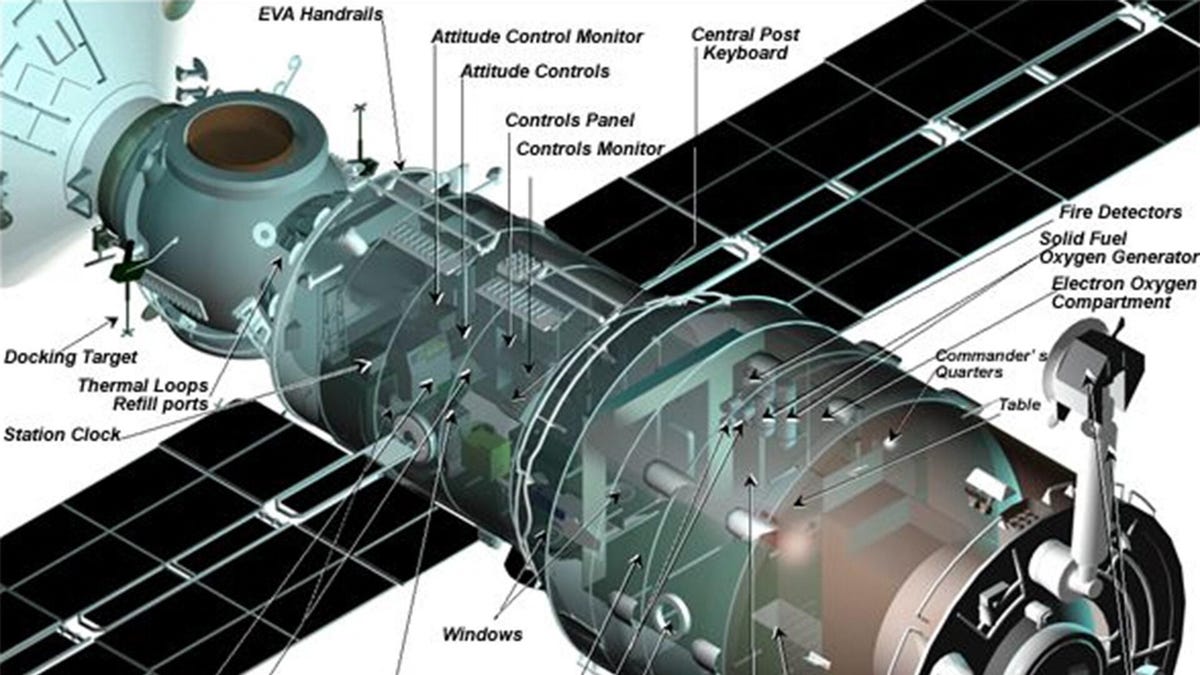
Astronauts detected two new air leaks on the transfer tube immediately adjacent to the Zvezda service module. This 43-foot-long module serves as the primary living quarters and houses the life support systems on the Russian orbital segment of the ISS. Russian astronauts repaired one of the leaks and decided to do more expensive repairs on the other.
“Following new leaks, Roscosmos has elected to proceed with a more extensive repair operation on Friday, June 5,” said Bethany Stevens, NASA spokesperson, in a post on X. “Out of an abundance of caution, NASA has directed all four of the agency’s SpaceX Crew-12 members and NASA astronaut Chris Williams to assume an elevated safety posture in the Dragon spacecraft while the repair is underway.”
A representative for NASA did not immediately respond to a request for comment.
The air leaks occur in the transfer tunnel leading out of the Zvezda module.
A nagging problem
Air leaks in the Zvezda service module have been an ongoing issue for NASA and Roscosmos, Russia’s national space agency. The first sustained pressure drops were identified around 2019, many years after the module entered service in 2000. Investigations have focused on the transfer compartment area connecting Zvezda to the rest of the station. While multiple repair attempts have been made, the exact source of the leaks has not been confirmed, and engineers continue to evaluate possible causes, including structural aging and joint integrity.
There are procedures in place to mitigate a major failure. The hatch leading to the transfer area that connects Zvezda to docked ships in the Russian segment of the ISS, called the PrK, is closed when not in use. When it is accessed, another hatch leading to the US orbital segment of the ISS is closed. If a failure does happen, only the Russian orbital segment is affected.
The future of the ISS remains uncertain
The current plan is to keep the ISS active until its planned retirement at the end of 2030. NASA’s plan includes a specialized SpaceX spacecraft that will push the football-field-sized space station out of orbit and back to Earth. Lawmakers are debating leaving the space station up for another couple of years, until 2032, so a replacement can be built and launched.
Private partners are expected to build the replacement, a move NASA hopes will kickstart new opportunities in space. Those planned commercial space stations are scheduled for completion and launch before the agency eventually removes the ISS from orbit.
Read the full article here