


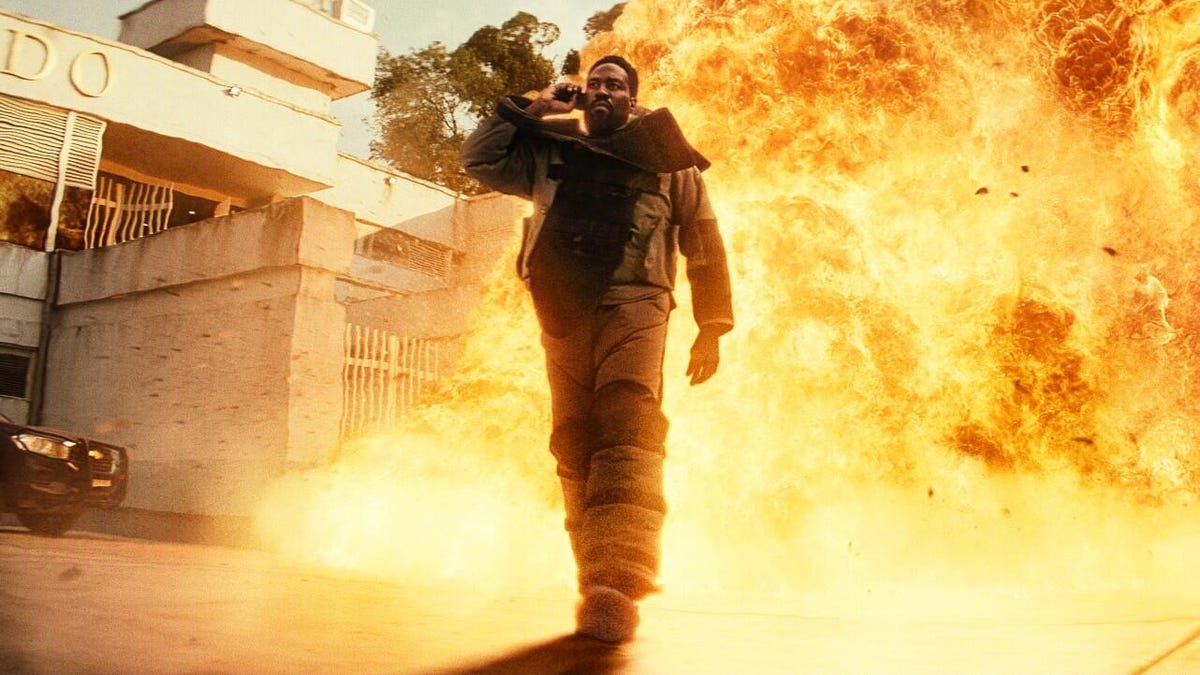
Man on Fire is a story that first hit my radar, like many of you, when Denzel Washington stepped into the role of former CIA operative John Creasy in Tony Scott’s 2004 action film. The story of that film, like Netflix‘s new thriller, draws inspiration from A. J. Quinnell’s book of the same name — which is the first entry in the five-book series.
For all intents and purposes, the 2004 film is a solid adaptation, and thanks to the performances of Washington (who plays Creasy) and a young Dakota Fanning, it has stood the test of time and remains a quality actioner to dig into.
Also, potentially like many of you, I’m shocked to say that Netflix’s episodic adaptation of Quinnell’s work is far superior.
If you’ve paid attention to the numbers, you already know that Man on Fire hit the top of Netflix’s streaming charts with a whopping 11 million views in the show’s first four days on the platform. It was this news that nudged me to give the show a try — and I was immediately hooked.
Read more: 40 of the Best Movies on Netflix You Should Stream Now
Netflix’s Man on Fire isn’t a retread of the 2004 movie because the series loosely adapts the original material. Taking a note from shows of a similar ilk, like Reacher and Cross, Man on Fire takes its own creative liberties while using the books as a narrative foundation. And it works brilliantly.
This Man on Fire takes to the streets of Brazil, altering the conflict of the original story, while adhering to the basics of a weathered man doing anything and everything to protect a girl who’s being hunted by gangs and terrorists hell-bent on killing her. That’s just one piece to an intricate and violent puzzle.
If it sounds heavy, that’s because it is. But thanks to smart writing and the emotional resonance of the cast performances, the movie is as engaging and heartfelt as it is bloody.
You want to watch this beatdown man get lit on fire for this purpose — it’s Death Wish for a whole new generation.
Abdul-Mateen stars in Man on Fire on Netflix.
Abdul-Mateen stars as Creasy in this rendition, which shifts the character’s backstory from CIA officer to PTSD-stricken Special Forces operative, and from the get-go, the emotional stakes are viscerally there. They steadily ramp up through each episode, justifying Creasy’s Jack Bauer-style actions, all with the motivations of enforcing justice and eliminating every evildoer he crosses paths with.
Abdul-Mateen holds his own in the role, quickly eliminating the remnants of Washington’s performance two decades earlier. And that’s no easy undertaking. Yet, as we’ve seen with the roles the actor has taken, from Dr. Manhattan in HBO’s Watchmen to playing Candyman in the 2021 horror remake and Wonder Man earlier this year on Disney Plus, he’s got range and a top-tier skill of wearing his heart on his sleeve, no matter what his character must do on screen.
In short, you can’t help but root for Abdul-Mateen, which means it’s nearly impossible to not root for Creasy.
It doesn’t stop with him, though. Every actor that graces the screen in Man on Fire is legit (as the kids say) fire. Bobby Cannavale dips in for a hot second to remind everyone of how great he is. Alice Braga, as Valeria, serves as a supportive counterpoint to Creasy’s hotheaded actions.
It’s Billie Boullet as Poe, the teenage girl Creasy protects from every possible danger, who steals the show, though. She’s got the same sort of wide-eyed emotional resonance Fanning had opposite Washington, yet it hits different and better here. She’s notably older than Fanning was, and the character she’s playing is a departure from earlier portrayals. That only works to her benefit, allowing her to find her own emotional footholds in the character. Boullet paired with Abdul-Mateen is a perfect match, full stop.
Instead of taking place in Mexico City, where Washington unleashed hell in the Tony Scott movie, this rendition sends Creasy to Brazil. The Netflix series shows off the beautiful, tourist-friendly areas of the country, then flips it, shoving us deep into the favelas to explore an often misrepresented culture.
The entire time I watched the show, I found myself leaning in close to take in the surroundings of each scene. Was this shot in a studio in front of a blue screen or on location? I’m pleased to say it was shot in multiple urban landscapes, like Mexico City and Rio de Janeiro. That tactile authenticity brings the story to life in a necessary way, embracing its realness rather than re-creating it in post.
Oh, and did I mention how action-packed and violent the show is? I did, but it bears repeating.
This is Jason Bourne-style action, in the form of a TV show where each episode runs approximately 40 minutes. If ever there was a way to guarantee my attention and keep me glued to the screen for hours on end, everything I just mentioned — from the writing to the acting and the viscera in between — adds up to the perfect formula to do just that. If you’re anything like me and you’ve read this far (so I assume you are), you’ll feel the exact same way.
Read the full article here