


Good morning, readers. This is Mared Gwyn. In this Tuesday morning newsletter: the final push to get fresh sanctions on Russia over the line, exclusive lines from an interview with the Bulgarian Foreign Minister, and another packed day of enlargement talks.
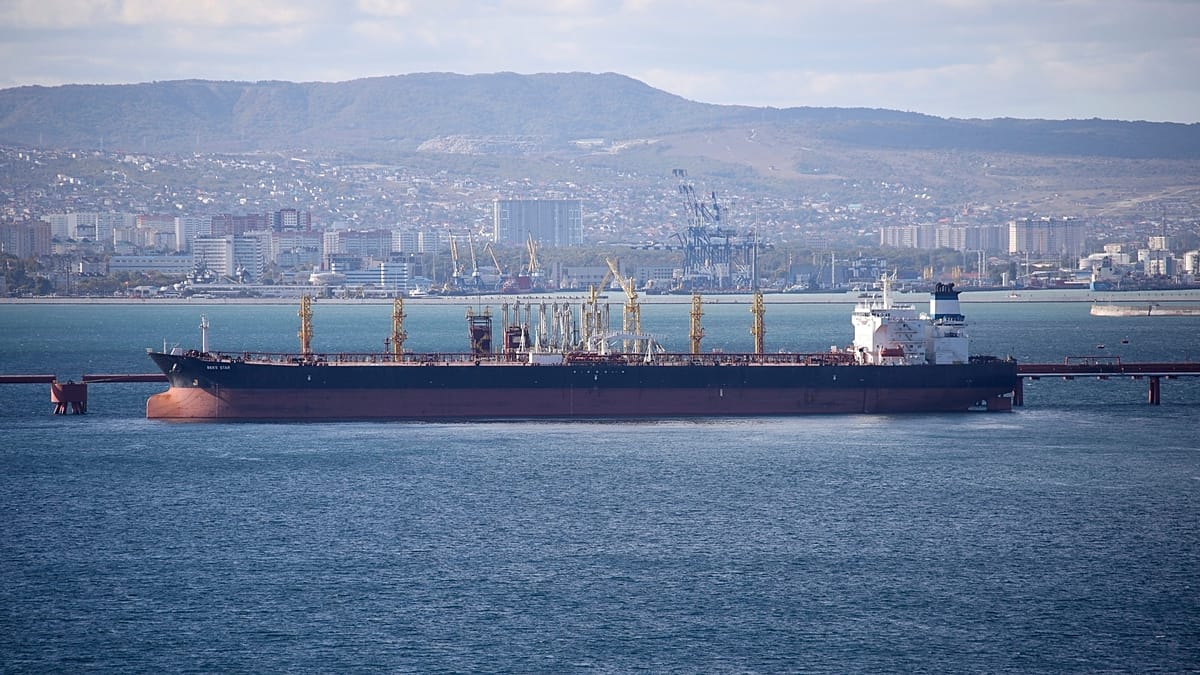
Final push for deal: the EU’s attempts to finalise the 21st package of sanctions against Russia are getting down to the wire, my colleague Jorge Liboreiro writes in, after yesterday’s meeting of foreign ministers in Brussels failed to deliver a breakthrough. The ball is back in ambassadors’ court, who are set to meet again today at 16.00, mere hours from the 15 July deadline. If no deal is reached by then, the price cap on Russian oil will jump from €44 to €58 per barrel, a disastrous scenario for everyone involved as Moscow would earn more revenues.
The cap, in fact, is no longer a point of contention. Rather, member states can’t agree on a ban on the transit of Russian LNG through EU waters. Greece, in particular, is pushing for an exemption so that its powerful maritime industry can continue servicing Moscow’s energy sector. It comes as fresh numbers showed the bloc had spent almost €6 billion buying LNG from Russia’s Yamal facility between January and June, a record sum for the period.
At least one thing in the sanctions has been settled: the EU will not blacklist either Patriarch Kirill, the head of Russia’s Orthodox Church, or Vagit Alekperov, the billionaire founder of Lukoil. Both names were definitely removed from the draft list after diplomats realised that Bulgaria’s veto was insurmountable. This is the second time the EU has failed to target Kirill.
“When you have sanctions that have purely symbolic measures but no economic consequence on Russia, what you are risking is that in a country particularly that is Eastern Orthodox — such as Bulgaria — you create the environment for brewing anti-European rhetoric,” Bulgaria’s Foreign Minister Velislava Petrova-Chamova told our correspondent Angela Skujins in an interview on Monday.
“We’re really happy that, in the end, the name was dropped from the sanction package and now the package is in a way that we can really support,” she added.
Energy spike: Petrova-Chamova will travel to Kyiv on Wednesday as part of a wider delegation of Eastern Balkan nations, a trip that coincides with the oil price cap deadline. Petrova-Chamova said she is “not afraid” of going to the Ukrainian capital empty-handed regardless of whether or not the oil price cap is adjusted.
“I’m more thinking about how we can work more together to help Ukraine face the challenges in front of it, which are going to be even higher as the winter approaches,” she said.
Settlement trade saga drags on: Also on Monday, a fully-fledged import ban on goods manufactured in Israeli settlements garnered the “most support” from EU foreign ministers, foreign policy chief Kaja Kallas said, after the European Commission last week presented a range of options to restrict settlement trade, the boldest of which was a full trading ban.
Crucially, a large cohort of member states also backed framing the measures as a trade rather than a foreign policy tool, which would avoid the need for all EU governments to unanimously back the move. Proponents of the trade ban – including Belgium, France, Ireland, Luxembourg, the Netherlands, Spain and Sweden – had pushed back against the European Commission for arguing that any measures taken should be framed as a foreign policy tool, requiring the unanimous backing of all member states. I have the details here.
Gaza pledge: Later on Monday, the European Commission launched a so-called “Team Gaza Initiative” during a meeting of the Palestine Donor Group, pledging around €900 million for the Gaza Strip’s recovery. Several EU and non-EU governments chipped in to the collective pledge.
Kushner makes appearance: While the US was not part of the €900 million pledge, President Donald Trump’s son-in-law and envoy Jared Kushner joined the conference by video link, welcoming cooperation between the Palestinian Donor Group and the Board of Peace, the controversial body chaired by Donald Trump that oversees the reconstruction of Gaza.
“We also want to have them on board because we see that we have to work together,” the European Commissioner for the Mediterranean Dubravka Šuica – who sparked controversy in February when she attended a gathering of the Board of Peace in Washington – told reporters after the meeting.
The first two recovery projects to be implemented in Gaza will focus on water and solid waste management, Šuica said. The EU and UN estimate that the cost of rebuilding Gaza over the next decade will top $71 billion.
Accession ‘super Tuesday’: Later today, three candidates bidding to become EU member states will open a new phase in their accession process – Albania, Moldova and Ukraine.
The occasion marks another symbolic breakthrough for Ukraine and Moldova, whose bids had been held up for two years due to the previous Hungarian government’s entrenched opposition, but who are now capitalising on an increased political momentum. Both countries opened the first phase of talks, known as the Fundamentals cluster, in June.
The EU’s 27 member states then unanimously backed the opening of a new phase of talks – known as Cluster 6 – last week. This phase covers external relations and was widely considered a lower bar for political consensus due to its limited scope.
Kyiv has been publicly pushing for all outstanding clusters to be opened by the summer – and while the EU executive considers both Ukraine and Moldova ready, Hungarian Prime Minister Péter Magyar has expressed strong reservations about moving at such a pace, arguing it would be tantamount to “fast-tracked accession”.
UK joins EU’s €90 billion loan for Ukraine with promise of ‘fair’ contribution
After weeks of closed-door negotiations, the UK has joined the EU’s €90 billion support loan for Ukraine, my colleague Jorge Liboreiro reports. In practice, this means Kyiv will be allowed to procure weapons and ammunition from British defence companies, such as BAE Systems, QinetiQ and Babcock International, using the aid that Brussels sends under the loan.
But it won’t come cheap! London will have to pay a “fair and proportionate” share of the €3 billion in annual interest rates, depending on how much its firms benefit.
The British addition was confirmed during a meeting of Ukraine and its allies in Paris that saw the launch of an Anti-Ballistic Missile Coalition to “deter and defeat future missile threats”.
Jorge has the full story.
More from our newsrooms
Hungarian parliament removes President Tamás Sulyok from office. An amendment to the constitution was adopted with 139 votes in favour and 6 against, making it possible to remove the current President of the Republic, Fidesz-appointed Tamás Sulyok. Gabor Kiss and Rita Konya have the details.
Nine European countries and Ukraine form anti-ballistic missile coalition. In a statement made on the margins of the Coalition of the Willing meeting in Paris last night, nine countries and Ukraine announced the creation of a coalition to develop anti-ballistic capabilities in Europe to protect the continent, Evelyn Ann-Marie Dom reports.
US launches strikes on Iran for third straight night as Trump says deal still ‘possible’. The UAE also said Iran attacked two ships in the Strait of Hormuz with missiles, as Iran said it carried out strikes on Bahrain. US Central Command wrote on X that its forces “successfully struck military targets across Iran including Bushehr, Chah Bahar, Jask, Konarak, Abu Musa, and Bandar Abbas” in an operation that lasted five hours. Emma De Ruiter has more.
We’re also keeping an eye on
- EU affairs ministers gather in Brussels.
- European Commissioner Maroš Šefčovič and the UK’s Europe Minister Stephen Doughty are expected to sign the EU-UK agreement on Gibraltar in Brussels. Gibraltar’s Chief Minister Fabian Picardo and Spain’s Foreign Minister José Manuel Albares will also attend.
- EU foreign policy chief Kaja Kallas meets Moldovan Foreign Affairs Minister Mihai Popsoi and Spanish Foreign Affairs Minister José Manuel Albares Bueno. She will also meet Dr. Subrahmanyam Jaishankar, Minister of External Affairs of India.
- European Commissioner Dubravka Suica to present the third report on demographic transformation in the EU.
That’s it for today. Jorge Liboreiro, Angela Skujins and Vincenzo Genovese contributed to this newsletter.
Read the full article here