


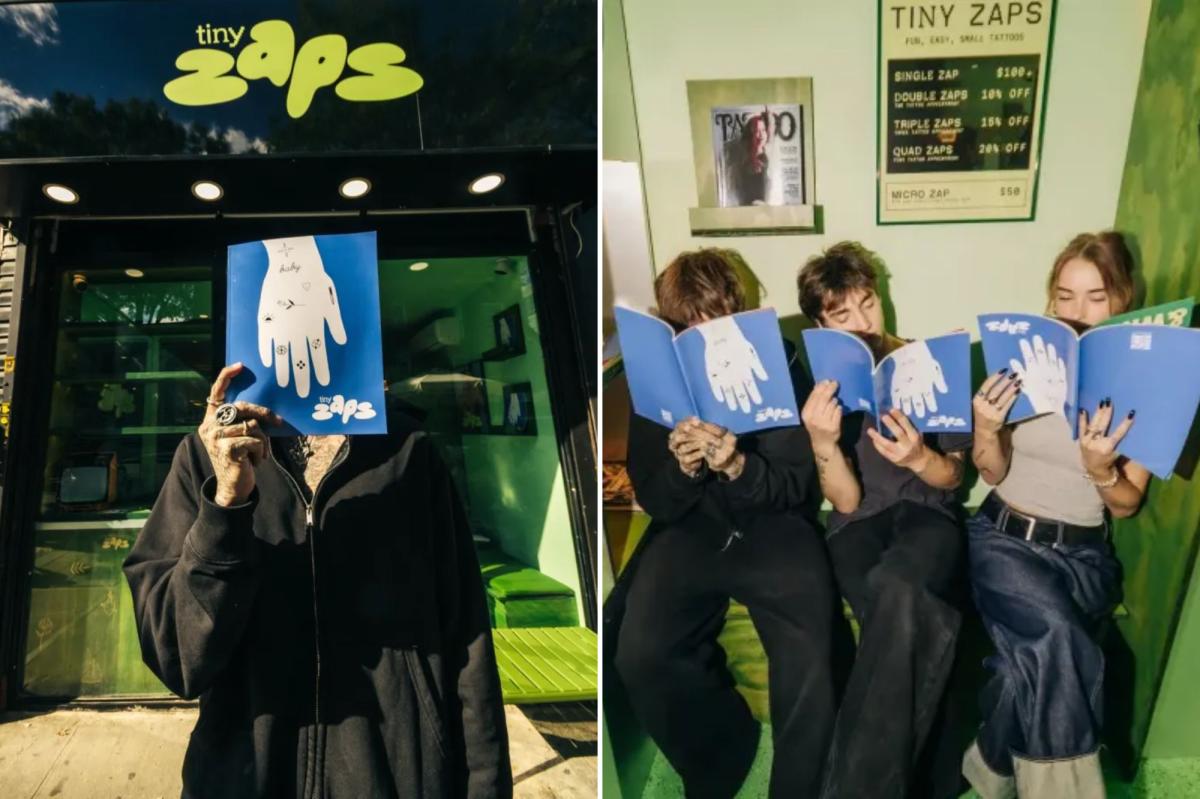
A New York City-based tattoo shop looking to expand into South Carolina has filed a federal lawsuit against state officials over two laws that owners argue violate their First Amendment rights.
Tiny Zaps Co., which currently has two Big Apple locations, sued South Carolina’s public health director Dr. Brannon Traxler, and Attorney General Alan Wilson, over a buffer law preventing tattoo shops from operating within 1,000-feet of a church, school or playground — alongside the state’s criminalization of tattooing “any part of the head, face, or neck” of another person, the new suit read.
The shop, which has a location in Manhattan and another in Brooklyn, argues that the state laws regarding tattooing not only violate the First Amendment by treating ink on skin as second-class speech, but also are unconstitutionally strangling its planned Charleston expansion.
“Tattoos are a form of artistic expression protected by the First Amendment — [which] does not permit South Carolina to treat tattooing as a disfavored form of expression,” the lawsuit argued.
“Whether artwork appears on canvas, paper, or skin, the Constitution protects both the artist’s right to create it and the customer’s right to receive it.”
The lawsuit further argues that the buffer, imposed by state health officials, is not a health measure at all and does not apply to other businesses offering piercing services.
Until 2004, South Carolina was one of only two states alongside Oklahoma that outlawed tattooing, and the state Supreme Court previously upheld that prohibition in a 2002 decision that rejected First Amendment protection for tattooing.
The federal Supreme Court has never ruled on the merits of tattooing as protected speech, and declined to hear an appeal that same year as South Carolina’s ruling, leaving the state ruling untouched.
The new lawsuit challenges the state’s ruling, calling it an “outdated premise.”
Since the Palmetto State Supreme Court ruling, several federal courts have moved the other way, with the Ninth Circuit ruling in 2010 that the act of tattooing itself is protected speech, striking down a California city’s ban on tattoo parlors.
Tiny Zaps, along with South Carolina couple Joshua and Stephanie McDonald, is seeking a permanent injunction blocking enforcement of both laws.
Read the full article here