


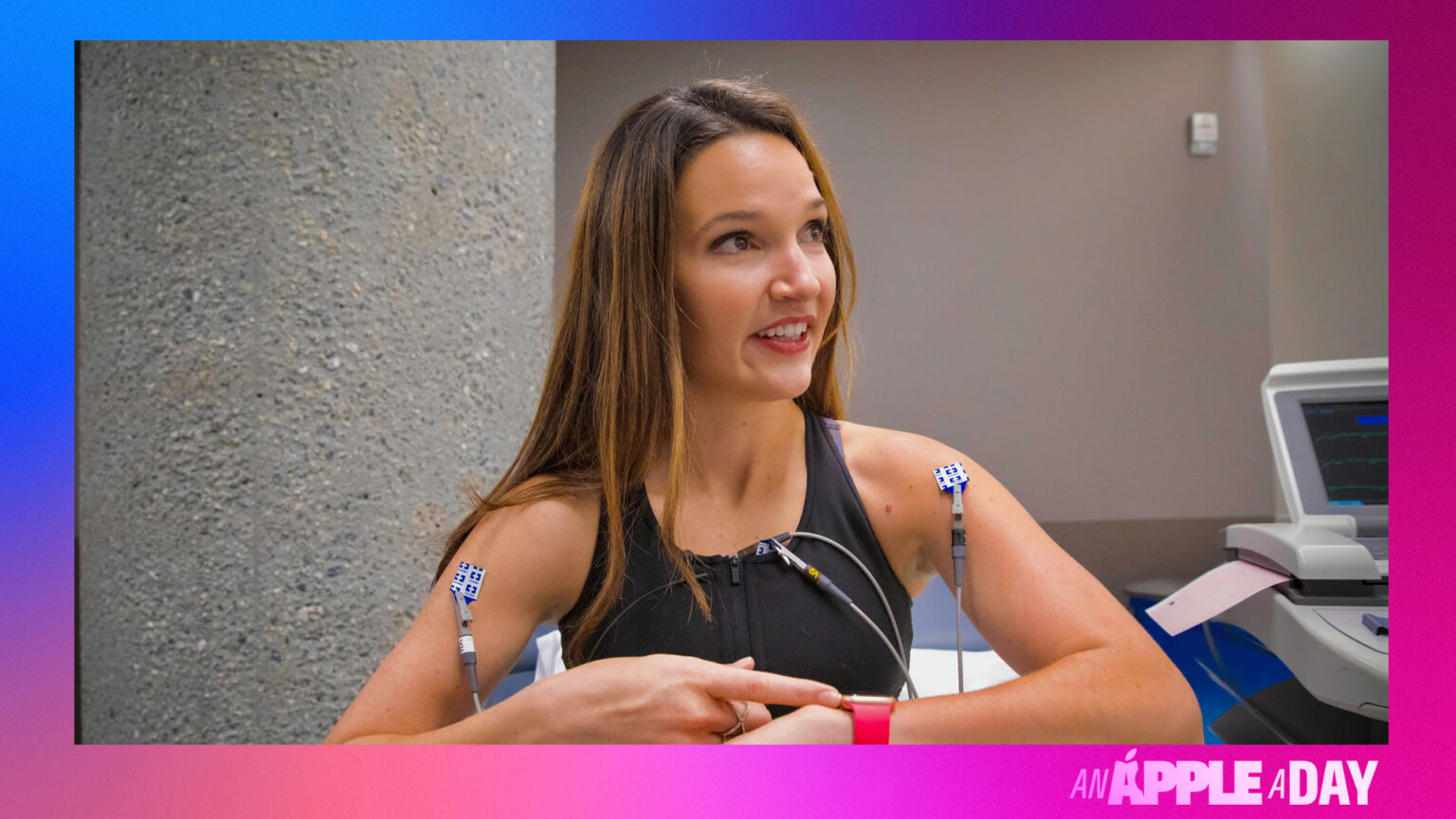
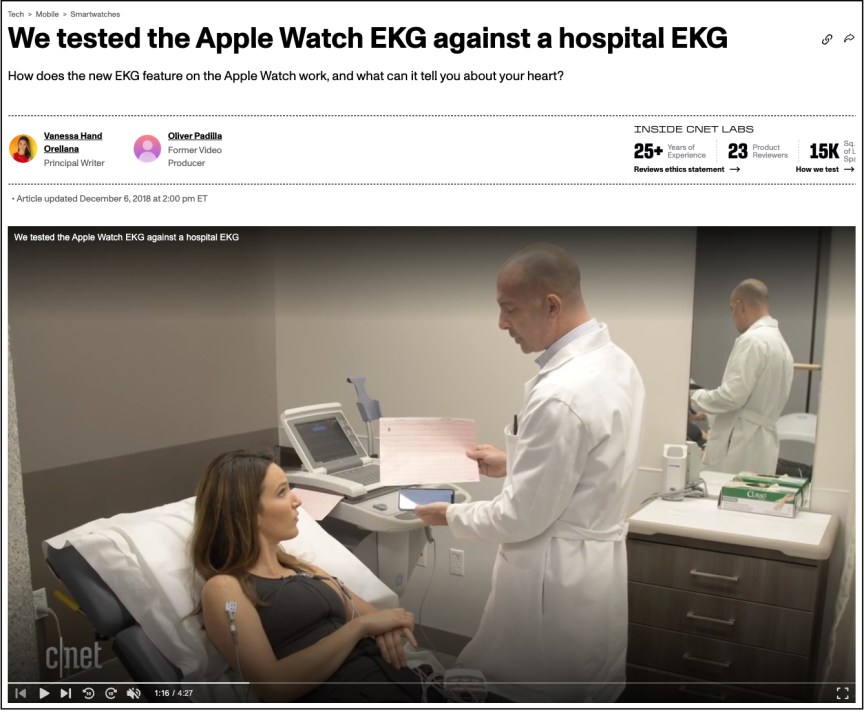
I haven’t always been a fan of the Apple Watch, thinking of it as an extraneous wearable novelty for years. That changed in 2018 when the Apple Watch Series 4 debuted with ECG. Looking at the watch’s tiny sensor, I didn’t believe that it could mimic the complex array of wires, stickers and monitors on hospital-grade electrocardiograms. So, I decided to put the Series 4’s ECG to the test alongside one at the hospital for a CNET story and video.
As a healthy, active 30-year-old, the last thing I expected was to become part of the story.
An electrocardiogram measures your heart’s electrical signals, and it needs a complete electrical circuit. The Apple Watch closes that circuit with two electrodes: one on the back of the case, against your wrist, and one on the Digital Crown, against your finger. That’s one lead, compared to the 12 a hospital uses. Fewer leads, less detail, but still similar accuracy.
During the test, the Apple Watch showed the same pattern as the hospital ECG and flagged an irregular heartbeat. The cardiologist paused to review the results while I tried not to panic on camera.
After further testing, that early beat turned out to be benign, likely the result of stress and sleep deprivation from juggling a new baby and a full-time job. But in that “OMG” moment, I stopped seeing the Apple Watch as a vanity-metric machine and started seeing it as a tool to catch something happening in my heart before I could even feel it.
Years later, I gave my parents Apple Watches as a sort of insurance policy for fall detection and heart-health alerts. Last year, my dad’s watch flagged something that ultimately led to his diagnosis and treatment for a potentially life-threatening heart condition.
There are plenty of Apple Watch health stories like ours now, and I’m sure there will be more. But looking back, my original article and video feel like a snapshot of the exact moment my relationship with the Apple Watch changed.
And yes, the “does this mean I’m going to die?” moment in the video below was genuine.


See full bio
Read the full article here