


Published on •Updated
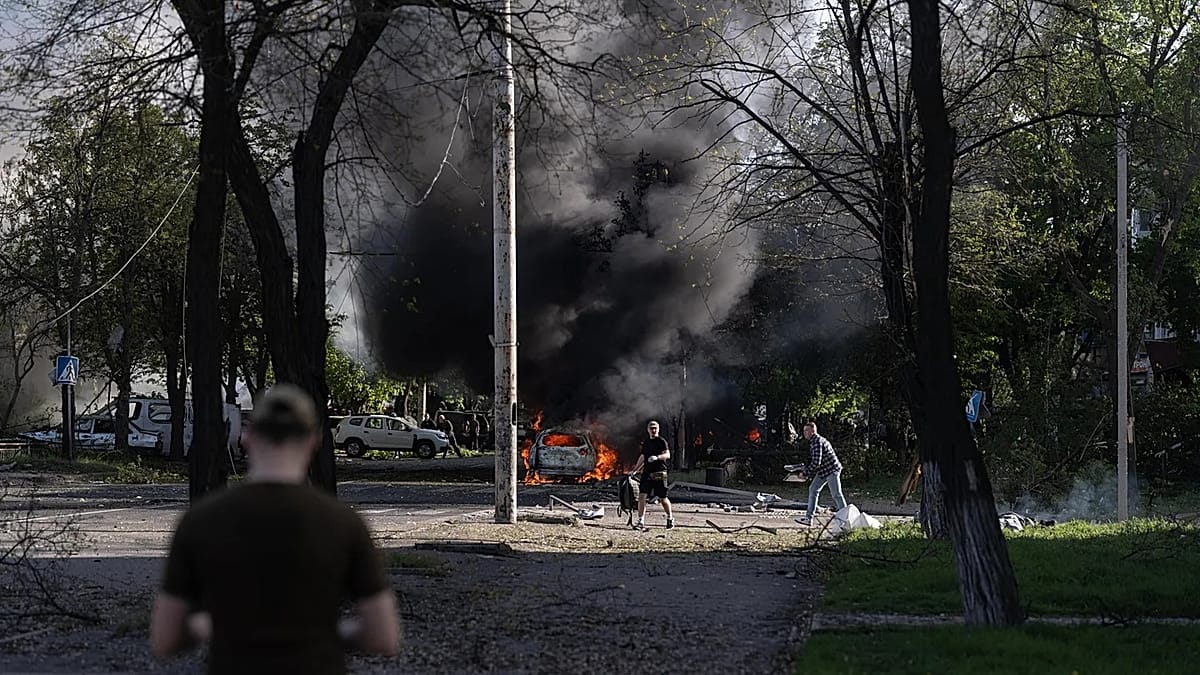
Ukraine said on Wednesday that Russia had violated a unilateral ceasefire called by Kyiv by launching a barrage of air strikes on Ukrainian cities with 108 combat drones and three missiles.
“This shows that Russia rejects peace and its fake calls for a ceasefire on May 9th have nothing to do with diplomacy. Putin only cares about military parades, not human lives,” Ukrainian Foreign Minister Andrii Sybiha wrote in a post on X, on social media, referring to the Kremlin’s own unilateral call for a halt to fighting during its World War II victory parade on 9 May.
Sybiha called on Ukraine’s partners to increase pressure on Moscow “including new rounds of sanctions, isolation, accountability for Russian crimes and enhanced support for Ukraine in all areas.”
On Monday, Moscow uniltaterally announced a ceasefire, due to coincide with its annual World War II victory celebrations on 9 May.
The 9 May parade is typically a bombastic display of military strength, which since 2022 has sought to link Soviet victory over Nazi Germany with the invasion of Ukraine.
But the Kremlin ordered a scaled-back version this year, with no military hardware to be on display, over the fear it could be targeted by Ukraine.
Ukraine later announced its own ceasefire, due to start earlier on 6 May, and slammed Moscow’s “cynicism” for continuing air strikes.
What happens now?
After Russia’s apparent rejection of Ukraine’s ceasefire proposal, the question now is what will happen on one of the most important dates in the Russian calendar, the 9 May victory parade.
After Moscow informed Washington about its unilateral ceasefire for 8-9 May, Ukraine’s President Volodymyr Zelenskyy responded with a counteroffer saying human life is far more valuable than any anniversary celebration.
“It is time for Russian leaders to take real steps to end their war, especially since Russia’s Defence Ministry believes it cannot hold a parade in Moscow without Ukraine’s goodwill,” Zelenskyy said, warning that Kyiv would “act reciprocally starting from that moment.”
Ukrainian forces have already demonstrated they can hit targets well beyond Moscow after a critically important military-industrial complex in Cheboksary was hit on Tuesday, around 1,000 kilometres inside Russian territory.
Zelenskyy published a video of launches of Ukraine’s domestically-made Flamingo cruise missiles, which he said covered a distance of more than 1,500km to strike the facility.
Read the full article here