


NEWYou can now listen to Fox News articles!
The U.S. is racing to reopen the Strait of Hormuz as Iran threatens one of the world’s most critical shipping lanes, testing a Navy that has recently retired most of its dedicated minesweepers and is now relying on a smaller fleet of unmanned systems to do the job.
President Donald Trump has warned Tehran against further escalation and signaled the U.S. is prepared to act to keep the strait open, while Iranian forces have laid mines and threatened commercial traffic in the narrow waterway that carries a significant share of global oil.
The confrontation is now testing a weakness in the Navy’s mine-warfare posture. As the U.S. moves to reopen the Strait of Hormuz after Iranian mining threats, it is doing so after retiring most of the ships once dedicated to that mission and while still relying on a limited mix of legacy vessels and newer unmanned systems to clear one of the world’s most critical shipping lanes.
At the current moment, any mine-clearing effort is unfolding amid an active standoff in the strait. The U.S. has imposed a naval blockade on Iranian ports, while Iran has responded with attacks on commercial vessels, seizures of ships and threats to close the waterway entirely.
HEGSETH BLASTS BRITS, SAYS IRAN’S CHAOTIC RETALIATION HAS DRIVEN ITS OWN ALLIES ‘INTO THE AMERICAN ORBIT’
At least several commercial ships have come under fire in recent days, and both sides have intercepted vessels as they attempt to move through the chokepoint, underscoring the risks facing any operation to restore traffic.
Iran has tied further negotiations to the lifting of the U.S. naval blockade, while Washington has insisted on security guarantees and reopening the strait, leaving little immediate path to a deal.
The operation comes after a major shift in how the Navy handles mine warfare. The service retired its four Bahrain-based minesweepers last year, ending a decades-long presence of dedicated mine-hunting ships in the Middle East.
At the start of the current crisis, the Navy’s remaining minesweepers were based in Japan, not the Persian Gulf, and newer littoral combat ships equipped for mine countermeasures were not all positioned in the region.
Multiple news outlets have reported Iran has laid at least a dozen mines in the strait, citing intelligence assessments, though some estimates put the number higher.
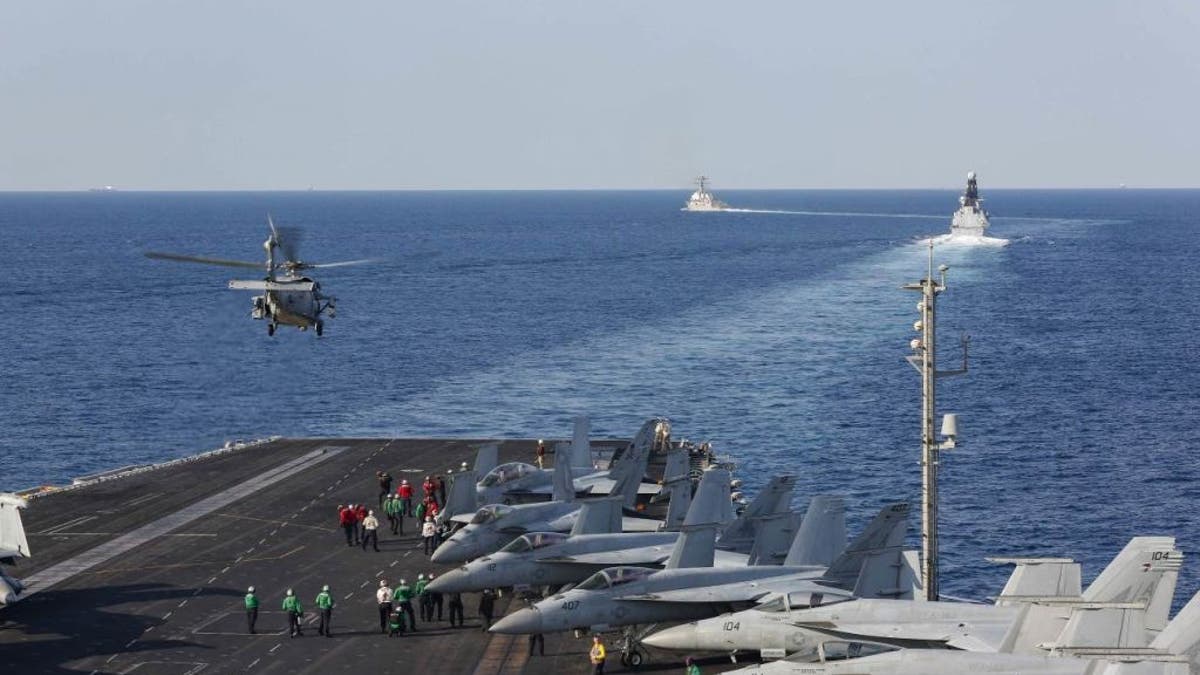
Now, as the U.S. moves to reopen the strait, some of those assets are being brought back in. Two Avenger-class mine countermeasure ships, USS Chief and USS Pioneer, were tracked sailing west from Southeast Asia toward the Middle East in recent days as preparations for mine-clearing operations ramp up.
DESTROY THE REGIME’S POWER WITHOUT OCCUPYING IRAN: A SMARTER WAR PLAN
The shift has left the Navy relying on a mix of legacy ships being surged into theater and newer unmanned systems designed to detect and neutralize mines.
“To be honest, that the minesweepers retired was never a concern to me, because we had brought in newer technology,” retired Vice Adm. Kevin Donegan, who previously commanded the Navy’s 5th Fleet, told Fox News Digital.
But analysts say the Navy is still working through a transition as it replaces its older minesweepers with newer systems.
“We’re sort of at this nadir of the Navy’s mine sweeping capacity,” Bryan Clark, a defense analyst at the Hudson Institute, told Fox News Digital.
Clark said the Navy has spent years developing unmanned systems to replace legacy ships, but currently has a limited number of those systems available for large-scale operations.
U.S. forces are not sending ships blindly into minefields. Instead, the operation begins with a wave of unmanned systems scanning the seabed to identify potential threats.
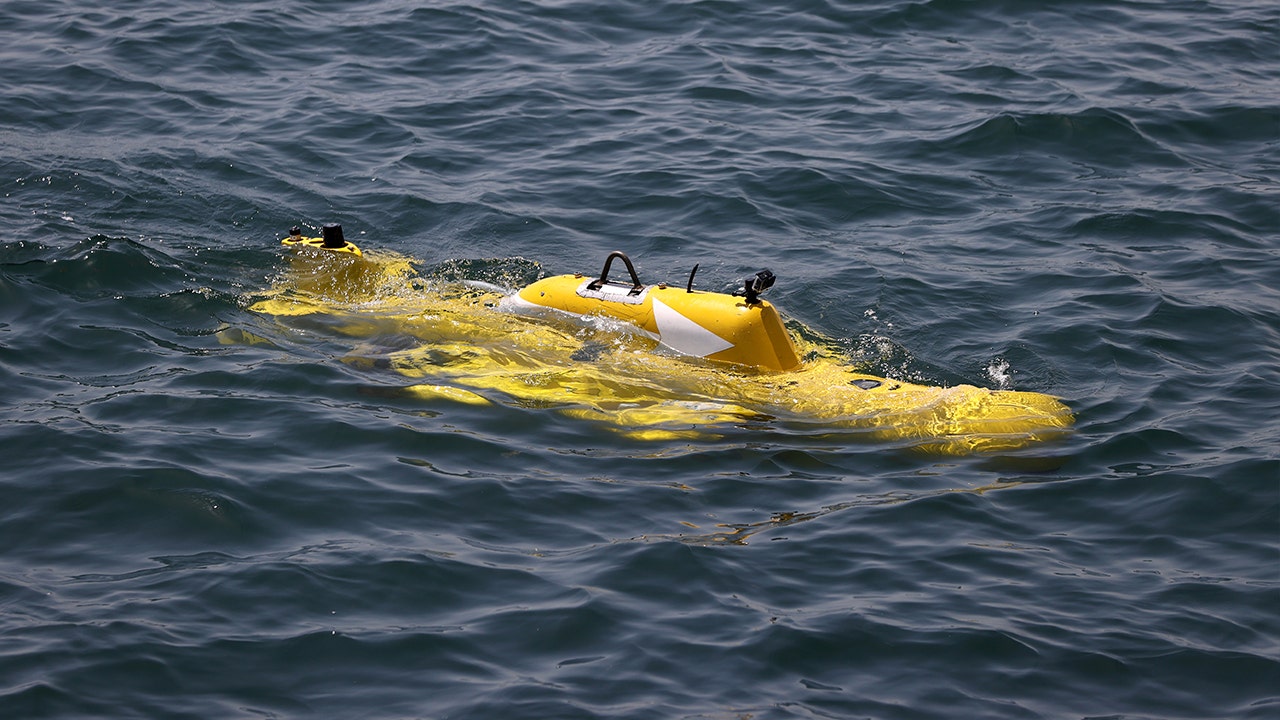
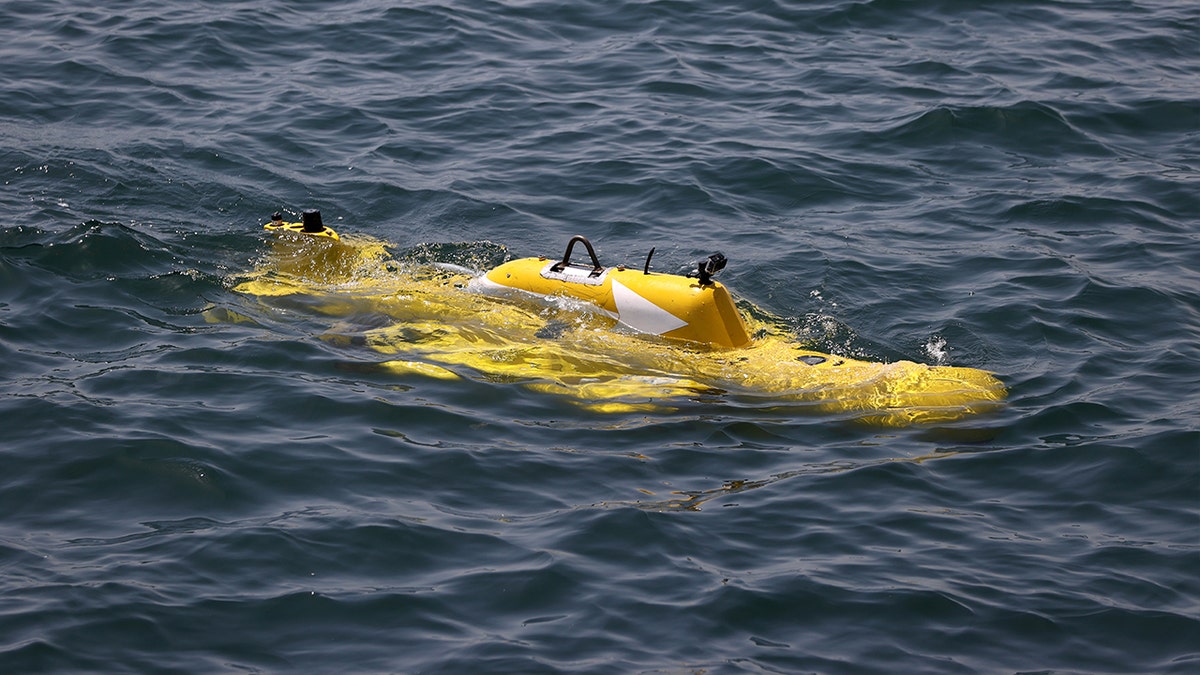
Underwater drones — some torpedo-shaped — are deployed in grid patterns to map the ocean floor and detect objects that could be mines, using high-resolution sonar to distinguish them from debris.
“They kind of look like torpedoes and they map the bottom,” Donegan said.
In parallel, surface drones tow sonar systems through narrow lanes, while helicopters equipped with sensors scan for mines closer to the surface, allowing the Navy to build a detailed picture of what is actually in the water.
TRUMP VOICES FRUSTRATION WITH NATO, SAYS IRANIAN NAVY ‘DESTROYED’ AS US PREPS FOR BLOCKADE
But identifying mines is only the first step.
“The mine neutralization part is really the long leg of the process,” Clark said.
Once a mine is located, operators deploy remotely controlled systems to disable it — either by detonating it in place or puncturing it so it sinks. Even then, the danger is not fully removed.
“You’ve got to then retrieve this thing with EOD personnel,” Clark said, referring to explosive ordnance disposal teams tasked with clearing debris that can still pose a hazard to passing ships.
Clearing mines remains a slow and methodical process that can stretch timelines depending on how many devices are in the water and how they are deployed.
The Pentagon has told Congress the effort could take as long as six months, according to a Washington Post report.
Clark said recent war-gaming suggests U.S. forces could identify and begin neutralizing mines within weeks, but fully removing them from key shipping lanes could take significantly longer.
“The finding part, you could do within a couple of weeks,” he said, adding that neutralizing mines could take additional time and that removing debris and ensuring lanes are completely safe could extend operations into months.
CLICK HERE TO DOWNLOAD THE FOX NEWS APP
Donegan cautioned that timelines are difficult to predict, in part because U.S. forces must first confirm whether mines are actually present in the areas Iran has claimed.
“When somebody says they mined it, you have to go validate if that’s even true, and that takes time,” he said.
Read the full article here